The archers were to blame
Saudi Arabia | Anno 2026
Wednesday 4 Februari | Taif – Al Wahbah Crater – Medina
Thursday 5 February | Medina – Al Buwayr
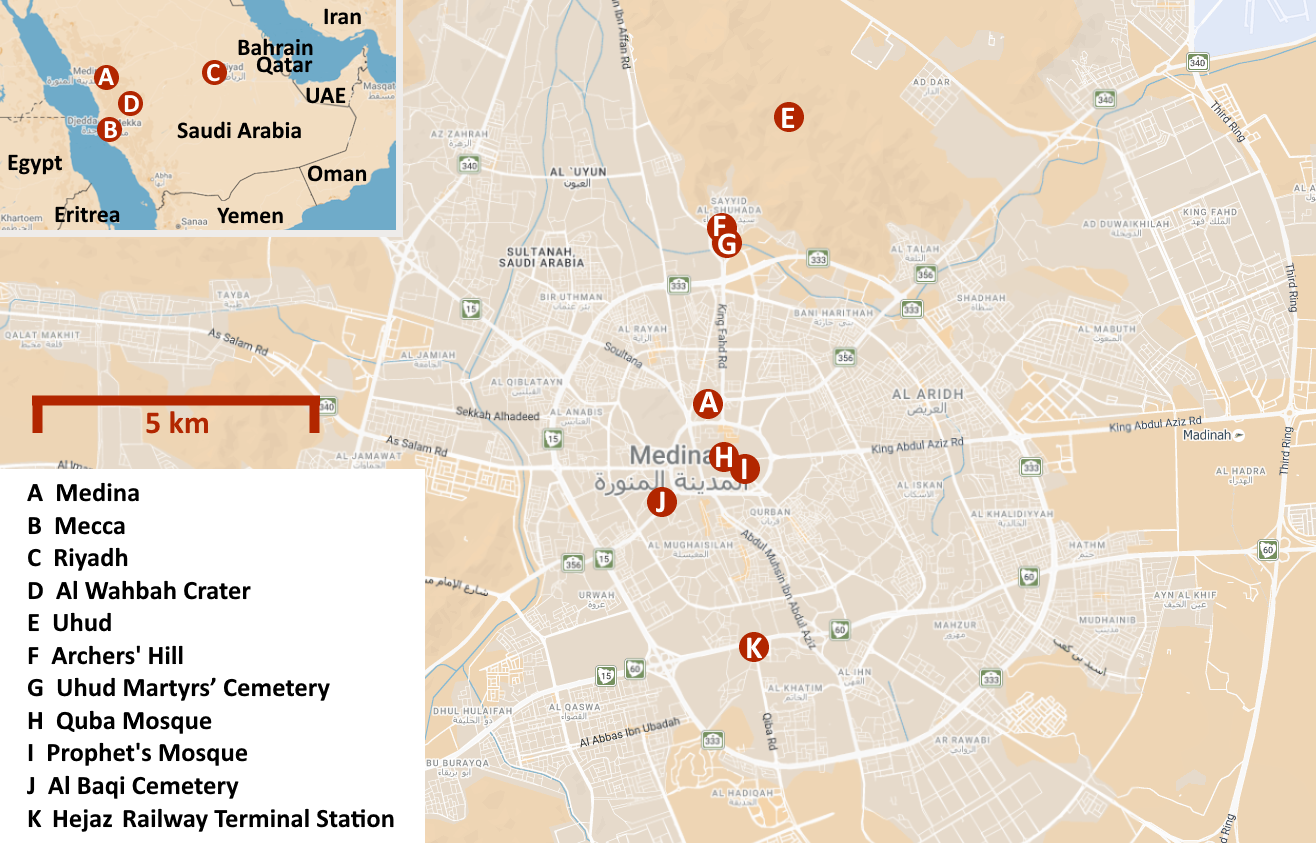
Wednesday 4 Februari | Taif – Al Wahbah Crater – Medina
Although it is not obligatory, a devout Muslim earns considerable merit by visiting not only Mecca but also Medina as part of the Hajj or the Umrah. The city abounds in holy sites, as several key events from the early history of Islam took place there. And, importantly for us, as non-Muslims we are allowed to visit almost all of these places.
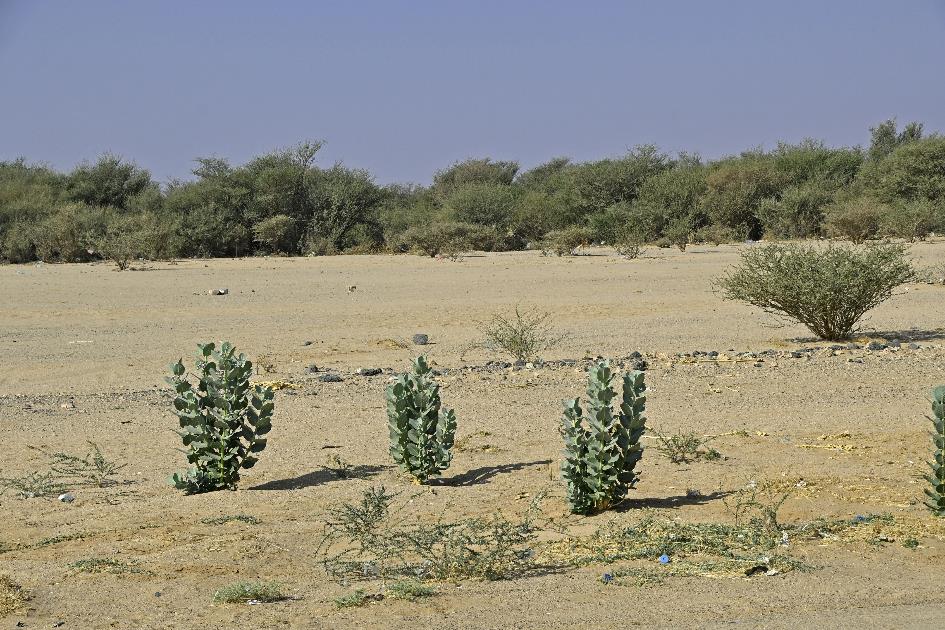
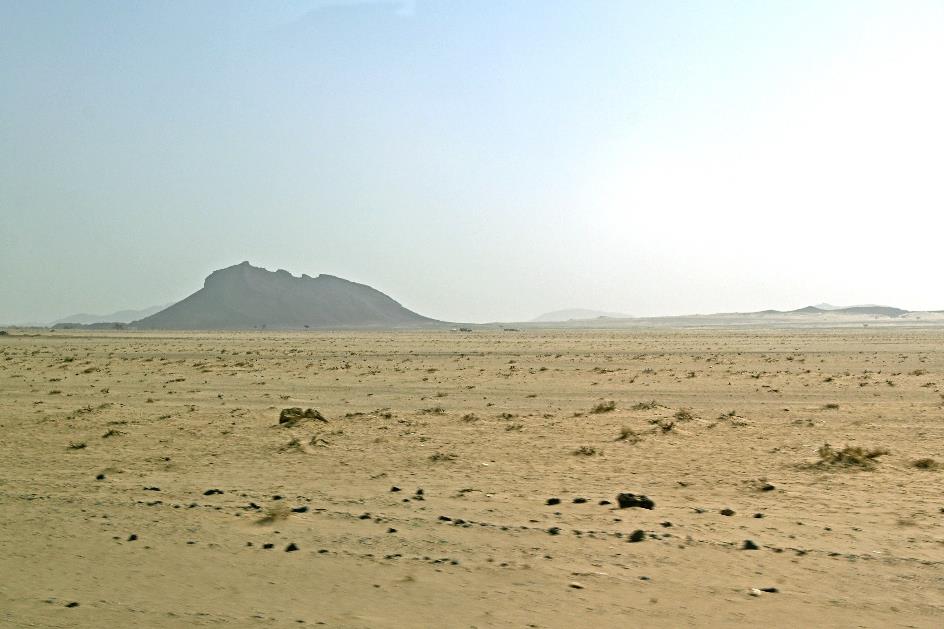
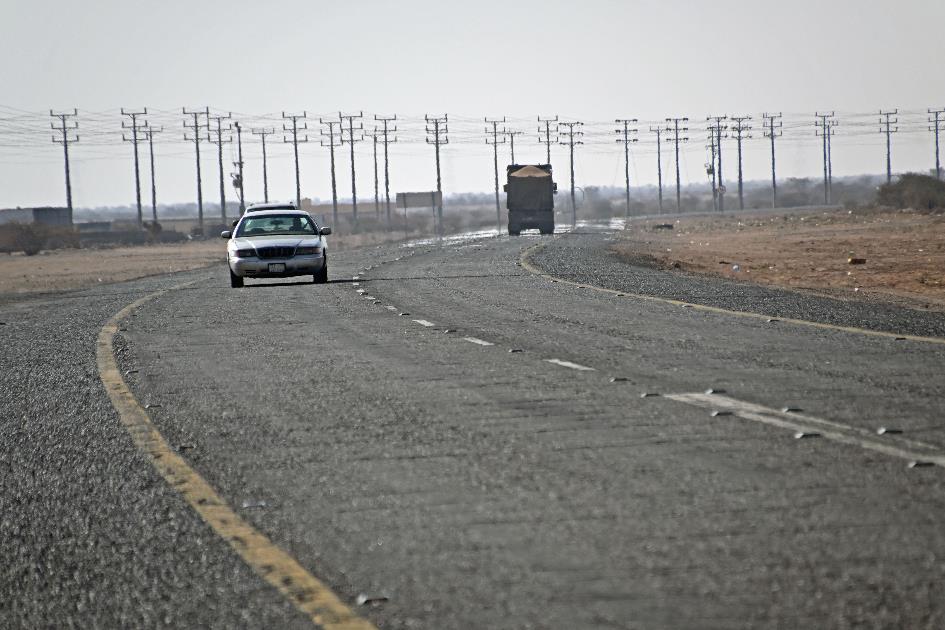
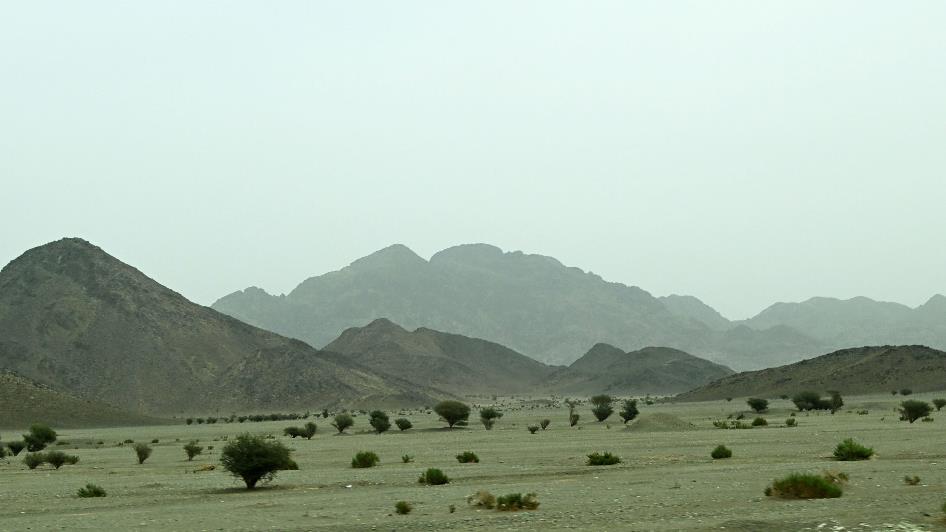
Today we have a journey of more than 470 kilometres (292 miles) ahead of us, from Taif to Medina. It takes us through a landscape that is not always captivating. Sandy deserts alternate with stony deserts; at times they stretch out as vast barren plains, while elsewhere a sparse covering of low shrubs breaks the monotony. On the distant horizon we can just make out the hazy silhouettes of the Hejaz Mountains. Every now and then a few dromedaries come into view. Somehow they still manage to find enough to eat in this inhospitable region.
Travelling through this largely deserted landscape, it is not difficult to imagine what the Arabian Peninsula must have looked like at the time Islam emerged
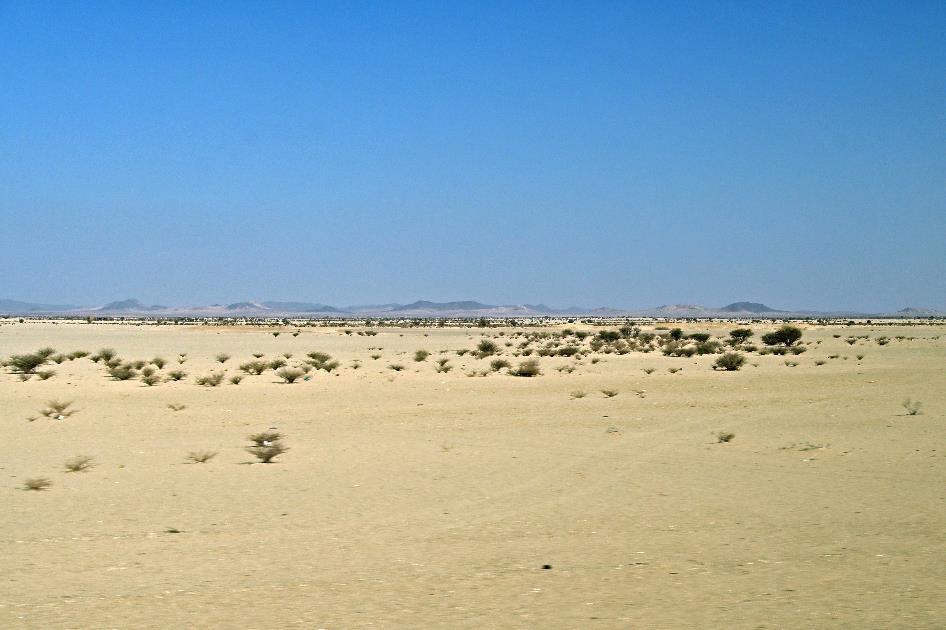
From time to time the monotony is interrupted by a settlement, a cluster of houses that has managed to survive in the midst of this unforgiving desert thanks to a dependable water supply. Travelling through this largely deserted landscape, it is not difficult to imagine what the Arabian Peninsula must have looked like at the time Islam emerged.
There must have been little city-states, centred on towns and oases, each under the authority of a local ruler and separated from the others by stretches of desert, ensuring that conflicts did not arise too readily. Caravan routes criss-crossed the region, and trading towns sprang up at strategic locations. This was still the situation at the beginning of the twentieth century, when Abdul Aziz set about unifying Arabia.
Gradually, the Kaaba developed into a universal sanctuary where, according to tradition, 360 gods were worshipped
We do not know with certainty when Muhammad was born. He probably did not know himself, for birthdays held little significance in pre-Islamic Arab society. It is generally assumed that he was born in Mecca in either 570 or 571. At first he seems to have led a fairly unremarkable life, initially as a shepherd and later as a merchant.
Even then, Mecca was already an important trading centre. Numerous merchants and travellers passed through the city, often bringing with them their own religions and their own deities. Gradually, the Kaaba developed into a universal sanctuary where, according to tradition, 360 gods were worshipped – the objectionable polytheism that Muhammad sought to abolish.
It was not until 610, when Muhammad was around forty years old, that he received his first revelation from the Archangel Gabriel. This took place in the Cave of Hira, where Muhammad regularly withdrew for periods of fasting and contemplation. For more than twenty years Gabriel continued to appear to him, conveying the words of Allah. These revelations were eventually compiled into what we now know as the Qur'an.
In time the situation became untenable, and plans were even made to have Muhammad assassinated
It was another three years or so before Muhammad began to preach publicly as a prophet. At first, his fellow townspeople largely left him alone. But when he started denouncing the idols and the polytheism they represented, opposition mounted. Members of the fledgling Muslim community were boycotted, while Muhammad himself was ridiculed and threatened. In time the situation became untenable, and plans were even made to have him assassinated.
On the night of 9 September 622, under the cover of darkness, he left Mecca. He first travelled south in order to throw his pursuers off his trail, before turning north towards Medina. It was a gruelling journey of more than 430 kilometres (267 miles), undertaken under the constant threat of enemies in pursuit. Yet on 4 October he and his father-in-law and loyal follower, Abu Bakr, reached Medina safely, where they found the support of the local population that enabled Muhammad to continue building the foundations of Islam.
So momentous was this Hijrah – the migration from Mecca to Medina – that it marks the beginning of the Islamic calendar. For the religious authorities, today is not 4 February 2026 but 16 Sha'ban 1447: the sixteenth day of the eighth month of the year 1447.
The Islamic calendar is governed by the lunar cycle, meaning that a year consists of only 354 days. As a result, the Islamic calendar gradually gains on the Western, or Gregorian, calendar. In the year 20,874 the two calendars will coincide for several months. So, only another eighteen thousand years to wait.
Muhammad died in 632. His death immediately sparked a succession dispute
Muhammad died in 632. His death immediately sparked a succession dispute. On the very day he died, Abu Bakr was chosen as the new caliph. This did not sit well with Ali, Muhammad's cousin and son-in-law. In his view, God's representative on earth could only be a member of Muhammad's own family – namely himself. Unfortunately for Ali, however, he was away travelling when Muhammad died, and the succession was settled in his absence.
The dispute eventually crystallised into the two main branches of Islam. The overwhelming majority of Muslims recognise Abu Bakr as the first caliph and are known as Sunnis, while a minority of around ten per cent recognise only Ali as Muhammad's rightful successor and are known as Shi'as.
In 680 the split became permanent. At the Battle of Karbala, Imam Husayn, the son of Ali and grandson of Muhammad, was killed by Sunni forces. As if that were not enough, he was also beheaded – an act regarded by Shi'as as the ultimate humiliation. The martyrdom of Imam Husayn is still commemorated every year by Shi'a Muslims.
The repercussions of these events continue to resonate in world politics. They are perhaps most visible in the struggle for influence in the Middle East between Sunni Saudi Arabia and Shi'a Iran, as well as in the existence of Shi'a militant movements such as Hezbollah in Lebanon, Hamas in Gaza, and the Houthi movement in Yemen.
For us, it was only to be expected that a day like today, with a visit to Medina, would be dominated by religion. Fortunately, there is now a change of pace in store. Geology takes centre stage for a while, as the landscape here and there is strewn with basalt boulders.
At times it looks as though some giant has scattered black blocks of volcanic basalt across the plain
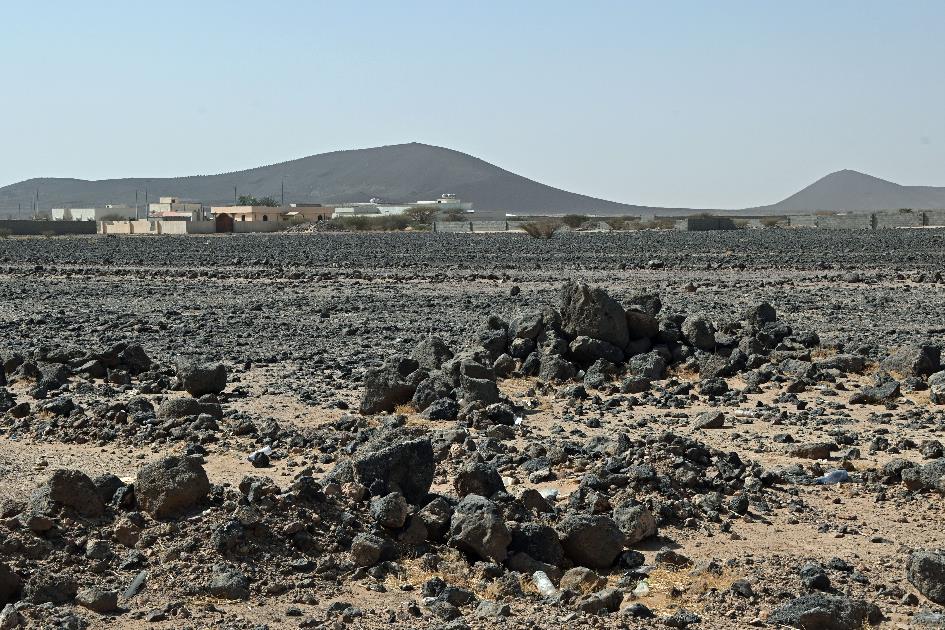
Saudi Arabia has largely been spared volcanic activity. The most recent volcanic eruption occurred around 1810. Like India, the Arabian Peninsula is drifting northwards as a result of plate tectonics and is gradually colliding with the Eurasian Plate. India, however, does so with such force that the Earth's crust has been thrust upwards by more than eight kilometres (5 miles), creating what we now know as the Himalayas.
In Saudi Arabia, by contrast, things are much more subdued. Volcanic activity is confined largely to the west of the country and is closely linked to the Red Sea. The sea is being relentlessly pulled apart as Africa and the Arabian Peninsula continue to drift away from one another, making the Red Sea about a centimetre wider every year. In another 400 million years, it will be as wide as the Atlantic Ocean is today.
That is why a chain of lava fields stretches along the western side of Saudi Arabia, not far from the Red Sea, extending from the Jordanian border in the north to the Yemeni border in the south.
Incidentally, the Arabian Plate is also rotating very slowly anticlockwise as it moves northwards. At that rate, the Strait of Hormuz will close in about ten million years' time. So, good news, because then they can't argue about that anymore.
Endless expanses of sandy desert now succeed one another. Every so often a Bedouin tent appears in the distance, with grazing camels never far away. A herd of dromedaries and their herder dissolve into ghostly silhouettes within the cloud of dust they raise. At times it looks as though some giant has scattered black blocks of volcanic basalt across the plain.
The Al Wahbah Crater is said to be the largest crater in the Middle East. But it is not a classic volcanic crater
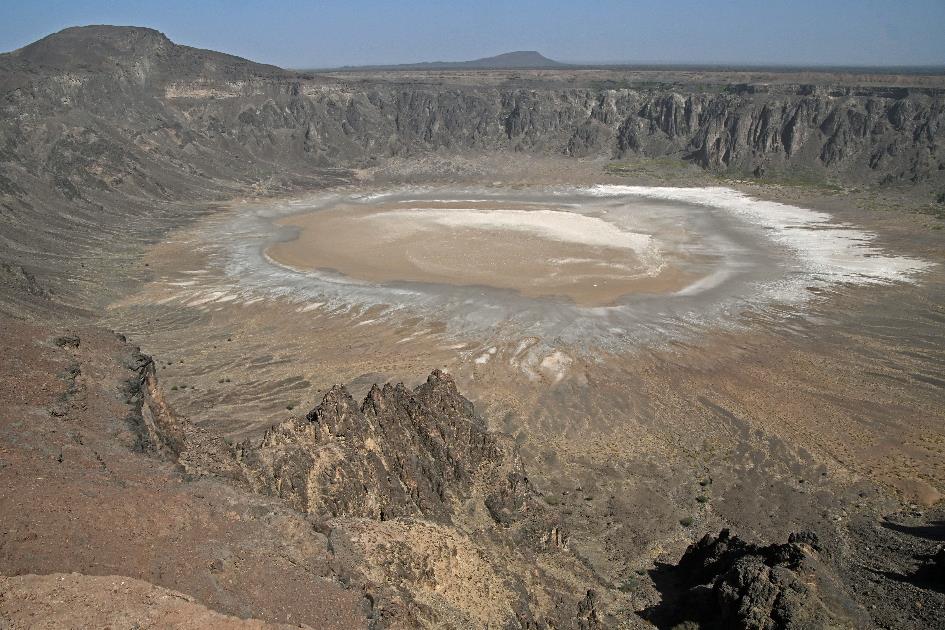
Al Wahbah Crater
The Al Wahbah Crater, which we are now heading towards, is not a classic volcanic crater. It has no volcanic vent and therefore cannot be connected to an underground magma chamber. It will never spew lava. Nor is it the result of a meteorite impact, something that can be ruled out from the composition of the rocks.
So, what did happen here? Geologists agree that this is a maar – a crater formed when intensely hot magma came into contact with groundwater. Such a process can occur only where the Earth's crust is thinner than usual, as is the case today, for example, beneath Yellowstone.
Eventually, the rocky overlying strata could no longer withstand the force and the whole system exploded
The magma heated the groundwater until it turned to steam, which became ever hotter and built up enormous pressure. Eventually, the rocky overlying strata could no longer withstand the force and the whole system exploded – rather like a pressure cooker whose safety valves have become blocked. The Al Wahbah Crater is thought to have formed about 1.1 million years ago.
Maar craters are best known from Germany's Eifel region, where the same process created numerous circular craters. Today they have become picturesque lakes and are among the area's principal tourist attractions.
The same is true of the Al Wahbah Crater. It has become a major attraction, with visitors willing to make a considerable detour to admire this natural wonder. Yet the differences become immediately apparent as soon as we climb to the crater rim. This crater is completely dry; there is no lake to be seen. After all, where would the necessary water come from in a place like this? Well, not entirely dry. In the centre of the crater lies a salt flat. It can only have formed from rainwater flowing down the crater walls, leaving behind salt crystals as it evaporated.
Descending into the crater via the zigzag path is at your own risk |
|
Harrat Kishb |
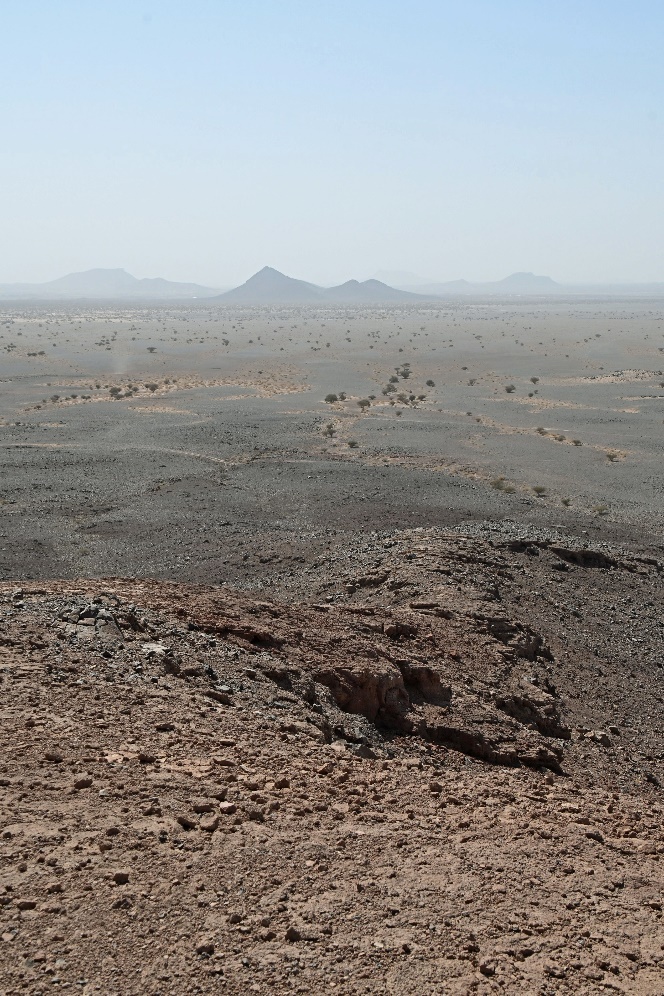
By far the greatest difference, however, lies in the sheer scale of this giant. It is said to be the largest crater in the Middle East. Rather than the few hundred metres across typical of the Eifel's crater lakes, Al Wahbah measures a full two kilometres (1.24 miles) in diameter, while its basin is about 250 metres deep. The effect is nothing short of awe-inspiring.
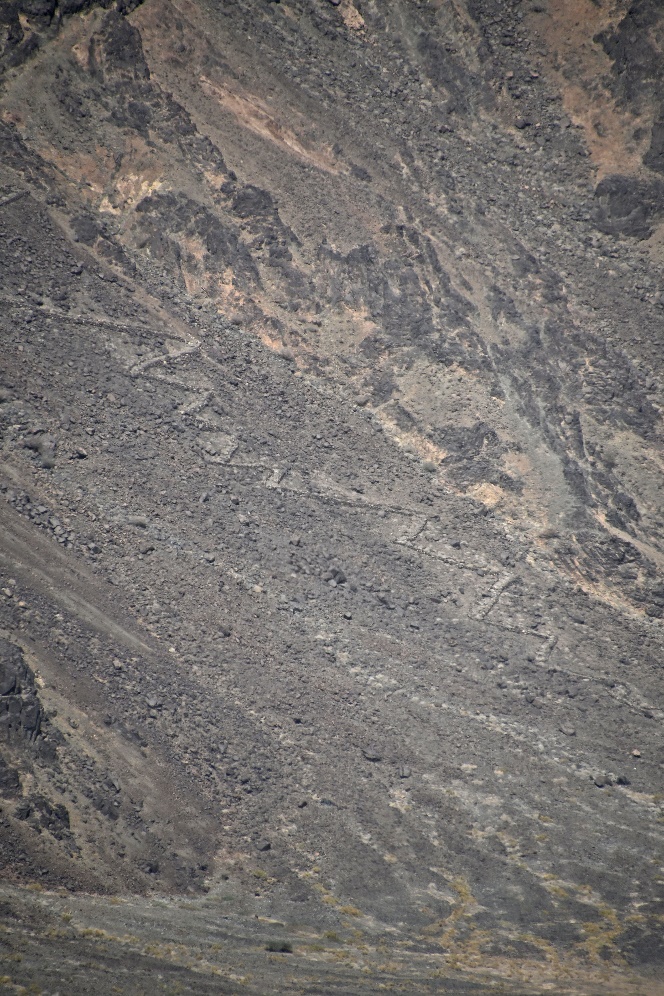
Steep, rugged rock walls encircle the crater floor. Descending into it is virtually impossible, except at one particular point on the north-western side, where a zigzag path leads down. Those with sufficient time and energy can follow it all the way to the salt flat.
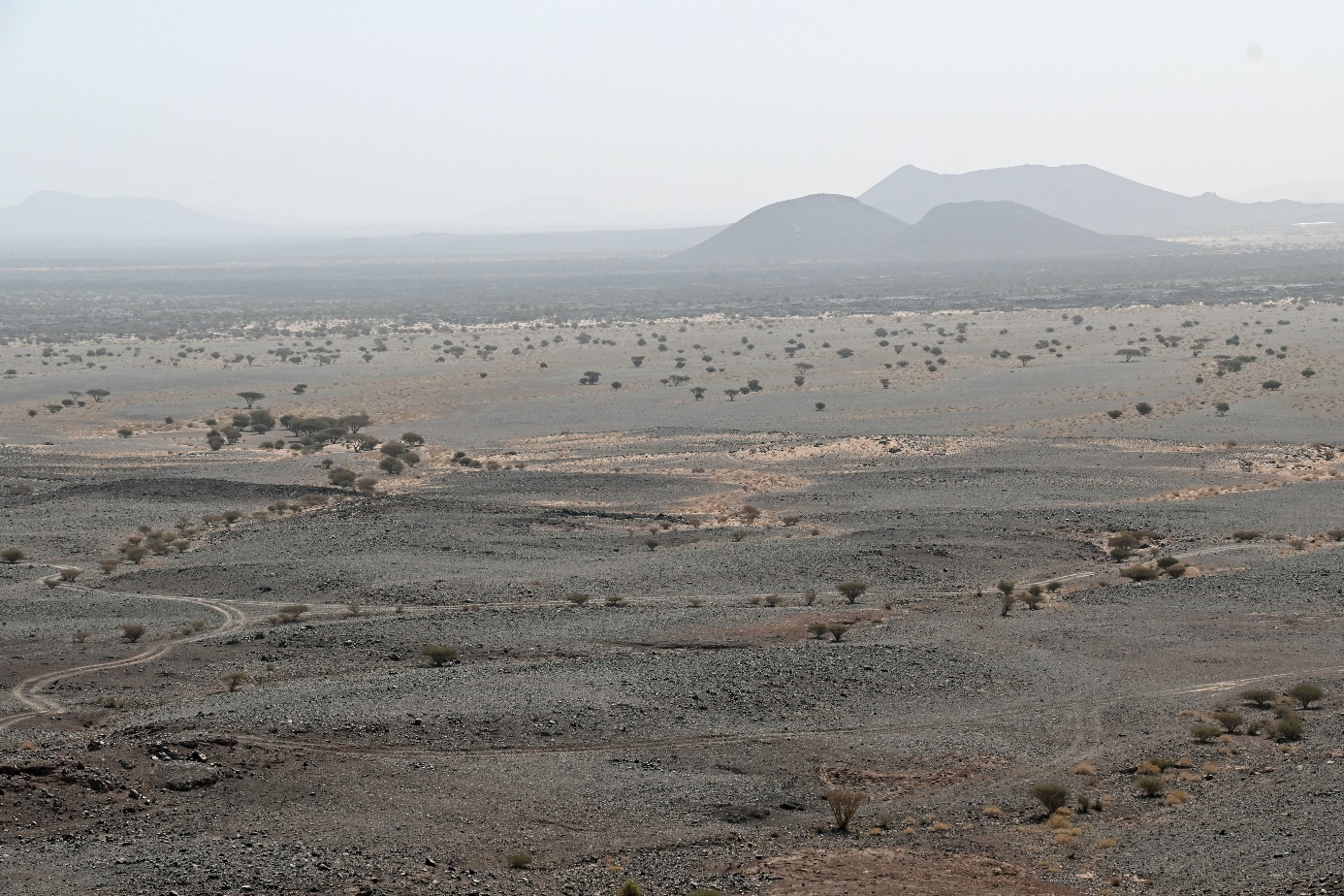
To the east stretches Harrat Kishb, one of Saudi Arabia's great lava fields, covering an area almost half as large as Northern Ireland
Harrat Kishb
The landscape beyond the crater is equally impressive. To the east stretches Harrat Kishb, one of Saudi Arabia's great lava fields, covering an area almost half as large as Northern Ireland. On the hazy horizon a handful of mountains are just visible. One of them must be Jabal al Hil, the volcano that created this almost otherworldly landscape.
The site has recently acquired a Visitor Centre and even a small toilet block. Unfortunately, neither has yet been officially opened, the attendant informs us with great conviction. The key, therefore, remains firmly in his pocket. No amount of pleading helps and pointing out that there are no toilet facilities for dozens of kilometres in any direction makes not the slightest difference. The inevitable result is a series of rather furtive expeditions behind rocks that are far too small to provide any real privacy.
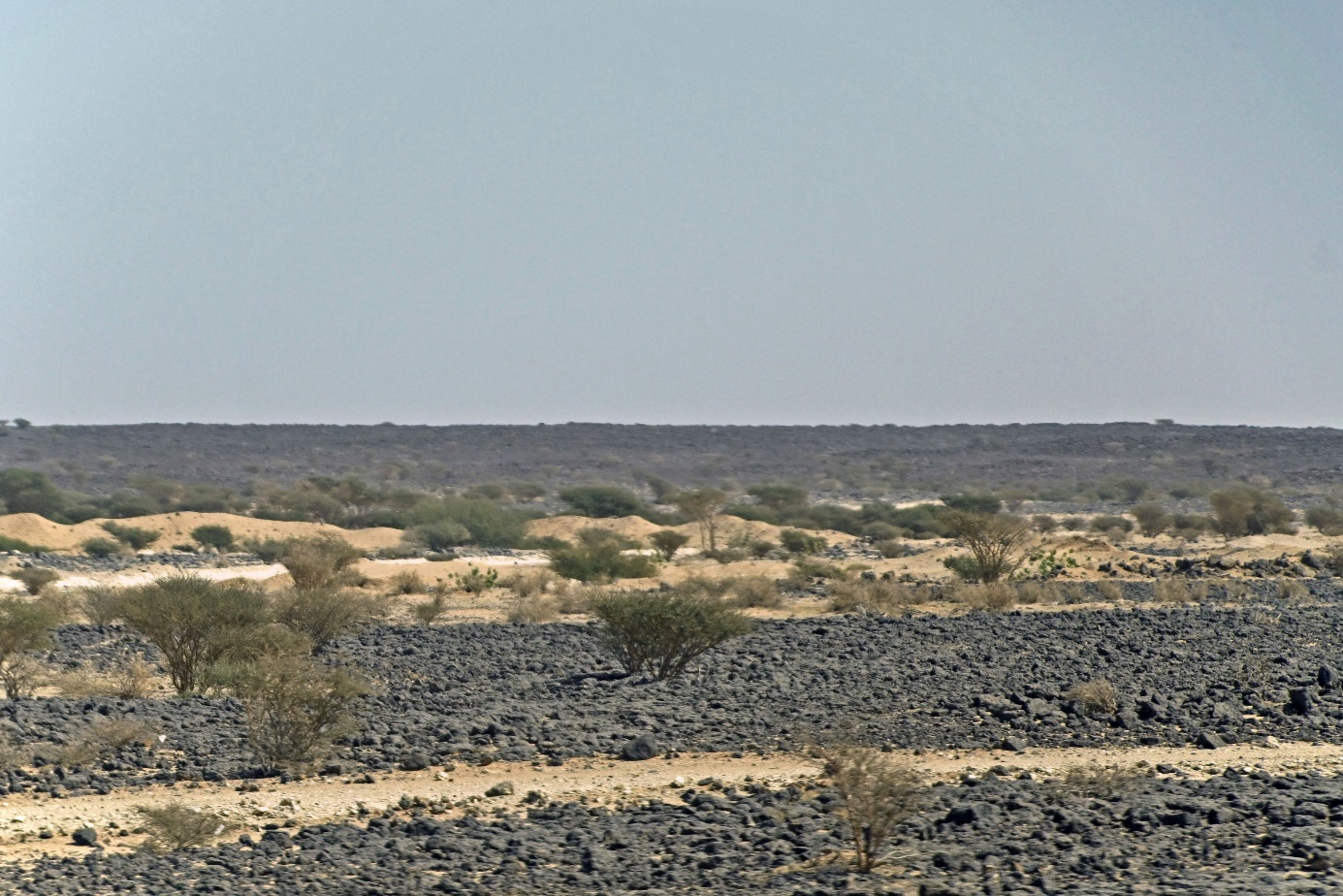
A reasonably good tarmac road carries us further north. Sandy desert dotted with shrubs, the occasional lava field strewn with basalt boulders – hardly the sort of landscape where surprises seem likely. Or so we thought. Quite unconcerned, as though they own the place – which, in fact, they do – two dromedaries amble across the road. Our driver, Mujahir, has no choice but to brake sharply. It is rather amusing, really. The dromedaries and ourselves are the only living creatures one is likely to encounter for miles around, yet we still manage to come close to colliding.
They're black camels, our guide Paul observes drily. They are valued primarily for their low-lactose milk, but also for their meat and their usefulness as pack animals. In short, they are the true workhorses of the desert. White dromedaries, by contrast, are more likely to be seen at beauty contests. They also make excellent riding animals, while meharis are renowned for the speed they can attain.
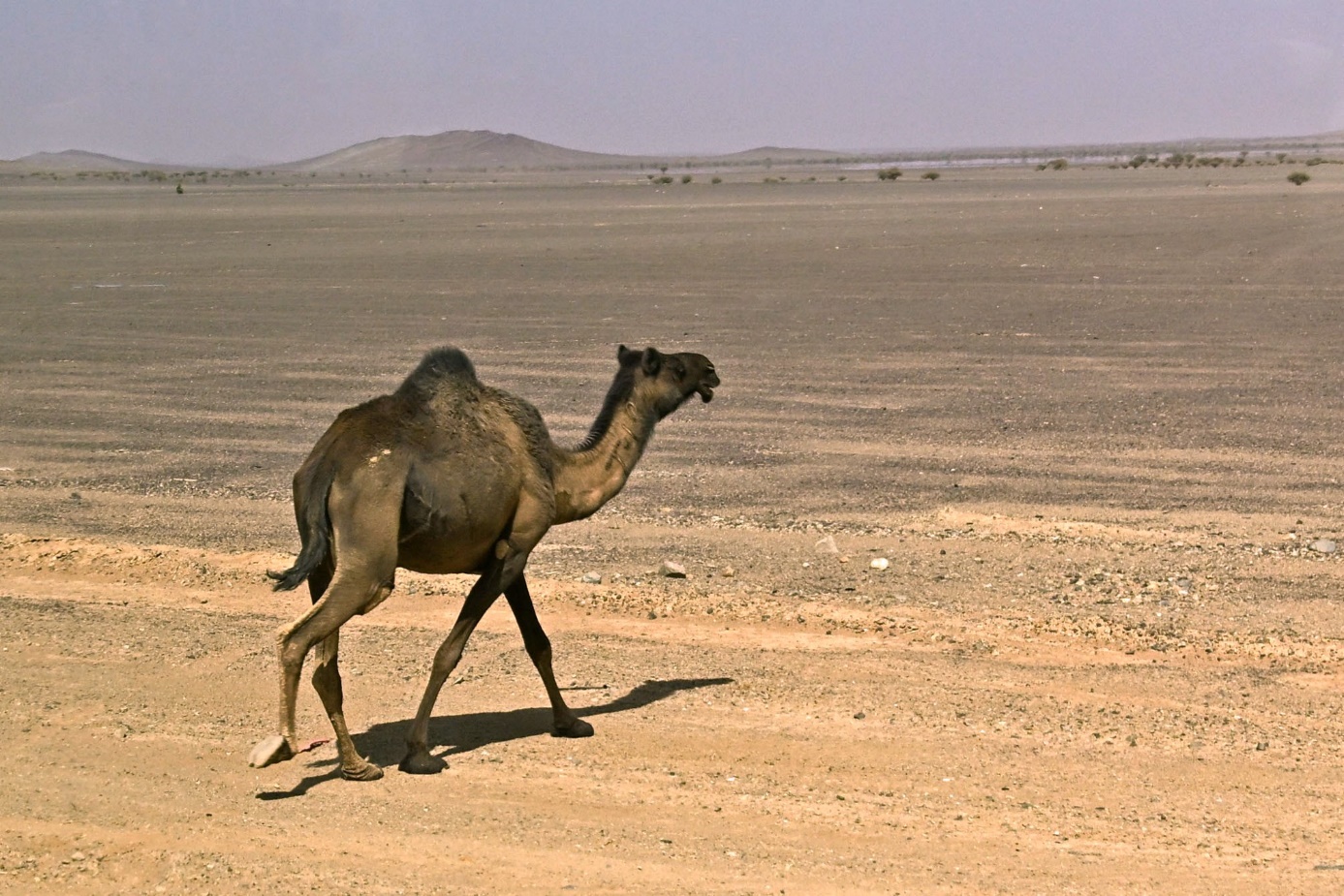
Quite unconcerned, as though they own the place – which, in fact, they do – two dromedaries amble across the road
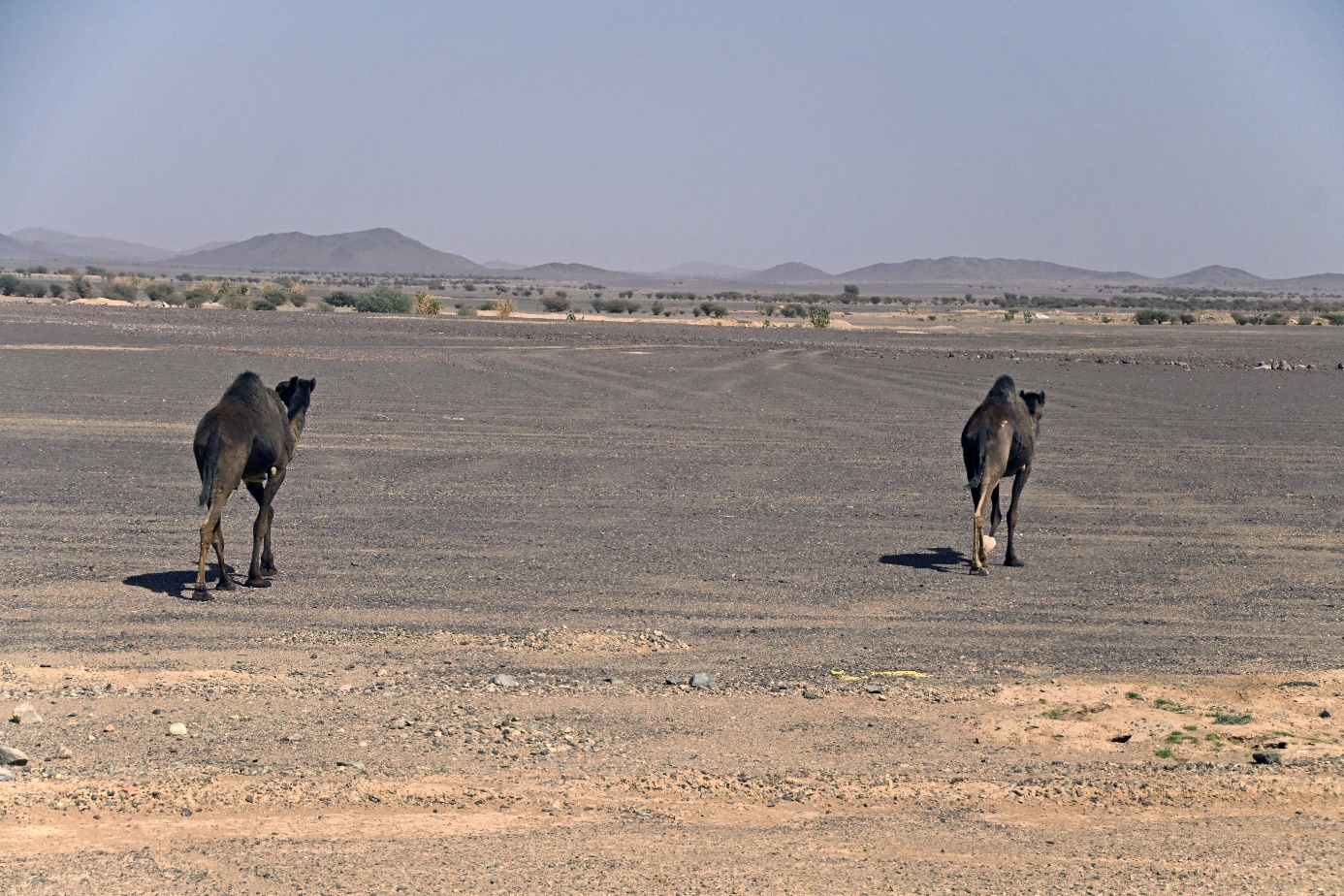
Strictly speaking, of course, we should call them dromedaries, although the term Arabian camel is also widely used for the one-humped species. Their two-humped cousins are known as Bactrian camels. There is even a handy little mnemonic: the capital D in Dromedary has one hump, while the capital B in Bactrian has two.
They can drink as much as one hundred litres in ten minutes if necessary. No other mammal could survive such an intake
Contrary to popular belief, a camel's hump does not store water but fat. For Bedouins, camels have always been indispensable because of their extraordinary endurance in desert environments. When water is available, they can drink as much as one hundred litres in ten minutes if necessary. No other mammal could survive such an intake; in those quantities, water would be fatal to both humans and most other animals. In the end, virtually nothing of a camel goes to waste. Its hide and hair are used to make tents, clothing, ropes, and countless other everyday necessities.
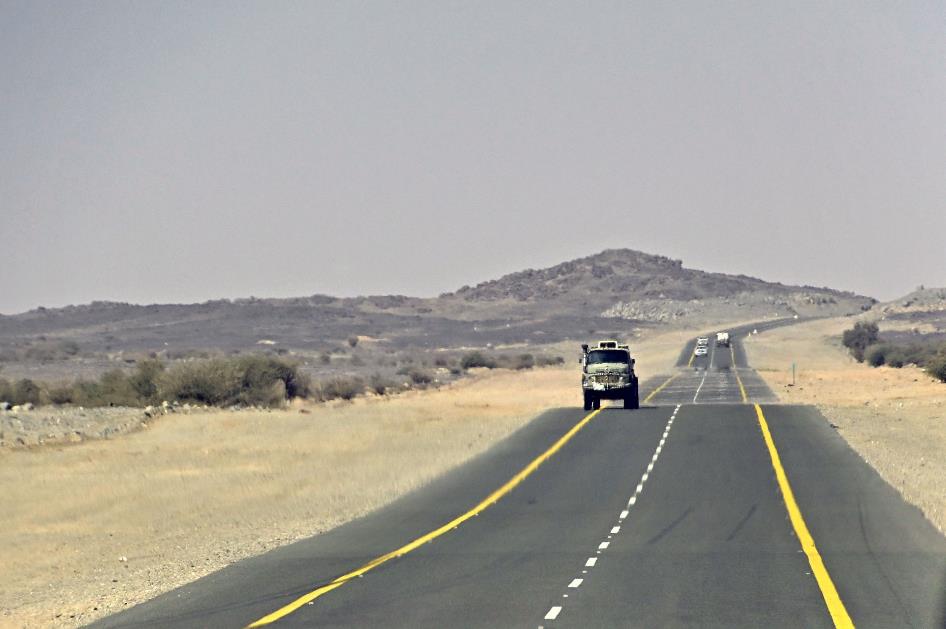
From time to time, the tarmac road takes us through a wadi, the bone-dry bed of a river. A bridge is unnecessary, because the channel never contains any water. Or so it seems. But that turns out not to be entirely true. On either side of the road stand marker posts. Not only do they indicate the course of the road should flooding occur, they also show… the depth of the water. Clearly, these wadis do occasionally fill up during heavy rainfall. It is rather remarkable that, in such circumstances, the only vehicle capable of getting through the desert may be a jeep fitted with a snorkel.
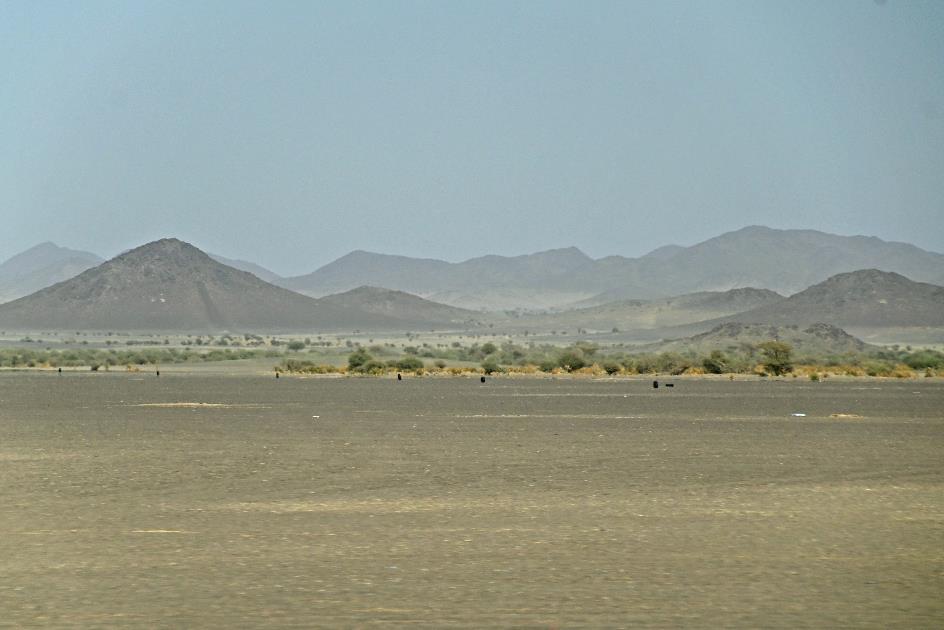
Endless desert plains continue to unfold one after another. Camels occasionally appear as well, but fortunately they are no longer on a collision course with us. Then, quite suddenly, palm plantations emerge. Apparently, the conditions here are favourable enough for them to thrive.
It is an apocalyptic landscape: livestock farming and agriculture are impossible here, and even constructing a road through this terrain is no simple undertaking
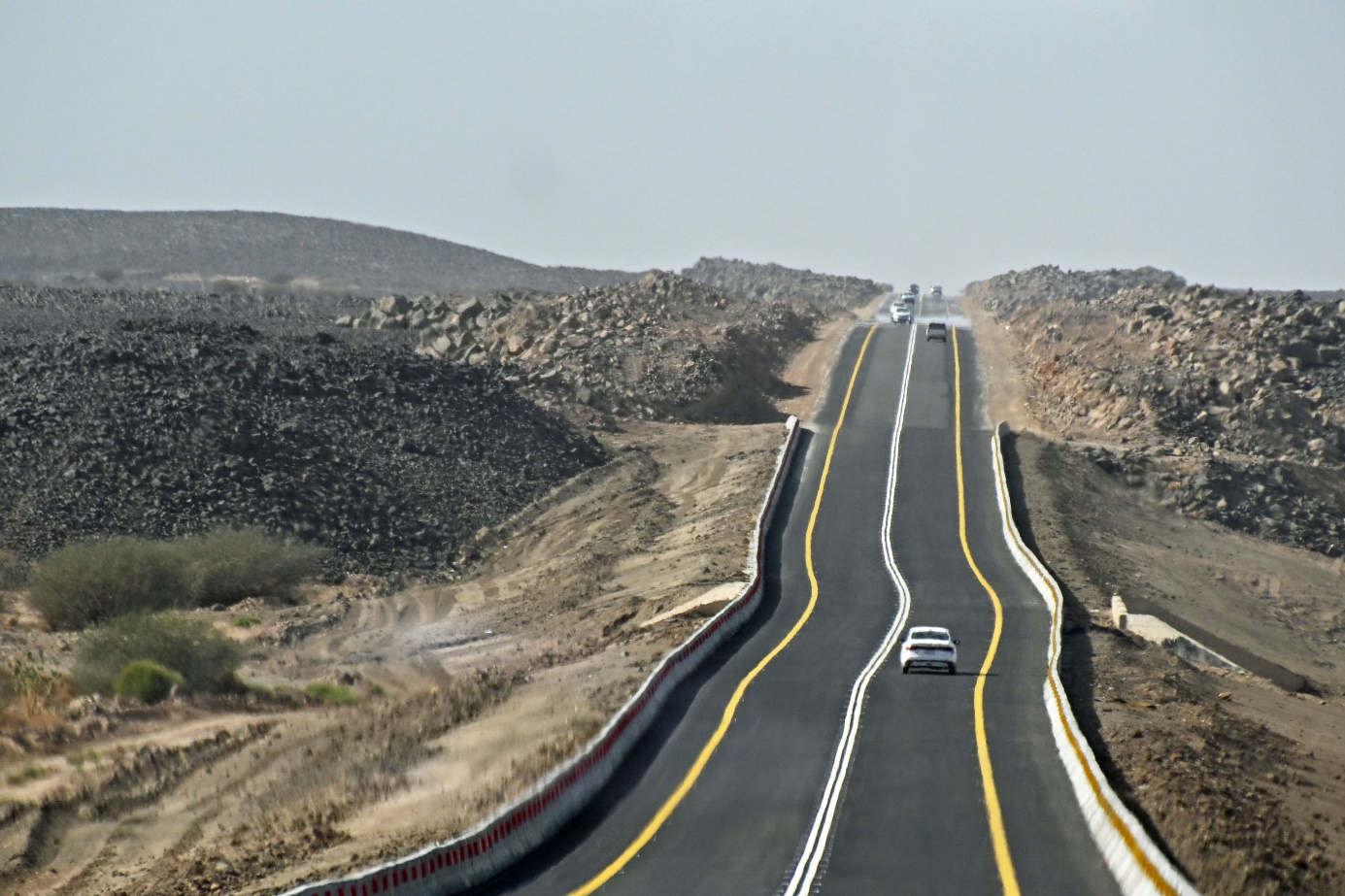
It is not long before this brief glimpse of civilisation gives way once again to vast lava fields. As far as the eye can see, basalt rocks line both sides of the road. It is an apocalyptic landscape: livestock farming and agriculture are impossible here, and even constructing a road through this terrain is no simple undertaking.
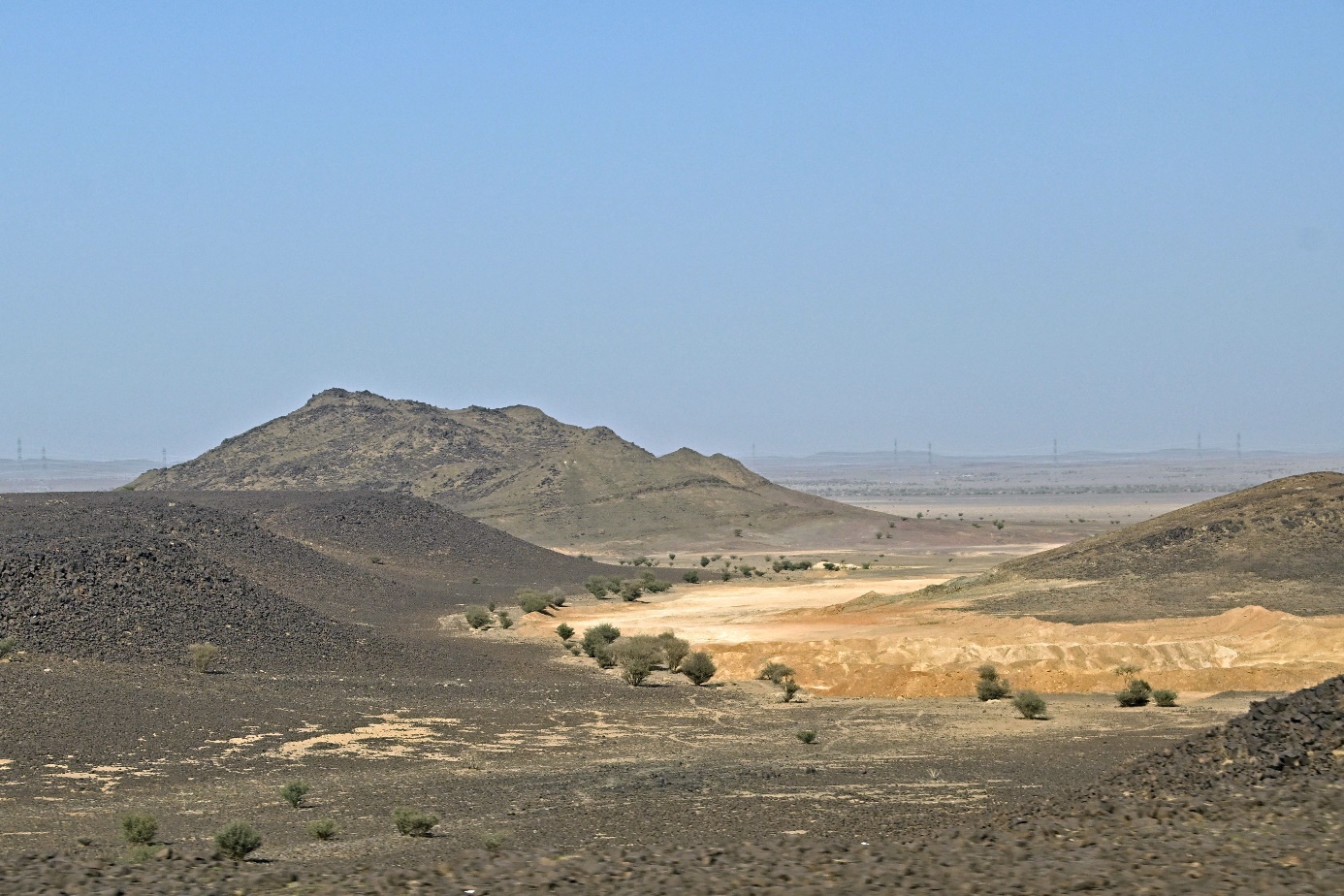
This is Harrat Rahat, the enormous lava field south-east of Medina. Its most recent eruption took place in 1256. It was not a true explosion; instead, intensely hot magma poured out of the volcanic vent and flooded the surrounding area. Even so, it must have been a terrifying event at the time, as the lava flow travelled twenty kilometres (12 miles) before coming to a halt only four kilometres (2.5 miles) from the Holy City. North of Medina lies another vast lava field, Harrat Khaybar. It is extraordinary to think that, amid such a bewildering landscape, a city of one and a half million inhabitants could have flourished.
For the time being, Mujahir bypasses the city and drives us to a place about four kilometres north of Medina. There Roula, our local guide, is already waiting for us. Meanwhile, the ladies in our group have put on their abayas and neatly adjusted their headscarves. In short, we are ready.
Dozens of coaches have found a place in the car park, and on Sayed al Shuhada Square there is a constant coming and going of large groups of pilgrims. A striking white mosque stands out photogenically against the imposing backdrop of a barren mountain, the 1,077-metre-high Uhud.
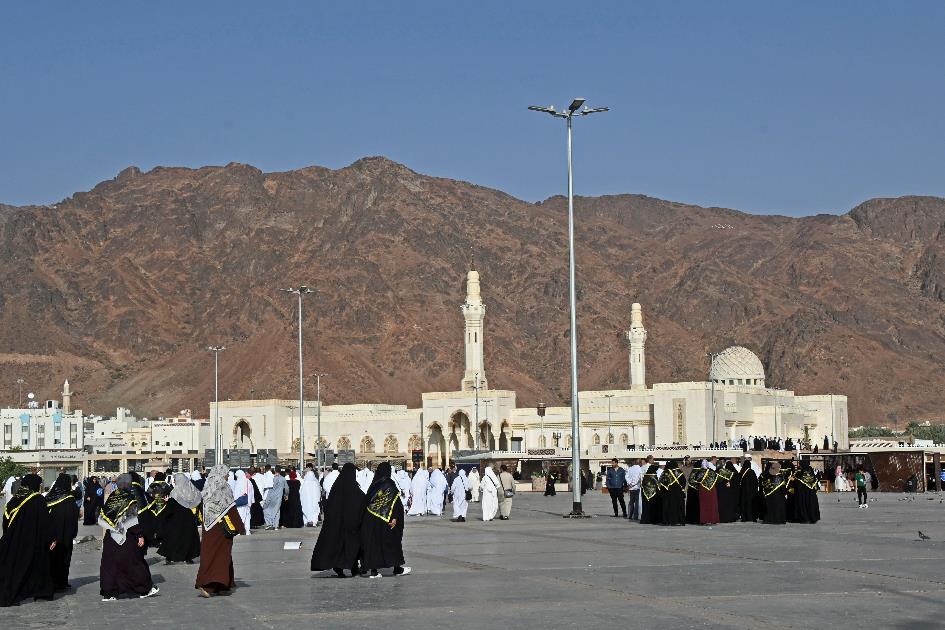
Sayed al Shuhada Square
Yet none of this is what captures our attention. It is the spectacle taking place on a small hill that fascinates us. It is an unremarkable hill of reddish-brown volcanic rock, entirely devoid of vegetation and barely twenty metres high. And yet it is covered with pilgrims. Everyone wants to climb to the top, and once there they simply mill around in a crowd. There do not appear to be any rituals involved. This is the famous Hill of the Archers, the place where one of the great stories from the early history of Islam unfolded.
Muhammad's flight to Medina in 622 was no coincidence, Roula states. The inhabitants of this city already had invited him years earlier. At the time, Medina was home to large communities of Arab Jews and followers of the prophet Ibrahim – Abraham in the Christian tradition. They were eager to embrace the new religion.
For eighty-eight years Medina remained the capital of Islam, until that role was successively taken over by Damascus, Baghdad, Cairo and Istanbul
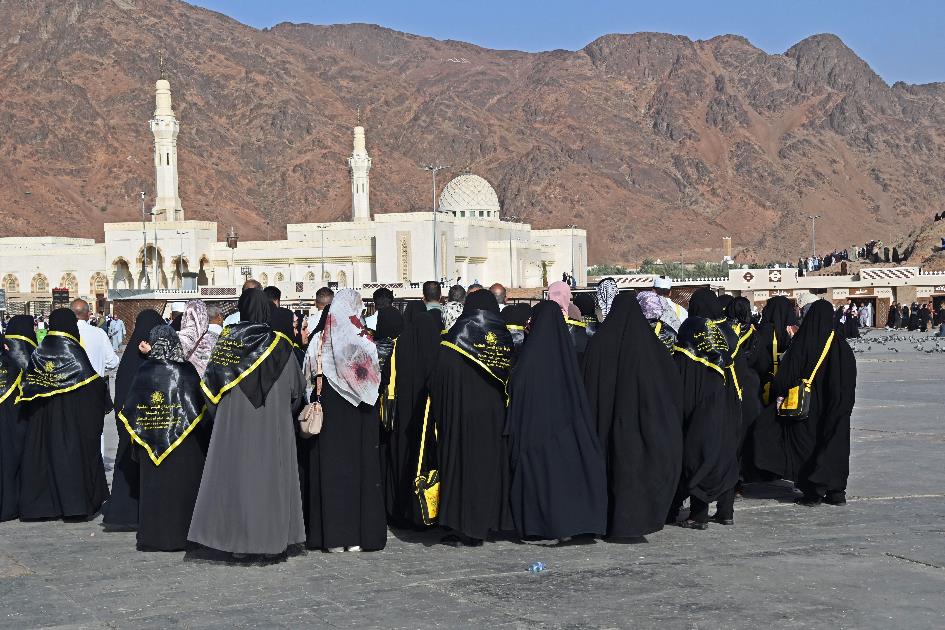
Muhammad wasted no time. He immediately began preaching and initiated the construction of the Quba Mosque. When he died in 632, he was therefore buried here. For eighty-eight years Medina remained the capital of Islam, until that role was successively taken over by Damascus, Baghdad, Cairo and Istanbul. But in reality, Medina has always remained the capital, Roula insists emphatically. After all, even Mecca has only the Kaaba, whereas Medina possesses an entire collection of holy sites.
It is an unremarkable hill of reddish-brown volcanic rock, entirely devoid of vegetation and barely twenty metres high. And yet it is covered with pilgrims
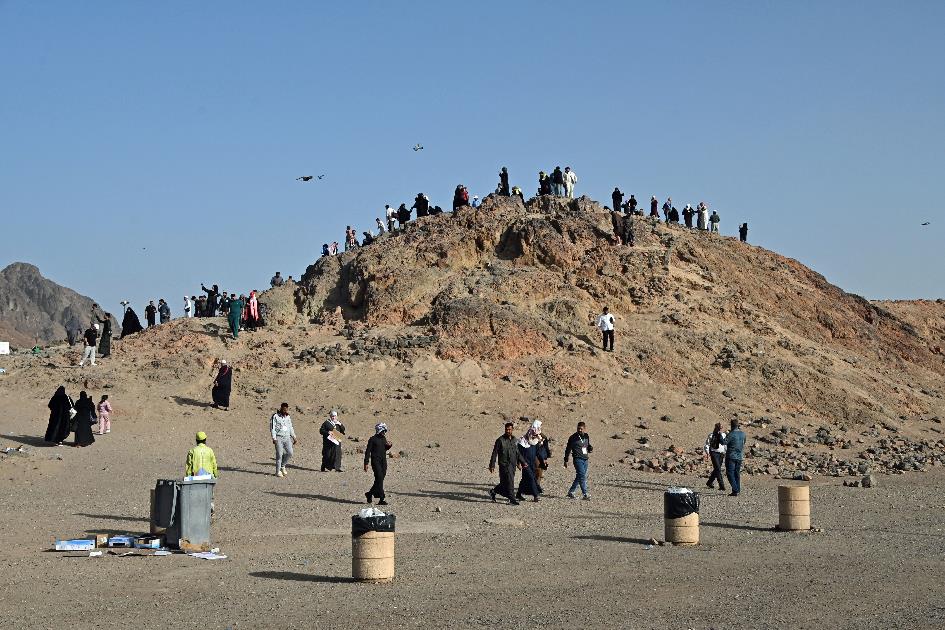
Hill of the Archers
Meanwhile, the polytheists of Mecca could not tolerate the success Muhammad was achieving with his new religion. In 624, a battle was fought which the Muslims won decisively, despite being outnumbered. It should be noted, however, that the cause of this battle lay in Muhammad's forces having begun attacking and plundering trade caravans from Mecca. The Muslims themselves described this as a form of compensation, since they had been forced to leave all their wealth behind when they fled Mecca.
The polytheists were not prepared to let the matter rest. In 625 they marched on Medina with an army of three thousand men to avenge their defeat. Muhammad positioned his troops at the foot of Uhud. In this way, the crescent-shaped mountain range provided excellent protection for their rear. In addition, he stationed fifty archers on the hill in question to prevent the enemy cavalry from making a flanking manoeuvre and threatening his troops on the left flank.
The archers rushed down the hill in order to seize as much booty as possible
The plan worked perfectly: the archers managed to repel two attacks. But against Muhammad's orders, forty-five of them abandoned their position during the third attack, convinced that the battle had already been won. They rushed down the hill in order to seize as much booty as possible. The enemy noticed the opportunity and sent two hundred mounted men around the back of the hill, from where they could attack Muhammad's forces. Add to this the rumour that both Muhammad and his uncle had been killed, and it was clear that the Muslim army was facing a serious crisis.
Yet ultimately neither side could claim victory. Both suffered losses. It was also the only battle in which Muhammad himself was ever wounded, specifically in the jaw. In addition, sixty-nine Muslims were killed. The moral of the story: the archers were to blame, and greed is a poor motivation. It would be another five years, until 630, before Muhammad succeeded in conquering Mecca and cleansing the Kaaba of idolatry.
To ensure that everyone remains fully aware of the proper conduct, the permitted behaviour is even explained on a large information board
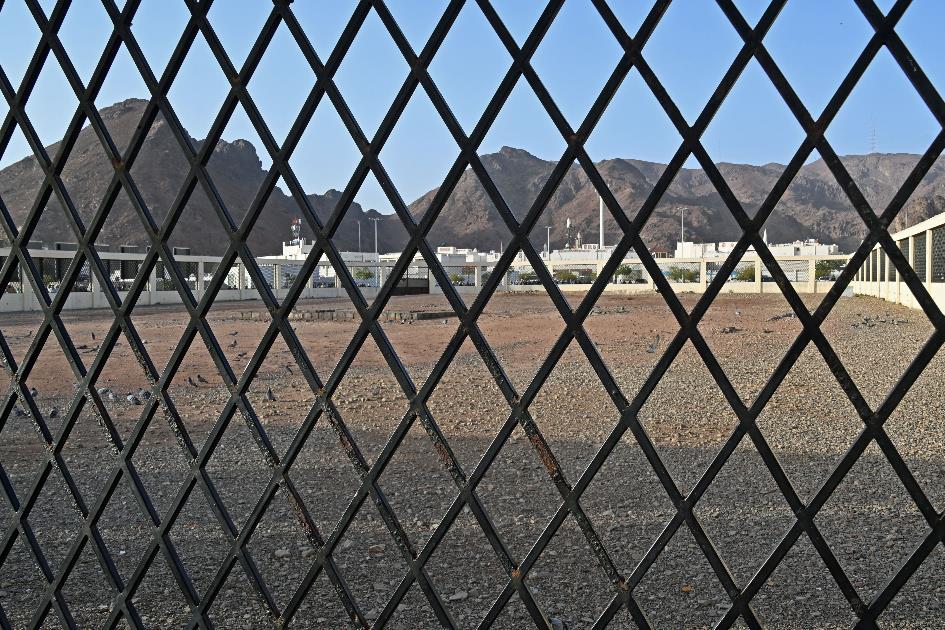
Cemetery of the Martyrs
The fallen martyrs were buried here, in the Cemetery of the Martyrs, yet there is almost nothing to indicate this. It is an unassuming, flat stretch of ground, covered with stones, where individual graves are not marked in any way. For after death, all people are equal. Worshiping the deceased, no matter how heroic they were, is out of the question for a devout Sunni, because that would bring idolatry dangerously close.
To ensure that everyone remains fully aware of the proper conduct, the permitted behaviour is even explained on a large information board. Visiting this cemetery is apparently allowed, but travelling here specifically for the purpose of visiting this cemetery is forbidden. Only two rituals are permitted on the site: offering prayers to Allah, asking Him to treat the deceased with mercy, and silently reflecting on death and the afterlife. So certainly no displays of intense emotion such as weeping, screaming, or throwing oneself to the ground. In other words: behave like a Sunni, not a Shi'a.
These bottles are distributed to the poor in your name, thereby allowing you to fulfil your obligation of almsgiving
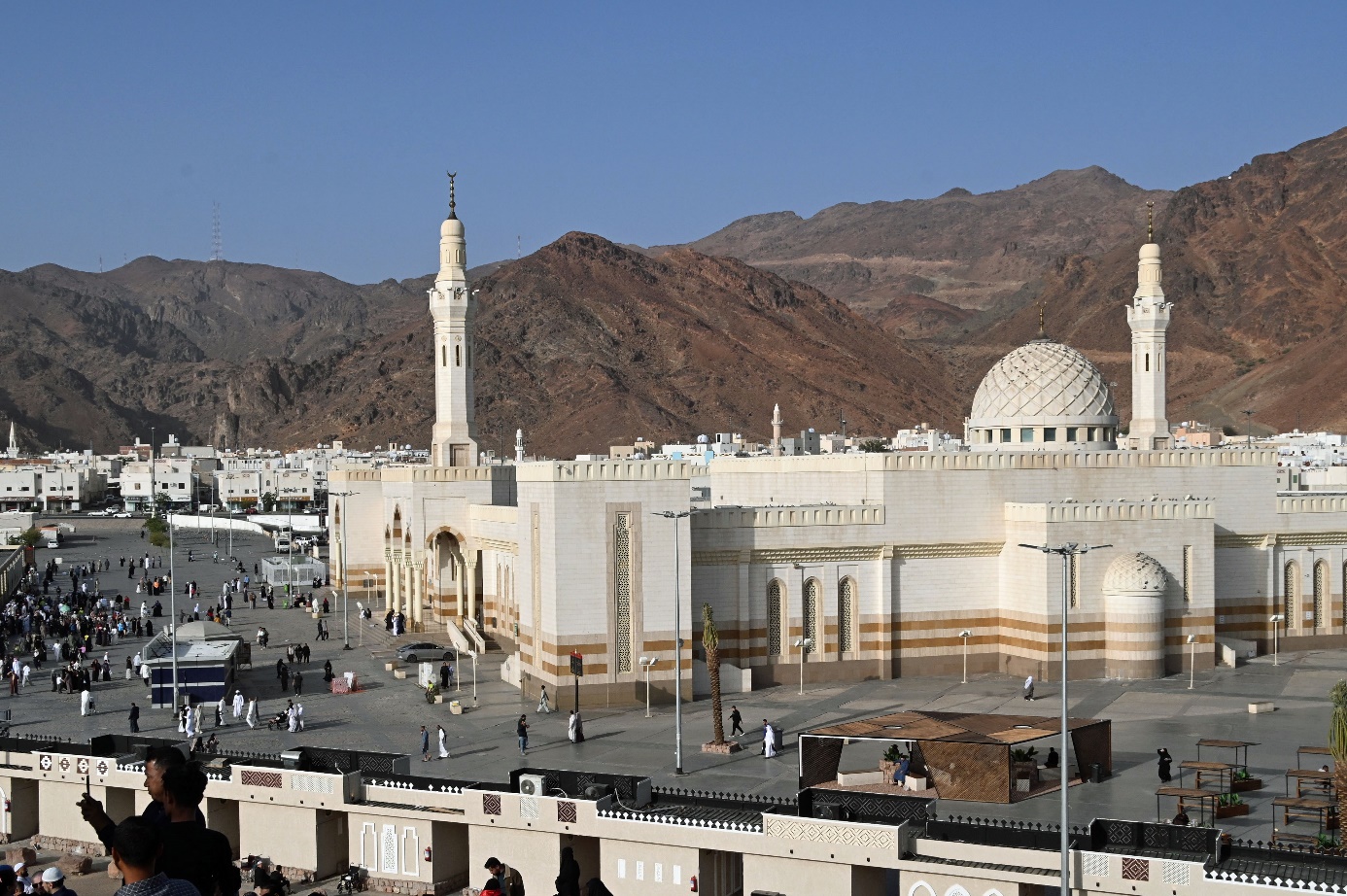
Sayed al Shuhada Mosque
Those who wish can buy a full crate of bottles of water in the square. It costs 20 riyals (5 euro or 5.33 USD), but that does not mean you become the owner of the bottles. Instead, they are distributed to the poor in your name, thereby allowing you to fulfil your obligation of almsgiving – one of the five pillars of Islam.
We too climb the Hill of the Archers. It is crowded and difficult to negotiate the steep rocky slopes, but that does not prevent a handful of enterprising vendors from spreading their blankets over the rocks and promoting their wares.
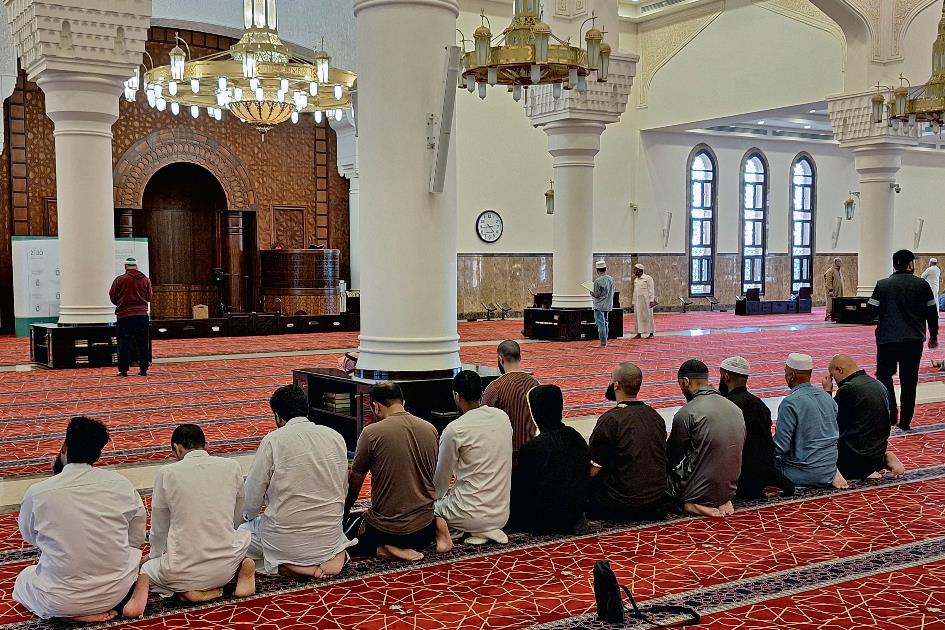
Sayed al Shuhada Mosque
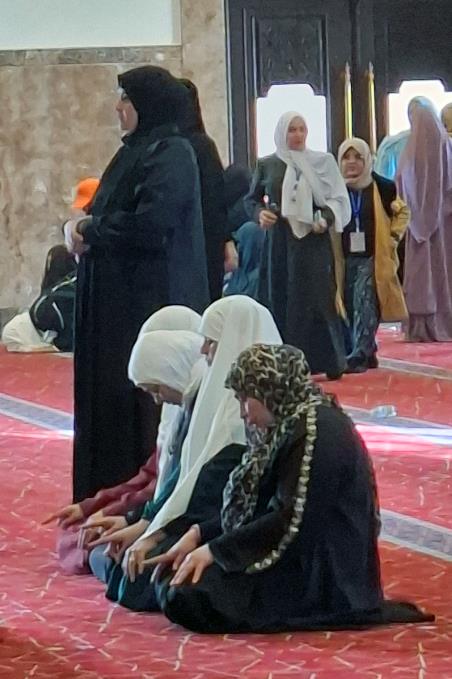
We then make our way to the adjacent Sayed al Shuhada Mosque. In its present form, it dates only from 2017. It can accommodate fifteen thousand worshippers. What is more, Roula emphasises that the area reserved for women is approximately the same size as that for men – something that is indeed not often seen.
Mihrab |
|
Women’s section |
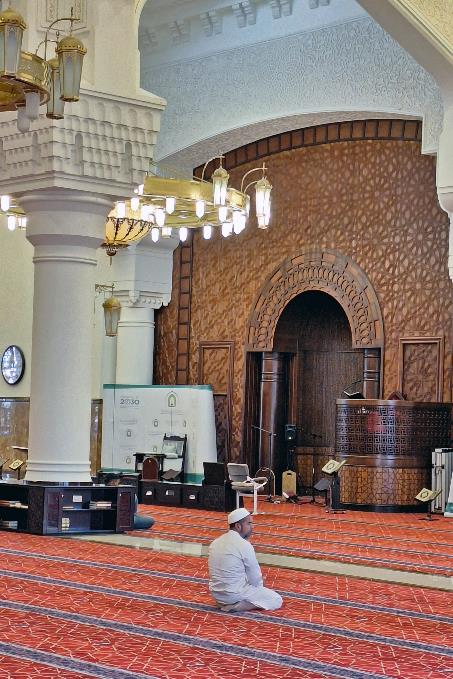
Shuruq, the second entry on the display, turns out to be an optional prayer – yet another opportunity for those who wish to do a little extra
Prescribed prayer times |
|
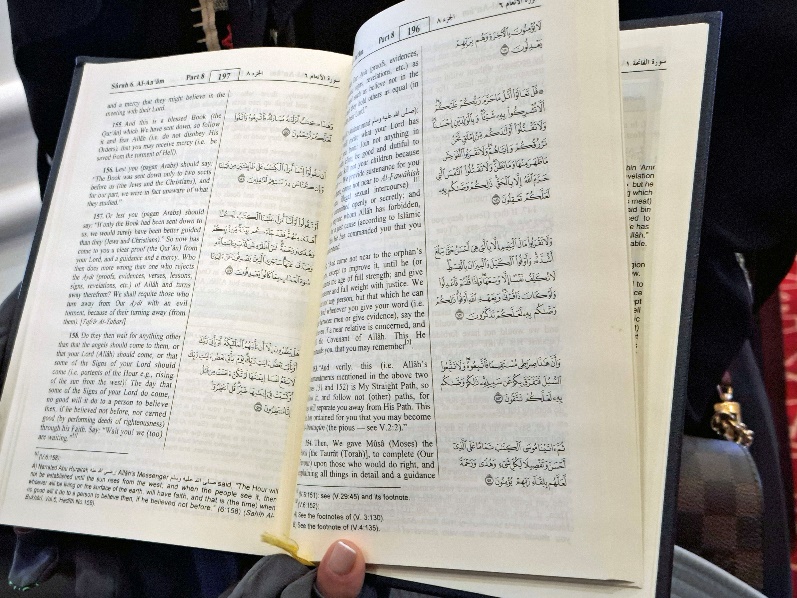
The Quran, Surah 6: The Cattle |
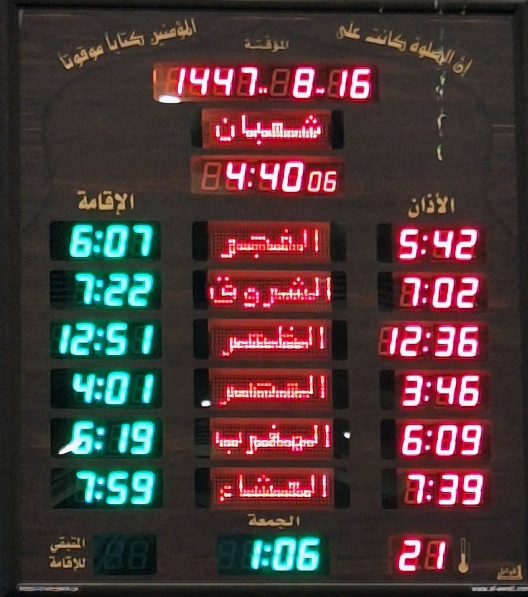
The interior of the mosque is simple and rather austere. Around fifty men are engaged in ritual prayer. Mounted on the wall is a digital display showing the prayer times – in red, the time of the adhan, the muezzin's call to prayer; in green, the start of the prayer itself. We cannot help noticing, however, that six prayer times are listed instead of the prescribed five. Shuruq, the second entry on the display, turns out to be an optional prayer – yet another opportunity for those who wish to do a little extra.
Quran school
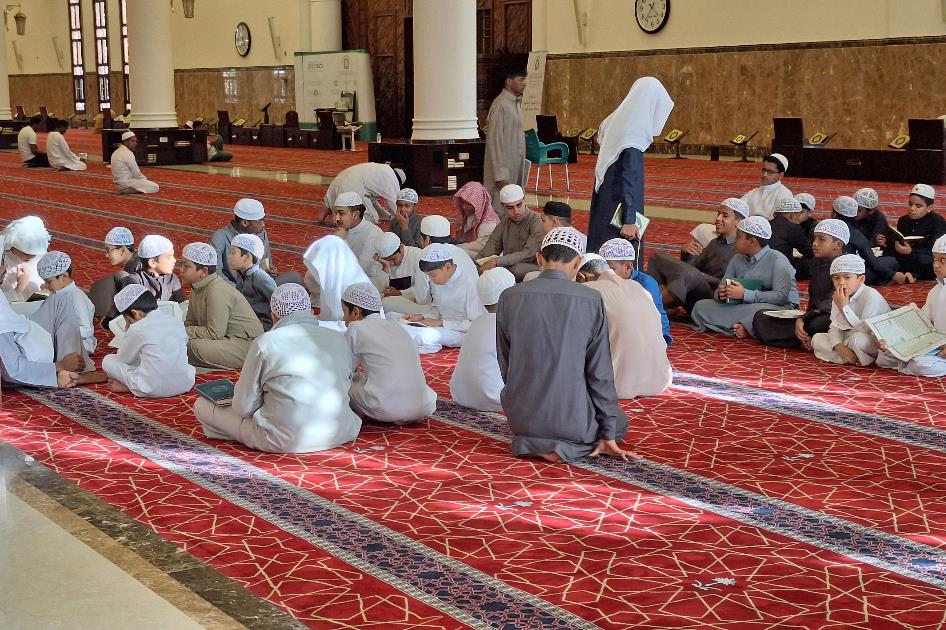
Apparently, there is also a small Quran school operating here. Wearing a taqiyah – the round white cap traditionally worn by Muslim men – around thirty boys are sitting studying the Quran. Or at least pretending to.
Shortly after five, we head into the city centre, more specifically to the Prophet's Mosque, where Muhammad is buried. As we drive south along the broad King Fahd Road, Roula points out that these neighbourhoods are packed with inexpensive hotels catering for less affluent pilgrims – hotels with three, two, one, or even no stars, she adds. In the immediate vicinity of the Prophet's Mosque, inside the King Faisal Ring Road, by contrast, you will find exclusively four- and five-star hotels.
We have no doubt that accommodating millions of pilgrims has become a lucrative multi-billion dollar industry
Medina – Hotels for pilgrims |
|
|
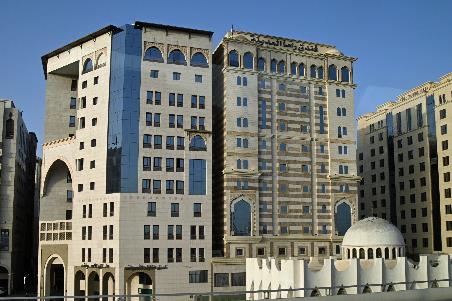
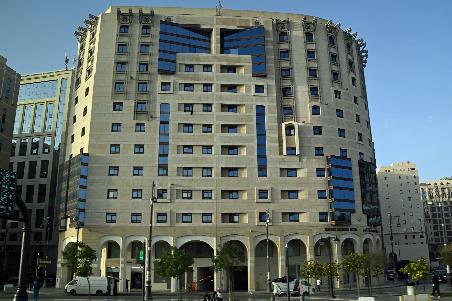
From the ring road, we can only agree. The buildings we see sliding past on our left defy imagination. We have no doubt whatsoever that the pilgrims' religious devotion is genuine and deeply felt. But we are equally certain that accommodating millions of pilgrims has become a lucrative, multi-billion-dollar industry.
Every Muslim who is physically and financially able to do so is required to undertake the Hajj, the pilgrimage to Mecca, at least once in their lifetime. To do this, one must first register with one's own national government. Every country with a Muslim population is assigned an annual quota by Saudi Arabia, a number that determines how many pilgrims from that country are permitted to take part during that year.
Many pilgrims take bottles of the holy water home with them or immerse in it the garments in which they wish… to be buried
Registration is free, but the travel costs obviously are not. Normally, pilgrims purchase a travel package from one of the many providers. This week, for example, it is mainly pilgrims from Iraq who are visiting Medina, whereas last week they came predominantly from Iran and Turkey. This depends on local circumstances in the country of origin, such as the applicable holiday arrangements.
The Hajj itself consists of nine obligatory rites. One of these is walking seven times anticlockwise around the Kaaba. Another is running seven times back and forth between Al Safa and Al Marwah in remembrance of Hagar, Abraham's wife. In the burning heat, she searched desperately for water for her son Ishmael until the Archangel Gabriel intervened and caused the sacred Zamzam Well to spring forth beside the Kaaba. Visiting the well is therefore an essential part of the pilgrimage. Many pilgrims take bottles of the holy water home with them or immerse in it the garments in which they wish to be buried.
In 2004, the columns were replaced by walls. This way, at least, the pilgrims could no longer stone each other
Another ritual is the stoning of the Devil. Pilgrims throw seven pebbles at the largest jamrah, a pillar representing the Great Devil. They then shave their heads or cut their hair very short. The following day, they throw another seven pebbles at each of the three pillars representing the lesser devils. Because this ritual proved rather dangerous in practice, the pillars were replaced by walls in 2004. This way, at least, the pilgrims could no longer stone each other.
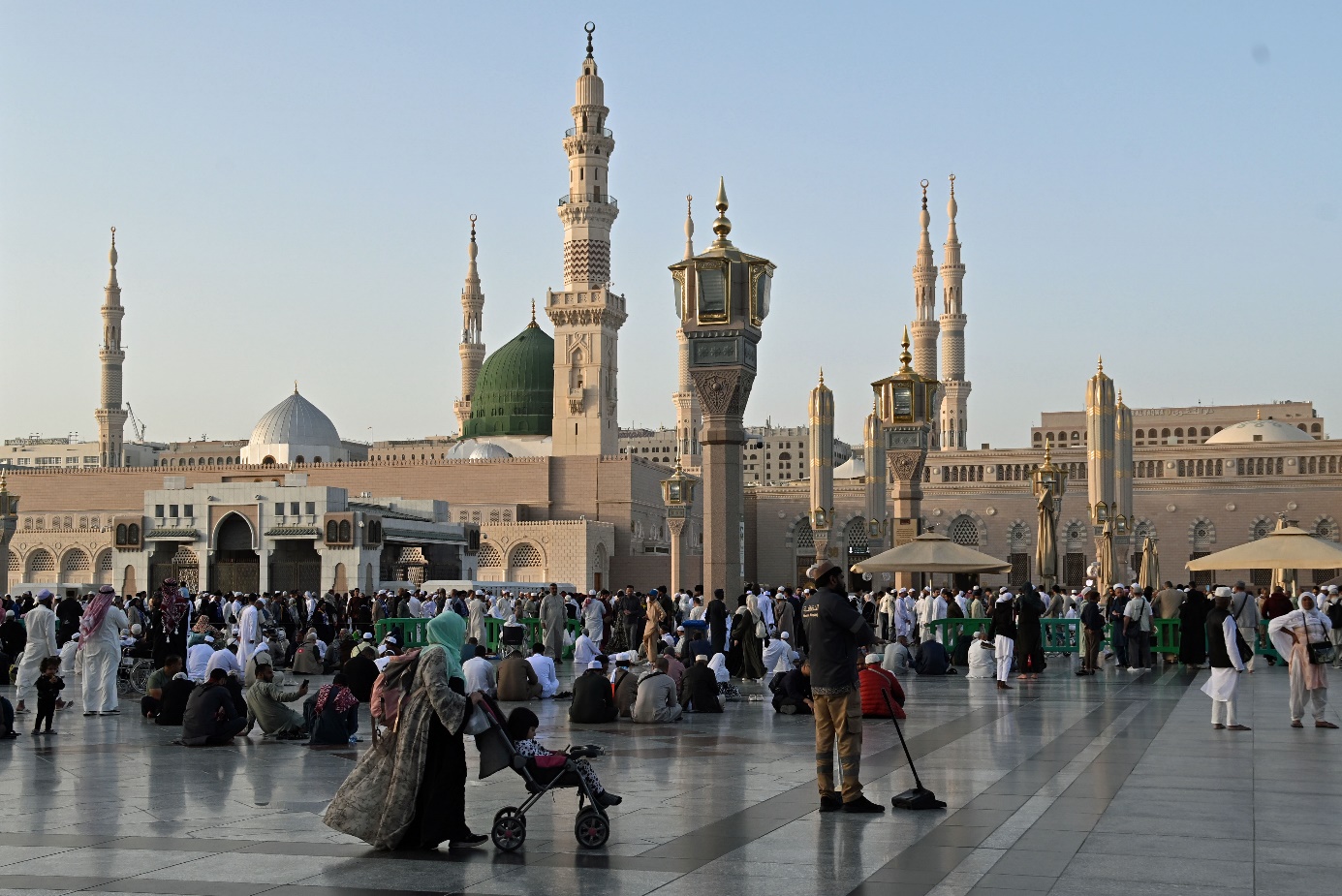
Medina – The Prophet’s Mosque
By now we have arrived near the Prophet's Mosque. Around the mosque, separate approach zones have been designated for pilgrims from different parts of the world. We happen to be in the zone assigned to pilgrims from Malaysia and Indonesia. According to Roula, this system allows people to help one another more easily should problems arise, since they share the same language and customs. It seems more likely to us, however, that the real purpose is to keep groups of pilgrims who do not always get along at a respectful distance from one another.
In Medina, by contrast, Al-Haram is confined to the grounds of the Prophet's Mosque. Non-Muslims like ourselves are therefore free to walk around the city
In Mecca, Al-Haram, the sacred precinct surrounding the Kaaba, extends for between eight and fifteen kilometres (5 to 9 miles) beyond the city. That was why we had to make such a wide detour around Mecca. In Medina, by contrast, Al-Haram is confined to the grounds of the Prophet's Mosque. Non-Muslims like ourselves are therefore free to walk around the city and even approach the enclosure surrounding the second holiest site in Islam. Only the mosque precinct itself is off limits to us.
The mosque owes its popularity in part to the belief that a prayer offered here earns the same spiritual reward as a thousand prayers performed elsewhere
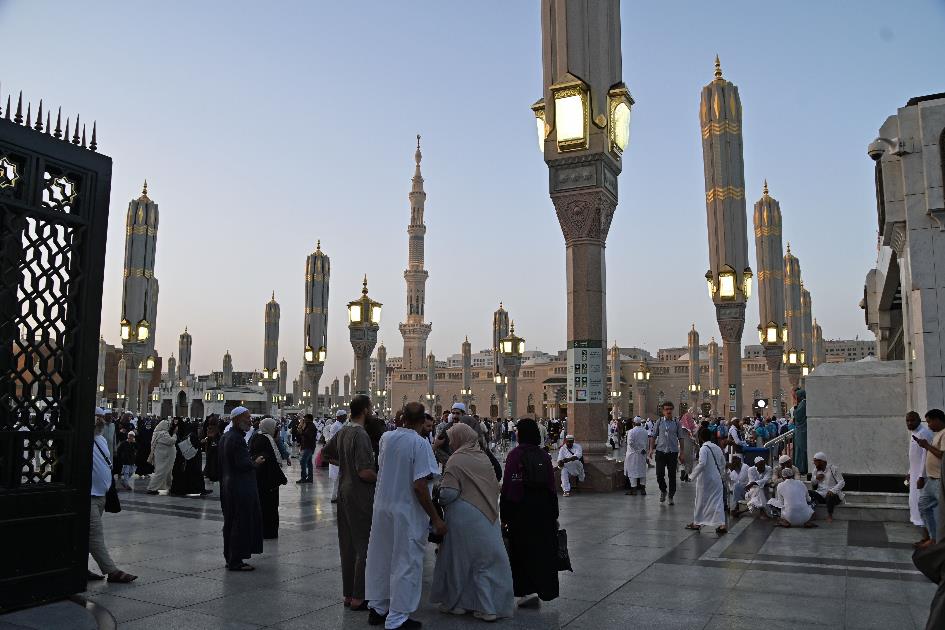
Medina – The Prophet’s Mosque
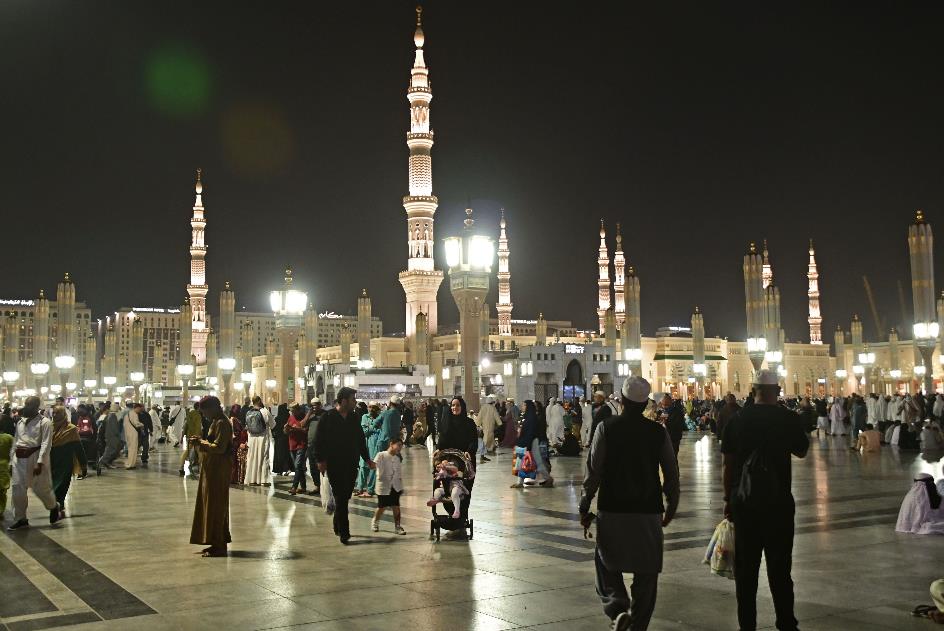
The square surrounding the mosque is bustling – at least by our standards. People stroll about, sit on the ground in small groups, or simply stand watching the scene unfold. Roula, however, describes this as a quiet evening. The mosque owes its popularity in part to the belief that a prayer offered here earns the same spiritual reward as a thousand prayers performed elsewhere. Only the Great Mosque in Mecca surpasses it, where a single prayer is said to be worth one hundred thousand prayers offered in any other mosque.
Nowadays the Great Mosque can accommodate 700,000 worshippers, and if the surrounding square is included, the total capacity rises to 1.7 million
Over the past century, successive Saudi kings have found themselves compelled to expand the complex again and again. The famous Al-Baqi Cemetery once lay just outside the city, whereas today it adjoins the mosque itself. The mosque has simply absorbed some ninety per cent of the old city. It can now accommodate 700,000 worshippers, and if the surrounding square is included, the total capacity rises to 1.7 million. By comparison, St Peter's Basilica in Rome can hold around 60,000 worshippers, while St Peter's Square accommodates a further 80,000.
The occupancy of the mosque is monitored continuously by a digital system. Above every gate, a green or red signal indicates whether pilgrims are currently permitted to enter. A devout Muslim enters the mosque with the right foot first while reciting: O Allah, open for me the gates of Your mercy.
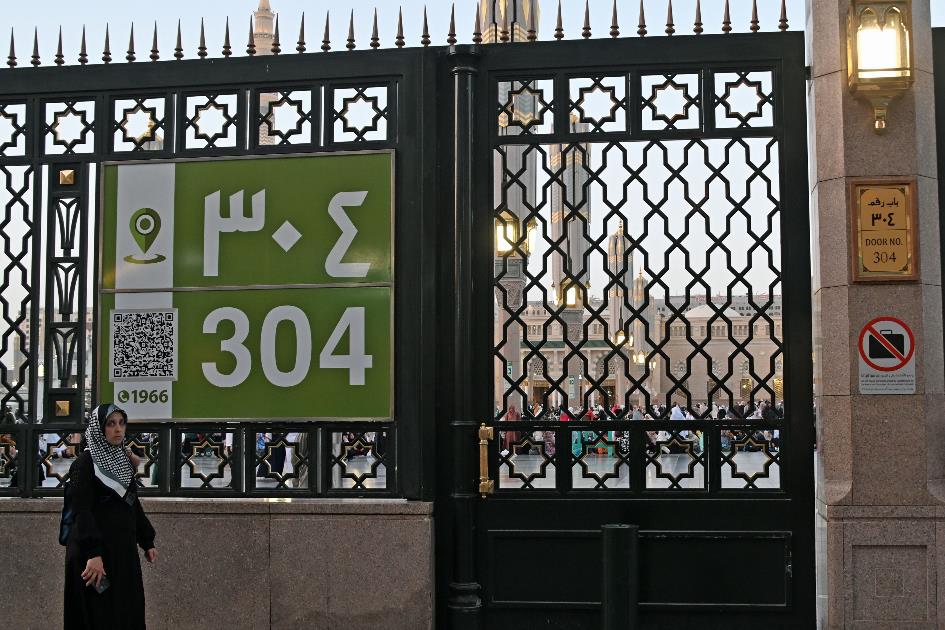
Here we are, standing at the threshold of Gate 304. The warm evening sun casts a gentle glow over the mosque. Although the true scale of this immense complex can really only be appreciated from the air, we are deeply impressed by its monumental character even from here.
Since 1279 the Green Dome has marked the place where Muhammad once lived and died, and where he is now buried
Clearly visible is the famous Green Dome. Since 1279 it has marked the place where Muhammad once lived and died, and where he is now buried. Care was taken, however, to position his tomb in a corner on the edge of the mosque so that it could not become an object of veneration. It was only in 1837 that the wooden dome, clad in lead sheets, acquired its present colour – green, the colour traditionally associated with Islam. A second, silver-coloured dome marks the place where Muhammad is believed to have preached.
The Prophet’s Mosque |
|
|
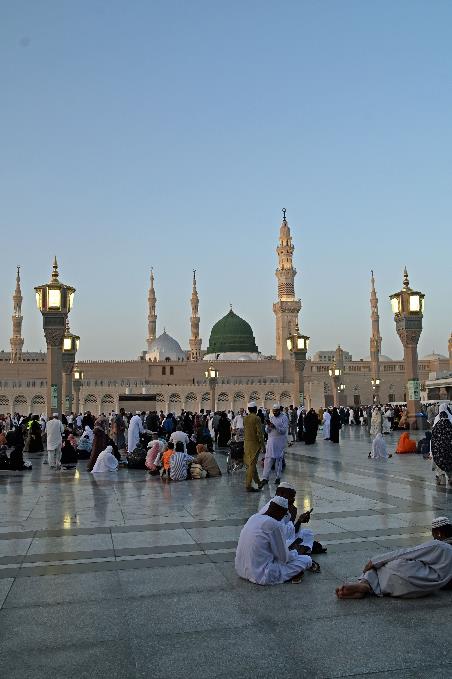
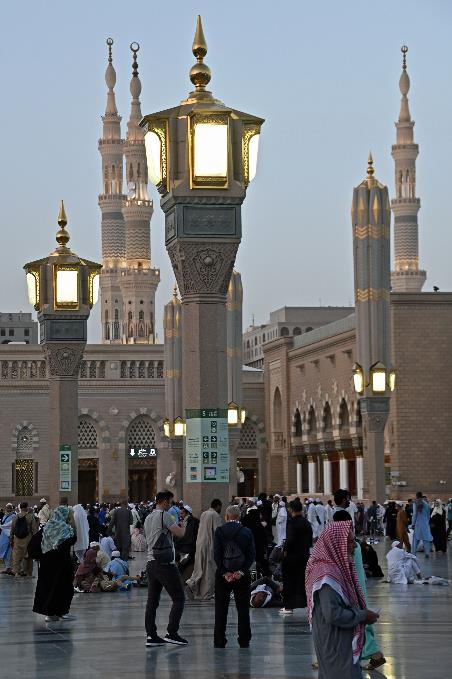
In 1992, King Fahd commissioned the installation of another twenty-seven domes on the mosque's roof. We cannot see them from here, but they are marvels of modern engineering, Roula assures us. In barely a minute, these massive structures can slide open completely, allowing daylight to flood the otherwise dimly lit mosque. They are the work of the German Muslim architect Mahmoud Bodo Rasch.
Once one of these giant canopies unfolds gracefully like a flower, it can provide cooling shade for as many as six hundred pilgrims
Far more conspicuous are the ten slender minarets rising gracefully above the mosque. The six newest are no less than 104 metres high and each is crowned with a gilded crescent weighing four tonnes. Above all, however, it is the forest of giant umbrellas that captures the eye. There are 286 of them, providing the life-saving shade that blankets the courtyard whenever the sun stands high in the sky and temperatures easily climb above 40°C (104°F).
The umbrellas designed by Mahmoud Bodo Rasch |
|
|
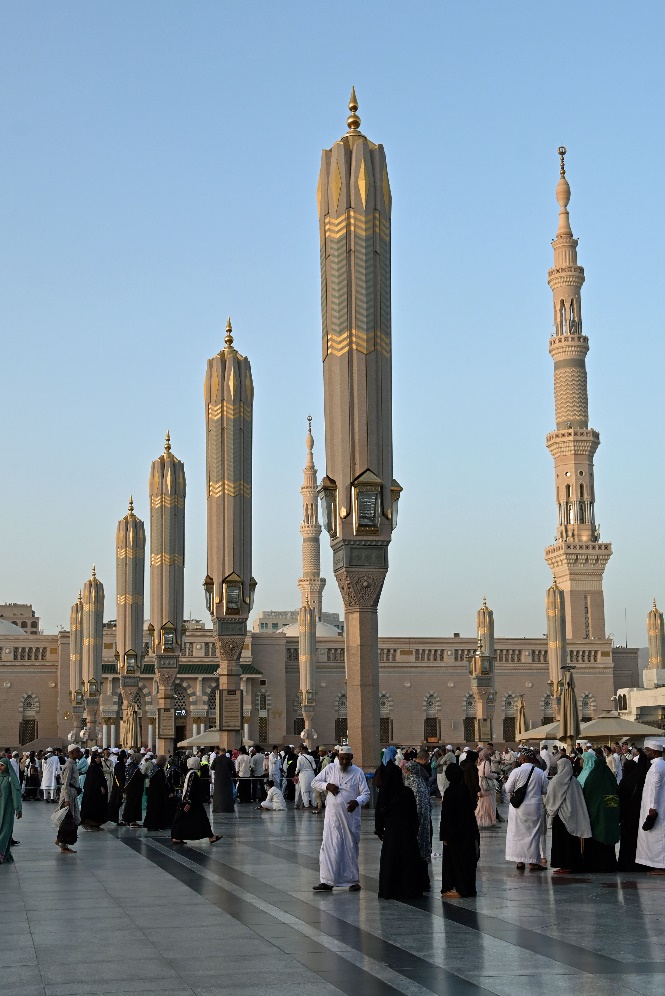
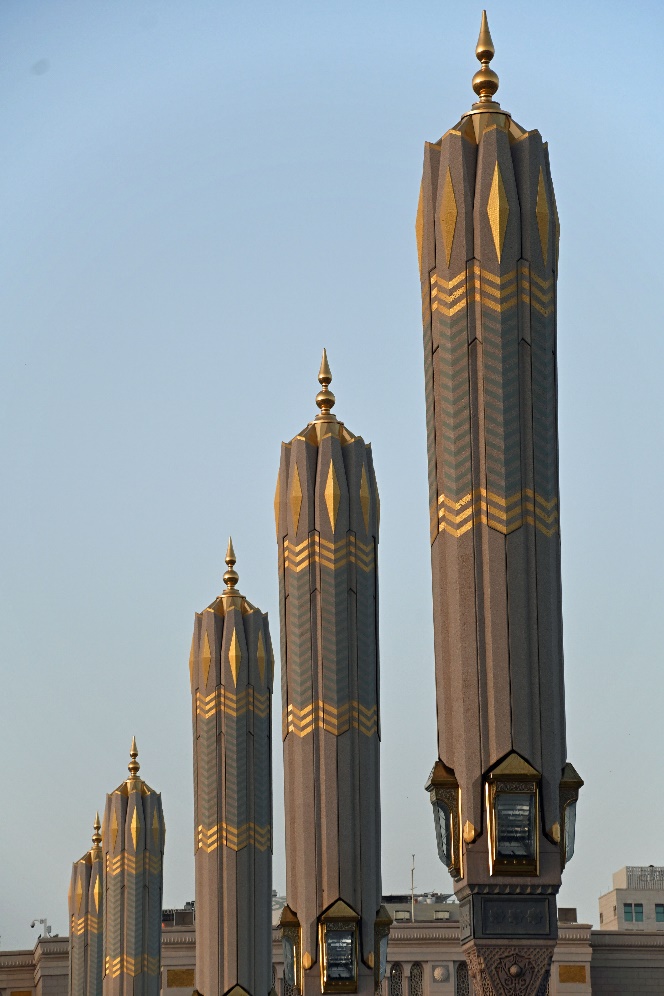
It was the same Mahmoud Bodo Rasch who designed and installed these spectacular umbrellas in 1992. At a cost of one million dollars each, they are masterpieces of understated elegance, much like the minarets themselves. Sensors built into every umbrella automatically monitor temperature, humidity and wind speed. Heat, rain and intense ultraviolet radiation pose no problem for them. At first glance they seem rather superfluous now, but once one of these giant canopies unfolds gracefully like a flower, it can provide cooling shade for as many as six hundred pilgrims.
Due to the noise of the roaring engines, the air conditioning was installed about six kilometres away. The cooling water is transported to the mosque via a pipe system
Yet umbrellas alone were evidently not enough to provide adequate relief from the heat – or so King Fahd must have thought. He therefore had an air-conditioning system installed as well. That is no simple matter in a building of this size. Moreover, the noise of the machinery might distract pilgrims from their prayers. For that reason, the plant was housed in a separate building some six kilometres away (3.7 miles). Chilled water is then piped from there to the mosque.
They are delicious little delicacies: dates from which the stone has been removed before they are coated in chocolate
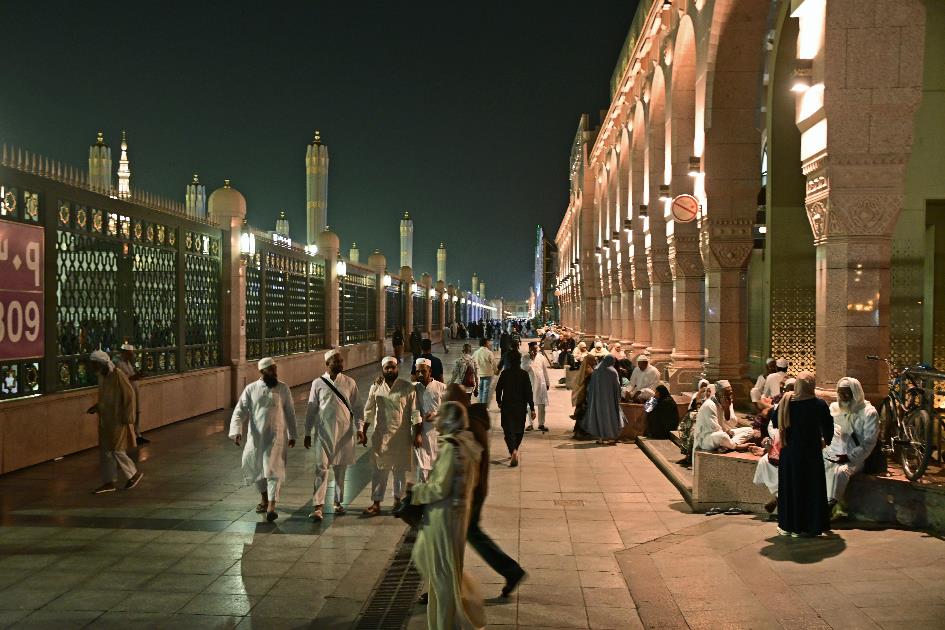
The enclosure surrounding Al-Haram
For the time being, the doors of the Museum of the Prophet's Biography remain closed, as Maghrib, the fourth of the five daily prayers, has not yet been completed. Meanwhile, we enjoy the chocolate-covered dates with which Roula treats us. They are delicious little delicacies: dates from which the stone has been removed before they are coated in chocolate. Other varieties, filled with nuts or dried apricots, for example, are available as well.
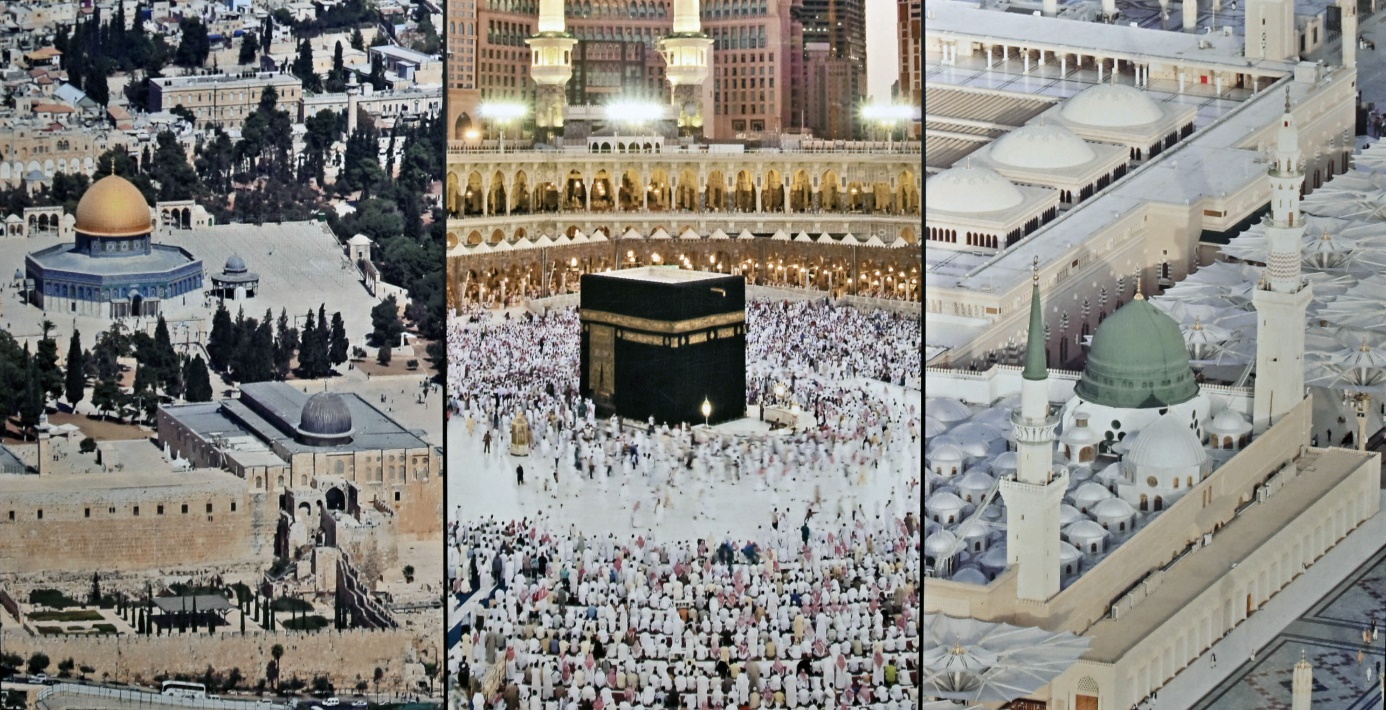
Museum of the Prophet's Biography – The three holiest sites in Islam (Al Aqsa Mosque in Jerusalem, the Kaaba in Mecca, the Prophet's Mosque in Medina)
Shortly after half past six, the museum doors finally open. We would have preferred to explore the museum on our own, but one of the guides insists on personally leading us through the principal stages in the mosque's architectural history. It is a little tiring, admittedly, because every time he mentions the Prophet, he adds the honorific Peace Be Upon Him. And in a museum devoted to the Prophet, that happens rather frequently.
Particularly striking is the mosque's growth: from 16,000 m² in the reign of King Abdulaziz, to 45,000 m² under King Faisal, and finally to its present area of 400,000 m²
An impressive timeline now unfolds before us, tracing the mosque's history from the Quba Mosque, which Muhammad himself built from the trunks and leaves of date palms, to the sophisticated innovations introduced by King Fahd. The first mihrab, we learn, was not installed until eighty-eight years after Muhammad's death. The Byzantines introduced the domes, while the Mamluks shaped the distinctive style of the minarets. Particularly striking is the mosque's extraordinary growth: from 16,000 square metres (172 200 ft²) in the reign of King Abdulaziz, the founder of Saudi Arabia, to 45,000 square metres (484 400 ft²) under King Faisal, and finally to its present area of 400,000 square metres (4.3 million ft²).
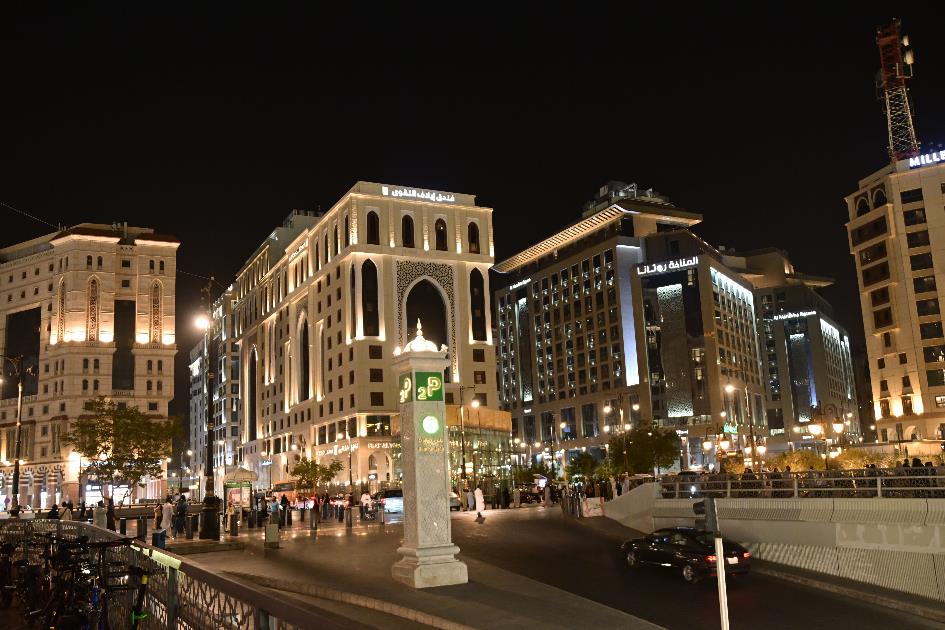
By now darkness has fallen over the city – but not over the mosque. There, thousands of lights built into the minarets and the giant umbrellas create the impression that it is still broad daylight. One could almost read a newspaper by their light. The square is just as busy as it has been throughout the day. People stroll, chat, sit, stand, or simply look around. In short, they come to this sacred place not only to pray, but also simply to be here, because it gives them a sense of peace.
Thursday 5 February | Medina – Al Buwayr
A breakfast room full of pilgrims dressed in ihram is exactly what you would expect in a hotel in a holy city such as Medina. Not even any abayas here. Instead, all the women wear a niqab with a face veil that leaves only the eyes uncovered. Every time they take a bite, they have to lift the veil. Here and there, six of them sit together at a single table: six anonymous figures dressed in black. Individual identity seems almost to have disappeared; to us, at least, they appear virtually indistinguishable from one another.
According to Sunni tradition, the female body is a source of fitna – social discord or temptation
The fact that women in Saudi Arabia have gradually acquired more rights does not alter the reality that they still occupy a subordinate position in public life. According to Sunni tradition, the female body is a source of fitna – social discord or temptation – and must therefore be carefully restrained. It is no coincidence that one chapter of the Qur'an, Surah An Nisa ('The Women'), is devoted largely to matters concerning women. It is said that during the second half of the twentieth century, religious scholars issued no fewer than thirty thousand fatwas dealing with women. Women must indeed be extraordinarily dangerous creatures.
At the beginning of the twentieth century, the Ottomans still ruled this region, but their grip was weakening as the First World War unfolded. Not only were the French and the British putting them under increasing military pressure, but Arab nationalists also sensed an opportunity. In 1916, the Arab Revolt broke out. The peoples of the Arabian Peninsula wanted to take their future into their own hands.
One of the key figures in this guerrilla campaign was the enigmatic Briton T. E. Lawrence. Under his guidance, among others, the Arab rebels carried out a series of highly successful sabotage attacks against an important railway line. We first learned about those events more than half a century ago – not at school, but in the cinema, where we were captivated by Lawrence of Arabia, David Lean's epic masterpiece of 1962.
In 1916, the Arab Revolt broke out. The peoples of the Arabian Peninsula wanted to take their future into their own hands
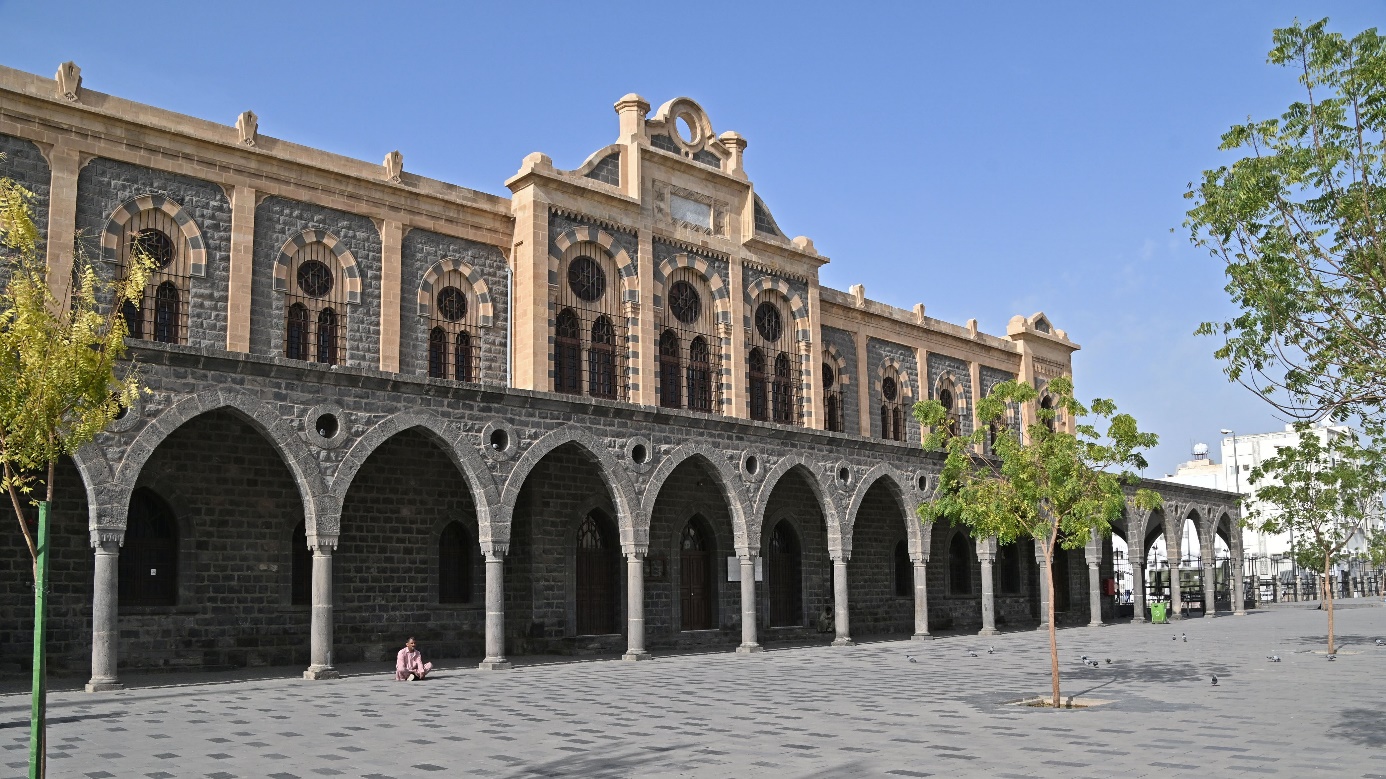
Medina – Terminus of the Hejaz Railway
The railway in question was the Hejaz Railway, a 1,332-kilometre narrow-gauge line linking Damascus with Medina. Construction began in 1900, and by 1908 this colossal undertaking had already been completed. The finishing, however, left something to be desired. As a European Christian, the German chief engineer, Heinrich Meissner, was not permitted to work south of Al Ula, a town some three hundred kilometres (186 miles) north of Medina. As a result, he remained unaware that, under considerable time pressure, basic procedures such as laying the track and applying the ballast were often carried out rather carelessly.
Officially, the purpose of the railway was to enable pilgrims from across the Middle East to reach Medina in just five days instead of spending forty days on camelback. That, at least, was the stated objective. It was, of course, also highly convenient that the Ottoman sultan could now move his troops through this restless region far more rapidly. The Bedouins, on the other hand, viewed the arrival of this iron camel with dismay. They feared for their livelihood, convinced that the railway would make the traditional caravan trade obsolete.
Their fears proved unfounded, however, because despite its apparent promise, the railway was not destined for a long life. In 1924, the last train completed the full journey between Damascus and Medina. One of the main reasons for its eventual demise was a chronic shortage of fuel. During the war, the authorities even went so far as to confiscate wooden furniture and structural timber from private homes simply to keep the locomotives running.
During the war, the authorities even went so far as to confiscate wooden furniture and structural timber from private homes simply to keep the locomotives running
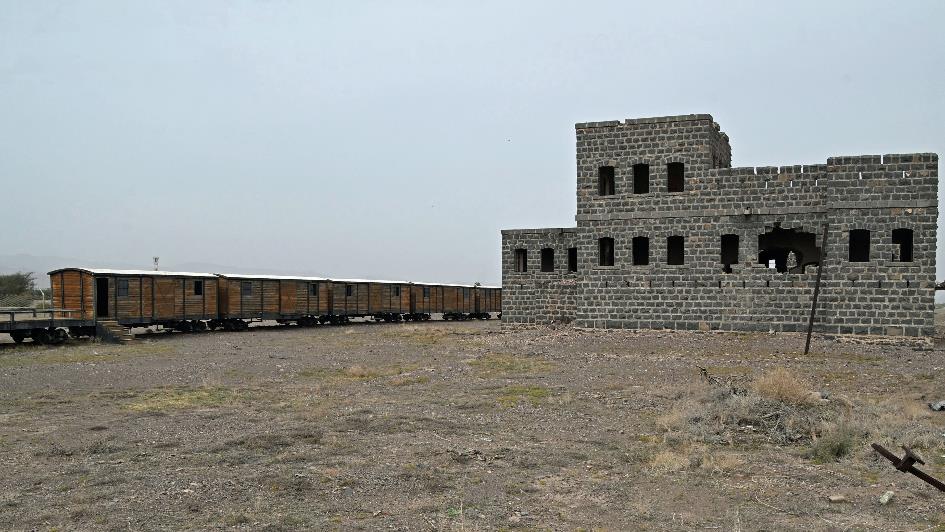
Al Buwayr – Intermediate station of the Hejaz Railway
The terminus in Medina, however, still stands today. It is located less than a kilometre (0.6 mile) from the Prophet's Mosque. When it was inaugurated on 1 September 1908, almost everyone believed that it would only be a matter of time before the railway was extended a further 340 kilometres (211 miles) south to Mecca. That hope, however, proved to be in vain. The local tribes successfully resisted the railway's advance.
It would be a shame to leave Medina without making a short detour to this historic landmark, especially as it was carefully restored in 2004. Meanwhile, we cannot help noticing that construction is taking place almost everywhere in the city, with hotels rising that are as grand and monumental as possible. Religious tourism is clearly booming in Medina – as, indeed, it is in Mecca.
The station's façade is built in a Neo-Classical style with characteristic Ottoman elements, including the seventeen decorative pointed arches on the ground floor and the alternating bands of light and dark stone forming the arches on the first floor. The station itself, however, together with its museum and its rolling stock, remains closed to visitors.
The Bedouins viewed the arrival of this iron camel with dismay
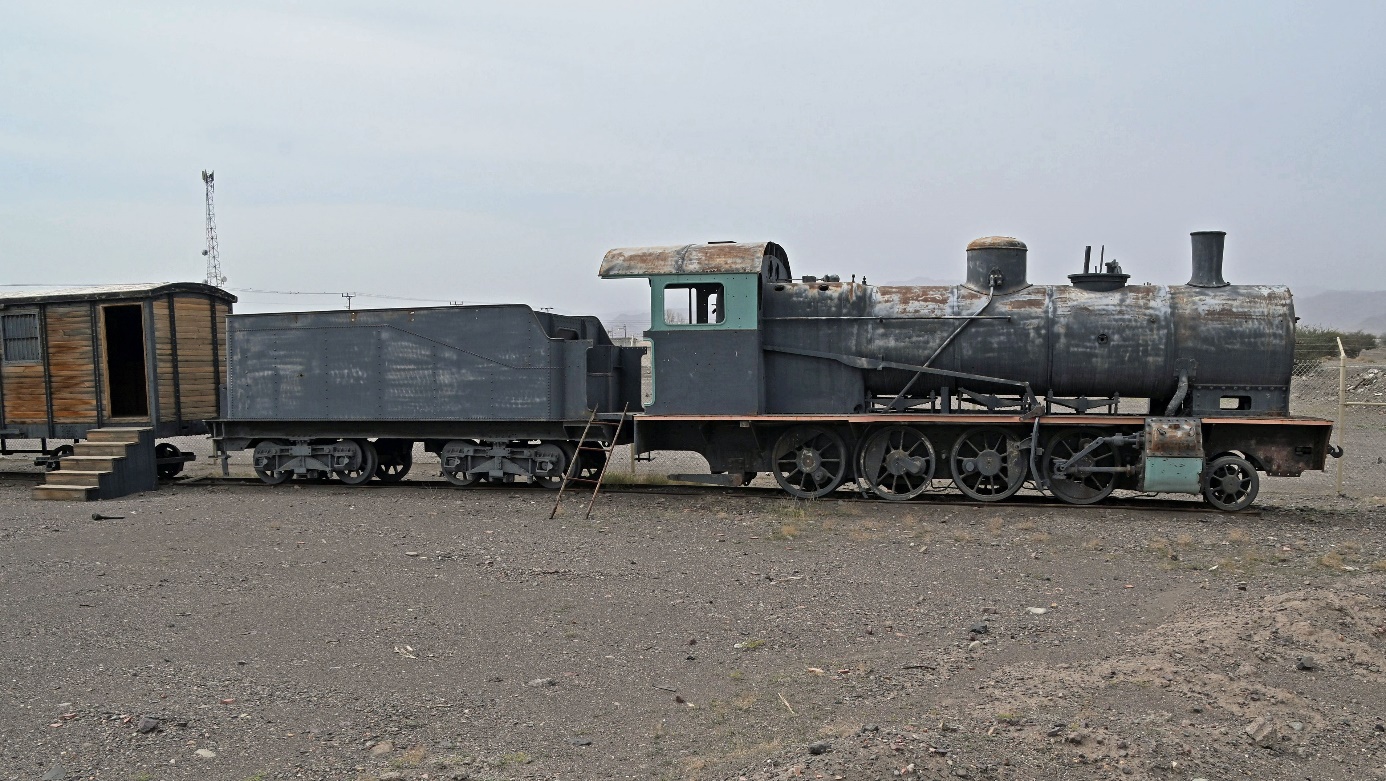
Al Buwayr – German-built Hartmann 2-8-0 steam locomotive with tender
If we want to see an authentic train, we shall have to look elsewhere. One such place is the fertile Wadi Al Hamd, amid its extensive date palm plantations. On our way to Al Ula, we make a brief stop at Al Buwayr railway station, just under a hundred kilometres (62 miles) north-west of Medina.
Unfortunately, the site is enclosed by a sturdy wire fence – understandably, perhaps, as protection against vandalism, but disappointing for visitors with an interest in railway history. From a distance we observe the two-storey station building, constructed of black basalt. The battlements and the modest tower reveal that it also served as a military post, housing some twenty-five soldiers charged with protecting this section of the railway. Most fascinating of all, however, is the partly restored train: a German-built Hartmann 2-8-0 steam locomotive with four wooden passenger coaches, two flat wagons, and, at the front, a tender carrying the locomotive's fuel and water supplies.
For the pilgrims of the time, the hazy silhouette of Jebel Antar was a sign that their exhausting journey to Medina was almost over
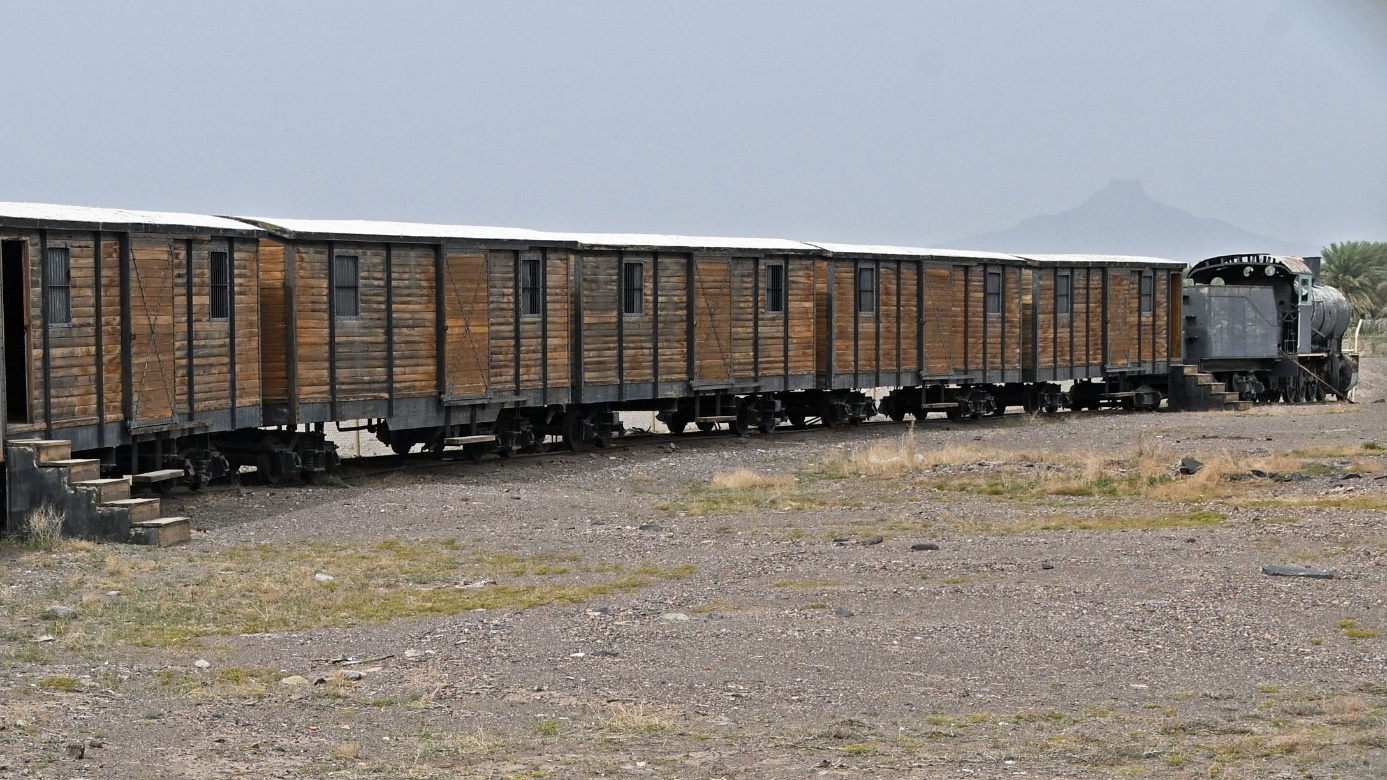
Train at Al Buwayr station, with the faint silhouette of Jebel Antar in the distance
In the distance we can just make out the hazy silhouette of Jebel Antar. To us it is merely another mountain, but for the pilgrims of the time the distinctive outline of its twin peaks came as a tremendous relief. It was the long-awaited sign that their arduous journey south was almost at an end.
By contrast, our journey north has only just begun.
Jaak Palmans
© 2026 | Version 2026-07-23 16:00
Continue reading in (4/7)
For her descendants forever
