The Kaaba might one day collapse
Saudi Arabia | Anno 2026
Sunday 1 February | Abu Dhabi – Jeddah
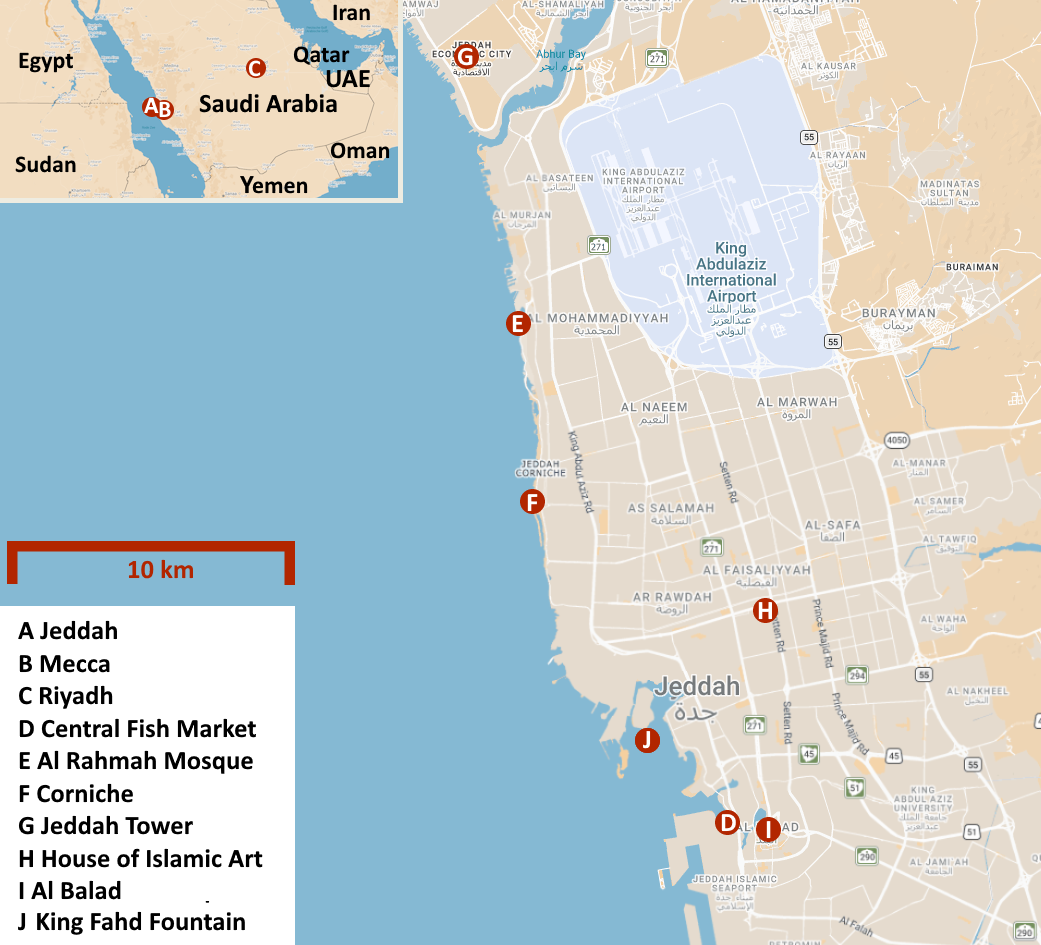
Sunday 1 February | Abu Dhabi – Jeddah
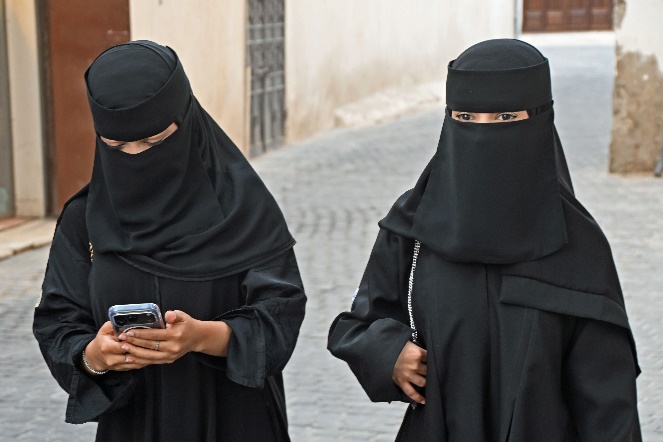
The contrast could scarcely be greater. More than three-quarters of the passengers are dressed in accordance with a tradition that stretches back over a thousand years: the men wear no more than two white cloths wrapped around their bodies, with sandals on their bare feet, while the women are concealed beneath loose black abayas, or even niqabs with face veils. Yet at the very front of the aircraft, in the cockpit, two female pilots are at the controls. Even at most Western airlines, that remains a rarity.
Even at most Western airlines, that remains a rarity
We are flying from Abu Dhabi in the United Arab Emirates to Jeddah on the Red Sea. It is the commercial hub of Saudi Arabia, but above all by far the country's most important gateway to the holy cities of Mecca and Medina. It is therefore no surprise that flights to Jeddah are packed with pilgrims dressed in traditional attire. The days when pilgrims had to trudge across the desert sands to reach Mecca are long gone.
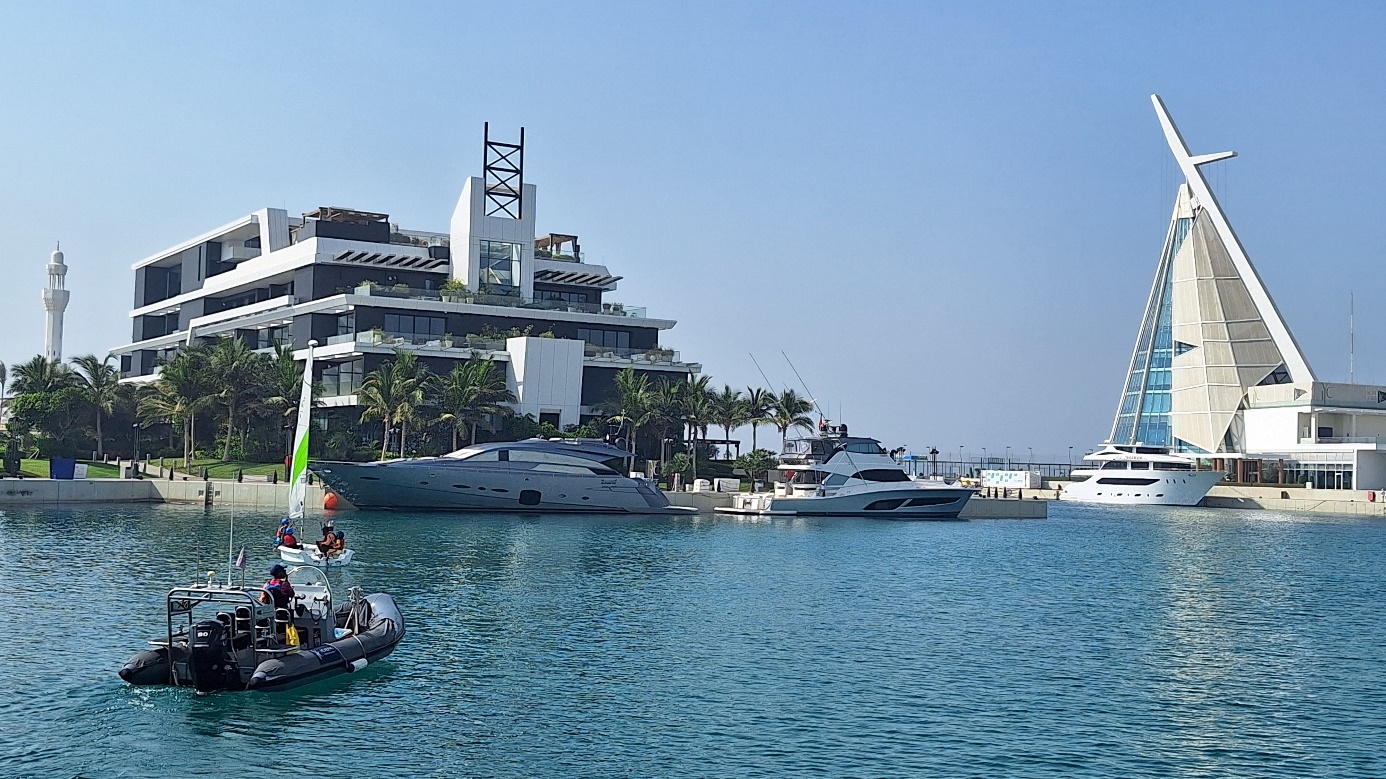
Jeddah – Marina
As the Etihad Airways Airbus A320 begins its descent towards King Abdulaziz International Airport in Jeddah, our thoughts once again turn to this controversial country and what we should expect from it. We are under no illusions about the regime's grim human rights record. Capital punishment is still carried out in Saudi Arabia, notably by beheading with a sword. In 2025 alone, 345 criminals were executed. Their offences ranged from murder, adultery, homosexuality and drug trafficking to insulting Allah or the King.
In October 2018, the world was shocked by the brutal murder of Jamal Khashoggi, a critical journalist who was lured to the Saudi consulate in Istanbul, where he was killed, dismembered and his remains smuggled out of the building. Democracy is non-existent in Saudi Arabia, as is a free press, and elections are unheard of. Power rests exclusively in the hands of men. Women are regarded as inferior beings and are kept out of public life as much as possible. Their role in society is largely confined to bearing and raising children.
Capital punishment is still carried out in Saudi Arabia, notably by beheading with a sword
And so we could go on. Yet there are also signs of change. Gradually, Saudi society is beginning to open up. Women are slowly assuming a more prominent role in society, although this appears to be driven more by economic necessity than by any genuine concern for human rights. Since 2016, the feared mutaween – the religious police – have no longer been permitted to detain people, read women, in the streets for violating the dress code. Since June 2018, Saudi Arabia's 15 million women have even been allowed to drive. At the same time, however, the very female activists who had campaigned for those rights were sentenced to lengthy prison terms.
The year 2019 marked the moment when this country of contradictions finally opened its doors to international tourists. Admittedly, the COVID-19 pandemic immediately put paid to those ambitions, but tourism has since begun to gather momentum, albeit cautiously.
Those changes do come with a dress code, but we are well prepared for it. Western women are best advised to leave jeans and other figure-hugging clothing at home. A long blouse reaching below the hips, by contrast, helps to conceal any alluring curves from the male gaze. If, moreover, she wears long sleeves and loose-fitting trousers reaching down to her ankles, her amorphous appearance is unlikely to attract much, if any, attention in the street. In the holy city of Medina, however, even that is not sufficient: there, women are also expected to wear a headscarf and an abaya.
For Western men, there are hardly any dress restrictions, provided they do not make the unfortunate mistake of appearing in public wearing Bermuda shorts or a sleeveless undershirt. Only in Medina are they required to wear long sleeves.
The biggest, the tallest, the longest, the fastest – in Saudi Arabia, nothing less will do. It is a theme we shall encounter time and again throughout our journey
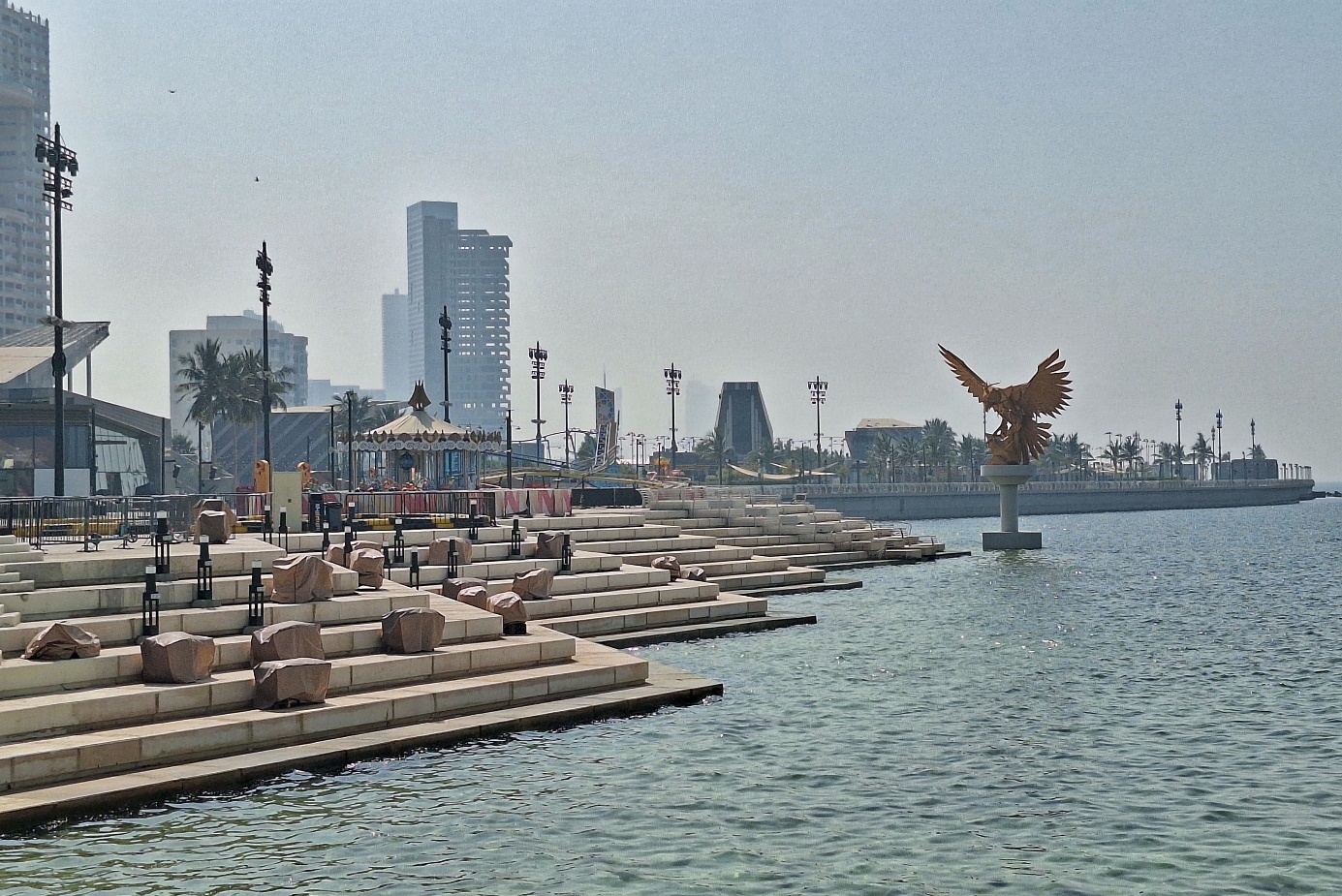
Jeddah – Corniche
It is almost midnight by the time we land in Jeddah. Our luggage seems to have been delivered by camel; such is the interminable wait at the baggage carousel. An hour later, we are finally making our way towards the exit. At this late hour, we pay little attention to the magnificent aquarium in the arrivals hall. Yet, standing 14 metres high and measuring 10 metres in diameter, it is the largest airport aquarium in the world. The biggest, the tallest, the longest, the fastest – in Saudi Arabia, nothing less will do. It is a theme we shall encounter time and again throughout our journey.
A little later, we meet our tour guide, Paul, and our driver, Moejahir. Together they will accompany us on our eleven-day journey through Saudi Arabia. The fact that our guide is from Lebanon and our driver from Sudan says something about the state of this country's fledgling tourism industry. Tomorrow's temperature, Paul tells us, will reach 30°C (86°F) – a pleasantly cool spring day, by Saudi standards.
Monday 2 februari | Jeddah
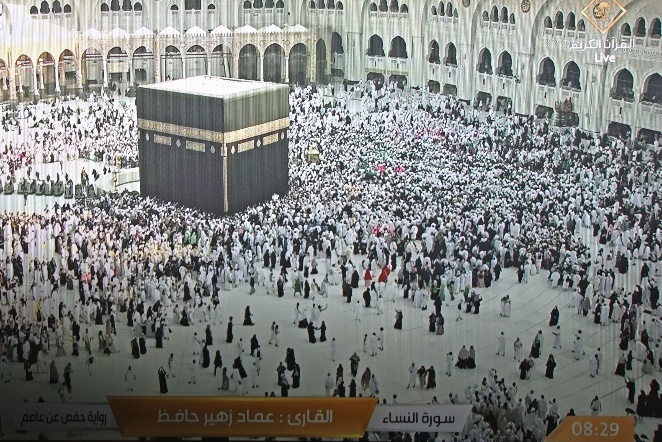
A quarter to six. The muezzin's call to prayer echoes across the rooftops. It is time for the first prayer of the day. Should we ever need it, an arrow on the ceiling of our room indicates the qibla, the direction of Mecca. Alternatively, we can tune in to one of the television channels broadcasting live, around the clock, from Al-Masjid al-Haram in Mecca, where pilgrims circle the famous Kaaba.
Still from the live broadcast of the pilgrims in the Al-Masjid al-Haram in Mecca |
|
|
The breakfast buffet offers everything one could wish for in a Western-style breakfast, including eggs and bacon – beef bacon, of course.
Paul and Moejahir are waiting to take us on our exploration of Jeddah, and we are also joined by Kholood, who was born and raised in the city. She will be our guide today. She is wearing an abaya, the loose outer garment that covers the entire body except for the face, hands and feet. The vast majority of abayas seen on the streets are plain black, but Kholood has opted for a mauve one. So a bit frivolous, but we can handle that.
In 647, Caliph Uthman ibn Affan conceived the idea of expanding the existing fishing harbour into a gateway for pilgrims travelling to the holy cities
Of all the cities in Saudi Arabia, Jeddah is undoubtedly the best place for a first introduction to the country. As a port city with a population of 3.8 million, it has a distinctly cosmopolitan character. It is the Kingdom's most progressive city, where social changes often emerge first. Its population is remarkably diverse, ranging from sailors calling at the port to descendants of pilgrims from all over the world who chose to settle here. As the Saudis themselves say, Jeddah Ghair – Jeddah is different.
Jeddah owes its rise as Saudi Arabia's principal port above all to Caliph Uthman ibn Affan. In 647, barely fifteen years after the death of the Prophet Muhammad, he conceived the idea of expanding the existing fishing harbour into a gateway for pilgrims travelling to the holy cities of Mecca and Medina. Today, however, the airport has overtaken the seaport as the country's main point of entry. In 2025, it handled a record-breaking 53.4 million passengers – almost 150,000 every single day.
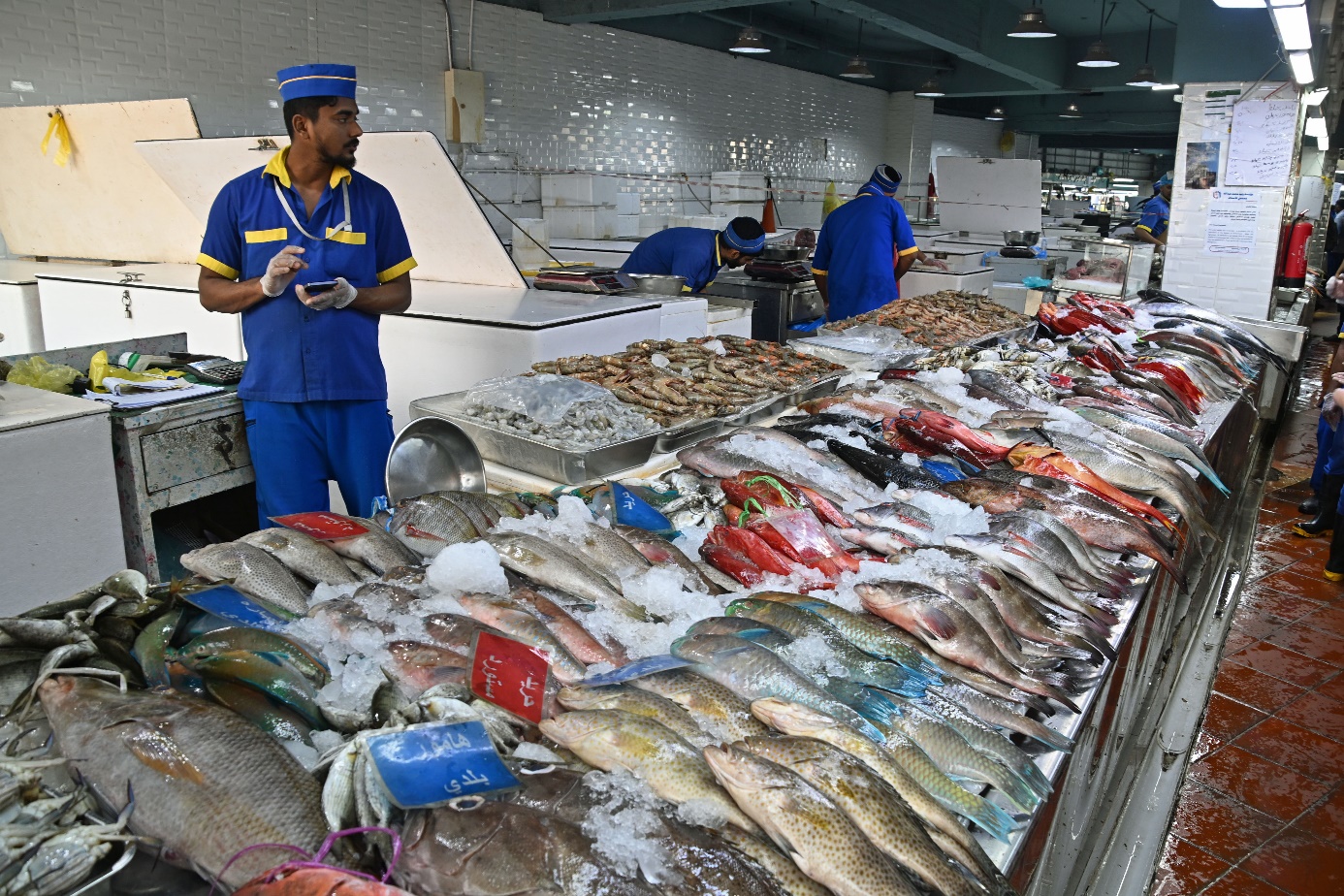
Jeddah – Central Fish Market
On our way to the fish market, Kholood points out Oasis Mall, Jeddah's oldest shopping centre. When it opened in the late 1990s, it immediately became hugely popular. It is worth remembering that, during the sweltering summer months, air-conditioned shopping centres have a very obvious appeal.
After a period of decline followed by extensive renovation, Oasis Mall was given a new lease of life as a centre for the gold and jewellery trade. It remains one of the city's best-known landmarks, and thanks to its distinctive architecture, it still holds its own against Jeddah's more modern shopping centres.
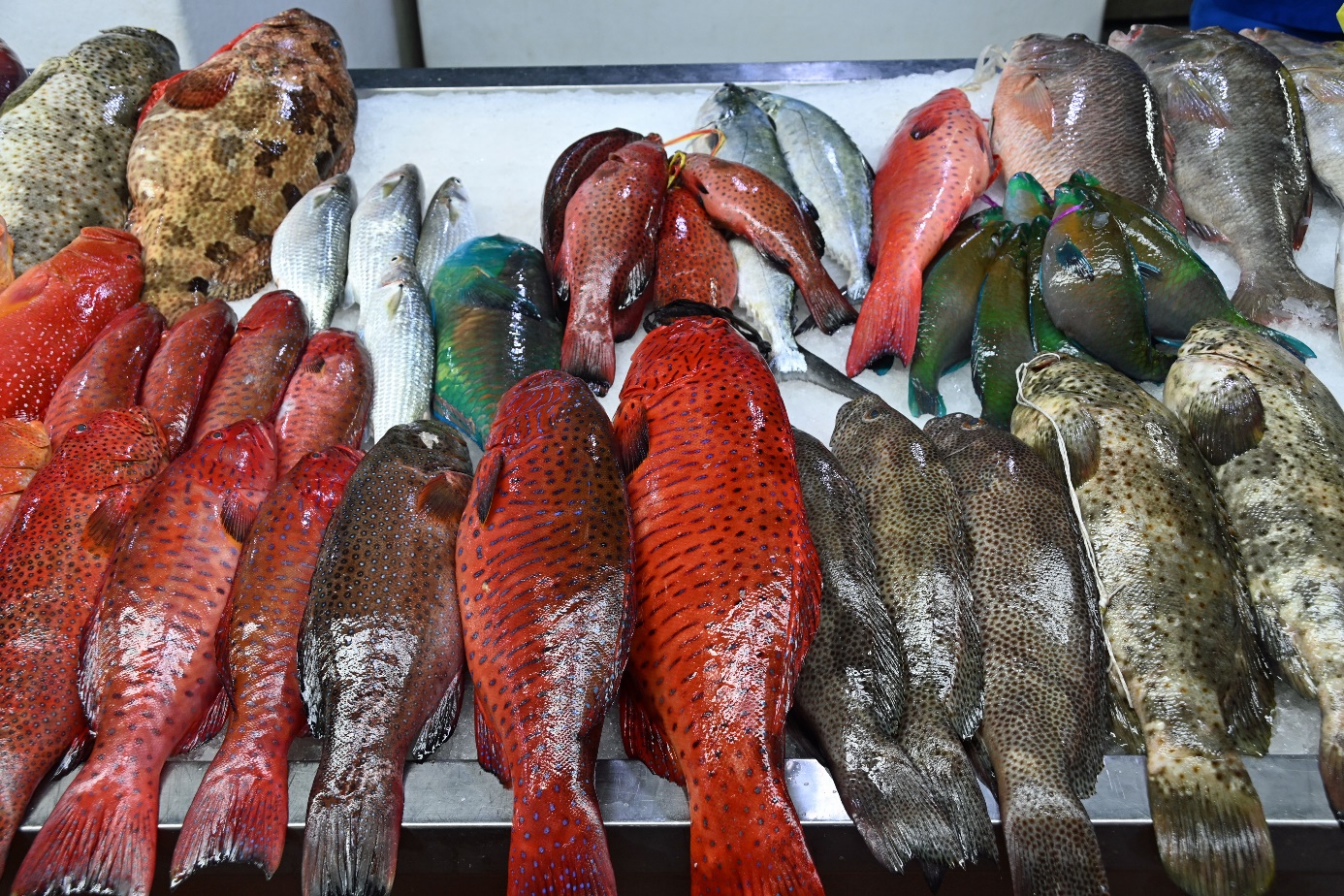
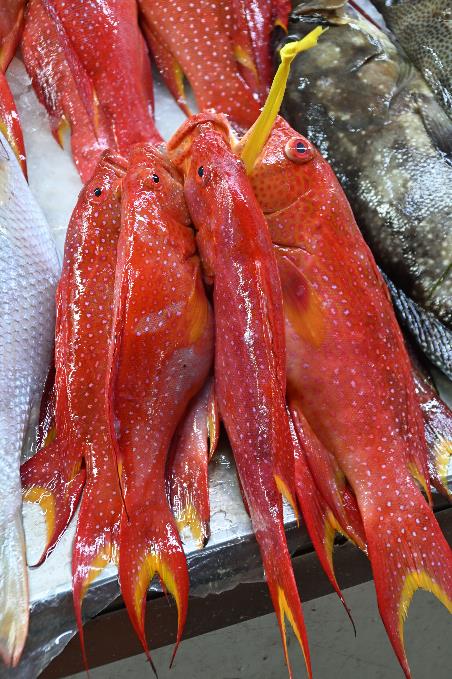
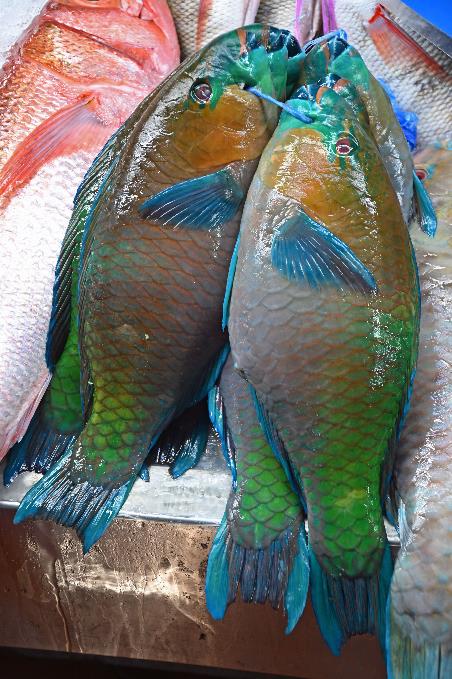
We are slightly amazed by the colourful variety on offer, with the red coral groupers and blue-green parrotfish taking centre stage
A little later, the Jeddah Flagpole comes into view through the window. Since 2014, it has been the tallest flagpole in the world, standing an impressive 171 metres high, Kholood proudly tells us. Do not underestimate the Saudi flag flying at its summit – that is, when the wind is not as calm as it is today. It weighs 570 kg (1 257 pounds) and measures 49.5 by 33 metres. We are not told that the Egyptians snatched the world record in 2021 when they erected a 201.95-metre high flagpole in Cairo.
Coral groupers |
|
Parrotfish |
Tourist visas have only been available since 2019, Kholood confirms. Before that, visas were issued solely to foreign workers and to pilgrims undertaking the Umrah, the smaller, voluntary version of the Hajj. When a Saudi company employs foreign workers, it is itself responsible for ensuring that those workers actually leave the country afterwards. At present, tourist visas are issued only to citizens of a limited number of countries, mainly Western ones. The same principle applies here – the tour operator is responsible for ensuring that those tourists leave the country when their visit is over. We have been warned.
Of the many fish markets in Jeddah, Al Bankala, the Central Fish Market, is said to be the best known and the busiest. Barely has fajr, the first prayer of the day, come to an end in the early morning when the entire market springs to life. As the sun has only just appeared above the horizon, the night's catch is auctioned off to shops and restaurants. It is only later in the day that individual customers begin to arrive.
|
|
|
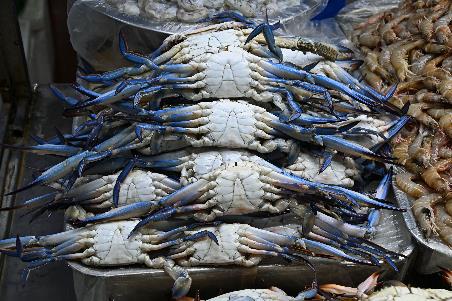
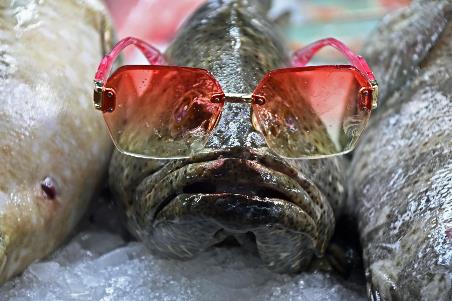
The busiest period is therefore long over by the time Moejahir drops us off at the fish market. We are immediately greeted by the smell of salty sea air. We stroll leisurely among the more than one hundred stalls of the covered market, slightly amazed by the colourful variety on offer, with the red coral groupers and blue-green parrotfish taking centre stage. There is nothing to criticise about the hygiene standards; these fish traders take order and cleanliness very seriously. All products must be fresh from the day’s catch; if they are not, this must be clearly stated.
Central Fish Market – Cleaning department |
|
|
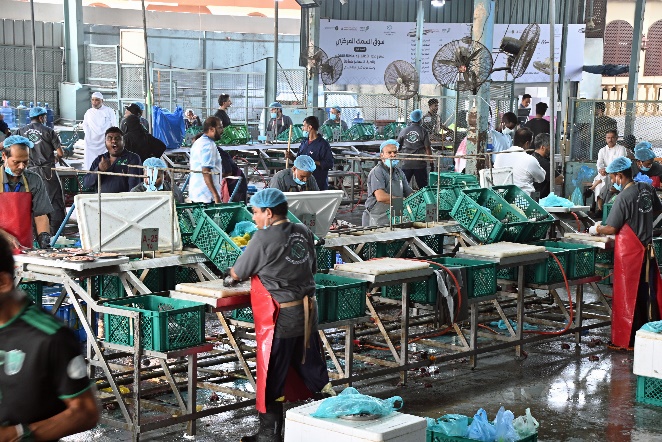
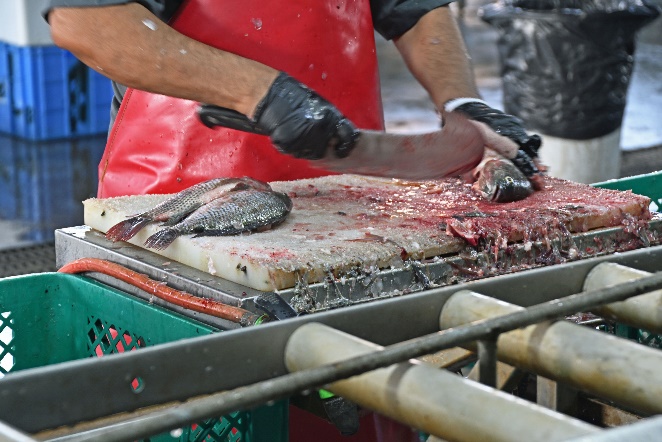
But selling fish is not all they do here. There is a separate section where you can have your purchase prepared – prawns peeled, fish descaled, gutted or filleted.
|
|
|
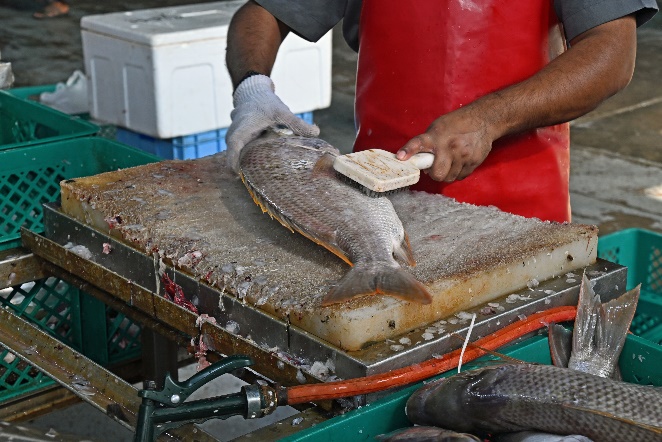
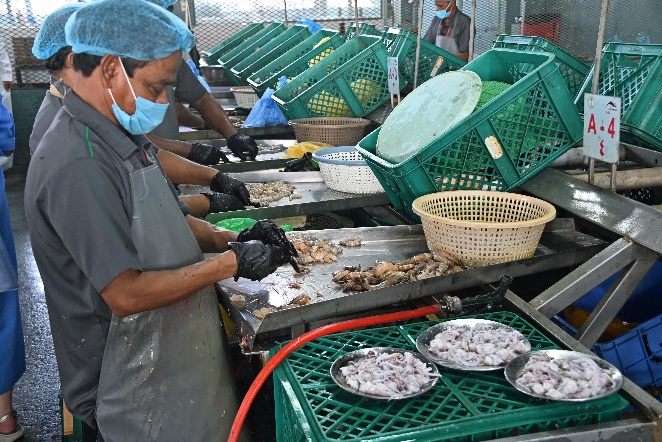
You can even have your fish prepared on the spot – fried, grilled or deep-fried. Each time, you pay by the kilogram. Some of the nearby restaurants apparently operate a BYO policy – Bring Your Own. You simply bring along the fish you want to see served at your table.
Covering an area of 606 square miles, the city is twice the size of the island state of Bahrain
Our next destination is the Al Rahmah Mosque. It takes more than half an hour to get there, but the reason is not heavy traffic; it is simply the enormous size of Jeddah. Covering an area of 1,570 km² (606 square miles), the city is twice the size of the island state of Bahrain.
Kholood uses the opportunity to tell us more about certain aspects of Saudi society. Education, for example, is free in Saudi Arabia, including the required school textbooks. The many foreign workers are also entitled to this provision. School attendance is compulsory from the ages of six to eighteen. If parents fail to send their children to school, they will inevitably face a fine. As many as thirty thousand Saudi young people continue their education abroad on scholarships. Healthcare is also free.
Oil remains by far Saudi Arabia's most important export product and its greatest source of income. The government is fully aware that this cannot last forever. Renewable energy has been gaining ground for several years. The installation of solar panels is actively encouraged. About time, one might say, because if there is one thing this country has in abundance, it is sunshine. But the oil lobby managed to hold back this development for a long time. Wind turbines, meanwhile, are mainly found in the north.
It is noticeable that detached houses are always surrounded by walls. In busy neighbourhoods such as this one, Kholood explains, this is required by law. She describes it as a way of preventing visual pollution. If an owner fails to comply with the requirement, he can be forced to sell his house.
Renewable energy has been gaining ground for several years. The installation of solar panels is actively encouraged. About time, one might say
Kholood cannot get enough of explaining offences and their corresponding penalties. If, as a pedestrian, you cross a motorway, you will not only receive a fine but may also be held liable if you cause an accident. If a camera catches you running a red light, you face a fine of 3,000 riyals (683 euro or 800 USD) or one day in prison. Repeat offenders lose their driving licence for a year. Eating, drinking or using a mobile phone while driving can prove costly. Speeding is also heavily punished, hence the many discreet speed cameras hidden in camouflage-coloured housings along the roads. Not wearing a seatbelt is also severely punished. Oops, we'd better buckle up ourselves.
A man is responsible for his wife, his children and his sisters. That is what the Quran prescribes. Men therefore have a duty to support their wives. But it would be going too far to conclude from this that women were previously forbidden from having careers. Kholood's grandmother, for example, worked at the Ministry of Media. Women were also allowed to work in hospitals. Cafés and similar establishments, however, were naturally off limits to them.
She does not mention the women's rights activists who spent years behind bars
And since 2018, women have even been allowed to drive. Naturally, this brought new challenges – women had to learn to deal with this new responsibility, and the traffic jams became even longer than before. But overall, women's rights in Saudi Arabia are progressing well. Kholood does not mention the women's rights activists who spent years behind bars.
A little society news along the way. In a week or two, Jeddah will welcome King Salman. The ninety-year-old monarch prefers to spend the warmer part of the year here by the sea. The other half of the year he stays in Riyadh, the capital of the Kingdom. And in November last year, the main construction contract, worth 531 million dollars, for the building of the Trump Tower in Jeddah was awarded.
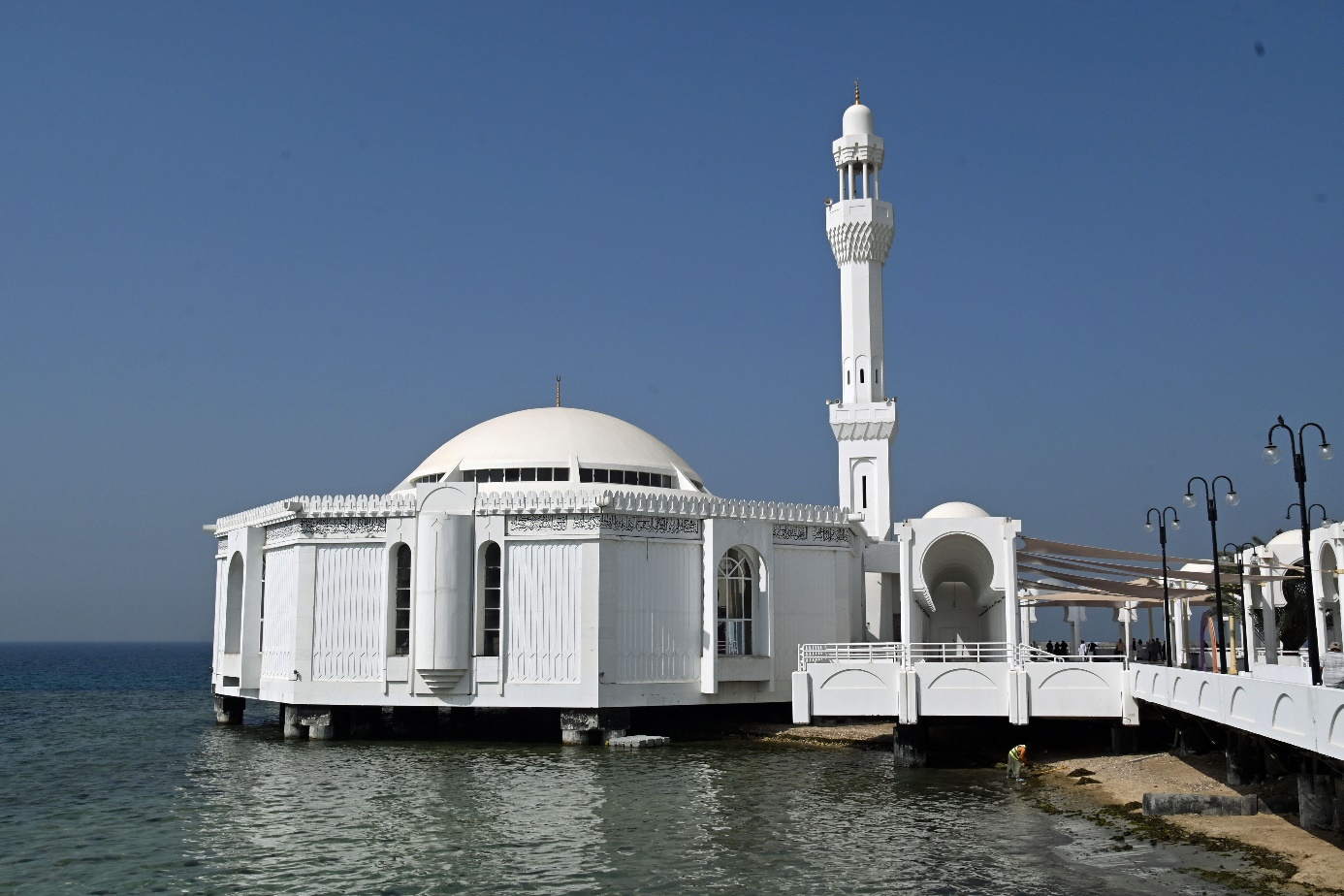
Al Rahmah Mosque, the Floating Mosque
It is generally known as the Floating Mosque, this pearly white Al Rahmah Mosque. Not because it actually floats on the water – although at high tide it almost appears to do so – but because it is built on pillars above the Red Sea. It makes it a popular attraction hub, and not only for Muslims.
Al Rahmah Mosque
Non-Muslims such as ourselves are also allowed to enter the sanctuary, albeit barefoot and with the ladies wearing a headscarf. Taking photographs is not a problem, as long as it is done with a smartphone. Cameras, on the other hand, are strictly forbidden. As we will gradually discover, this appears to be the rule in all kinds of situations – sometimes even outdoors. Why that is, only they know.
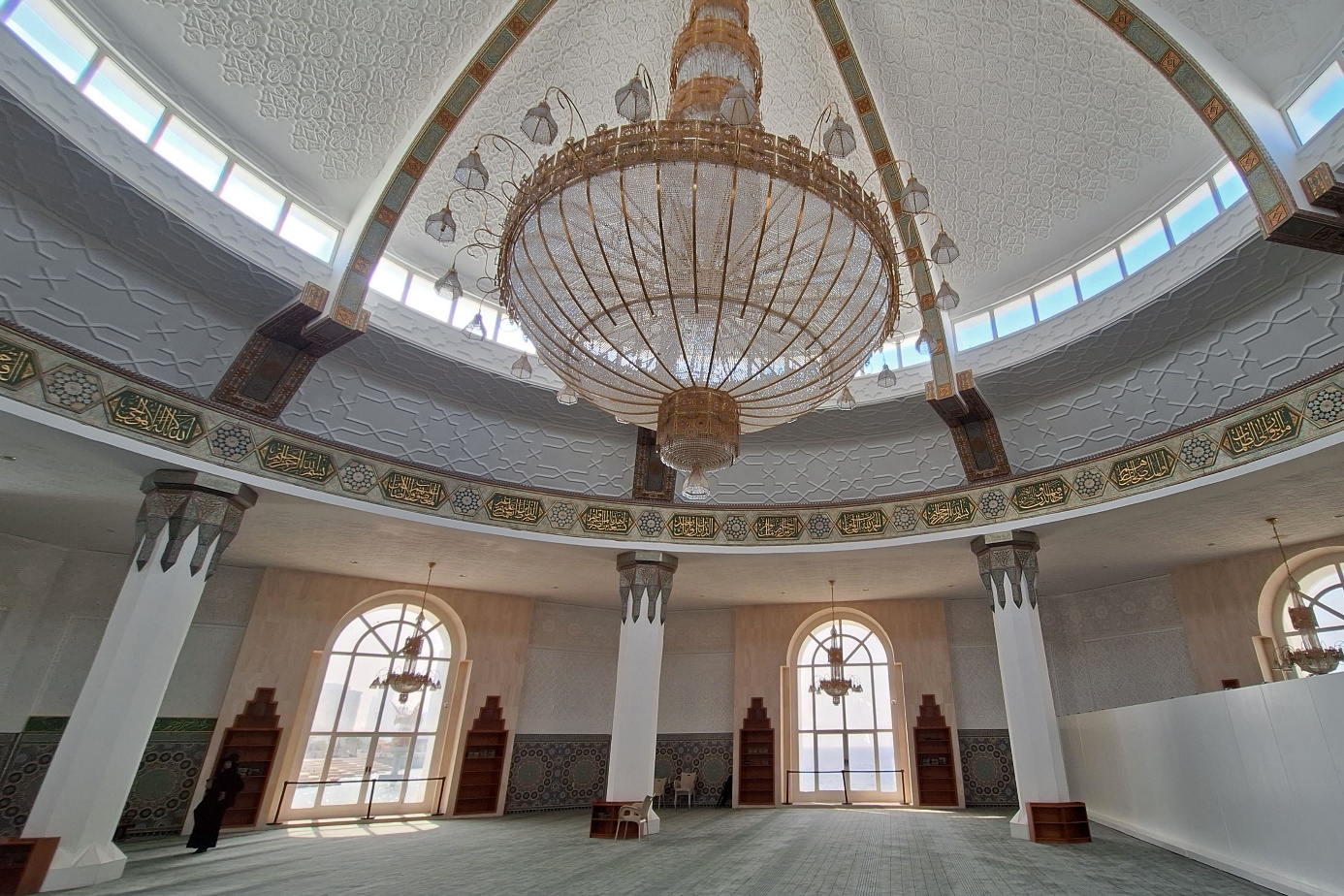
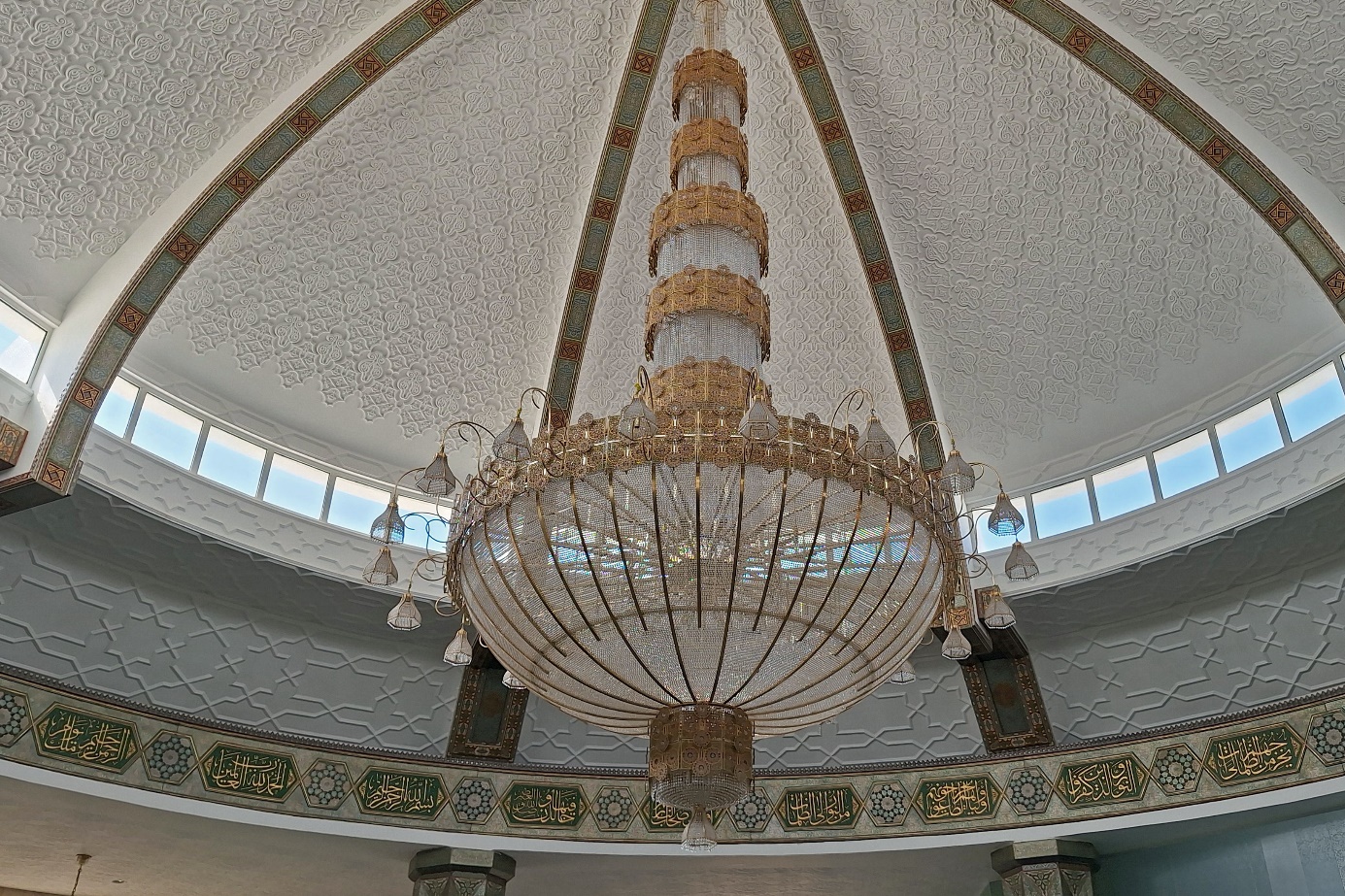
Inside, one is immediately overwhelmed by an abundance of light. The impressive chandelier, crafted from delicate filigree work, instantly catches the eye
Al Rahmah Mosque
It is a relatively recent and modestly sized mosque, built in 1985 in a simple yet highly attractive style. Inside, one is immediately overwhelmed by an abundance of light. The impressive chandelier, crafted from delicate filigree work, instantly catches the eye. Eight columns support the dome, while Quranic verses in gold-coloured calligraphy adorn the walls.
Mihrab
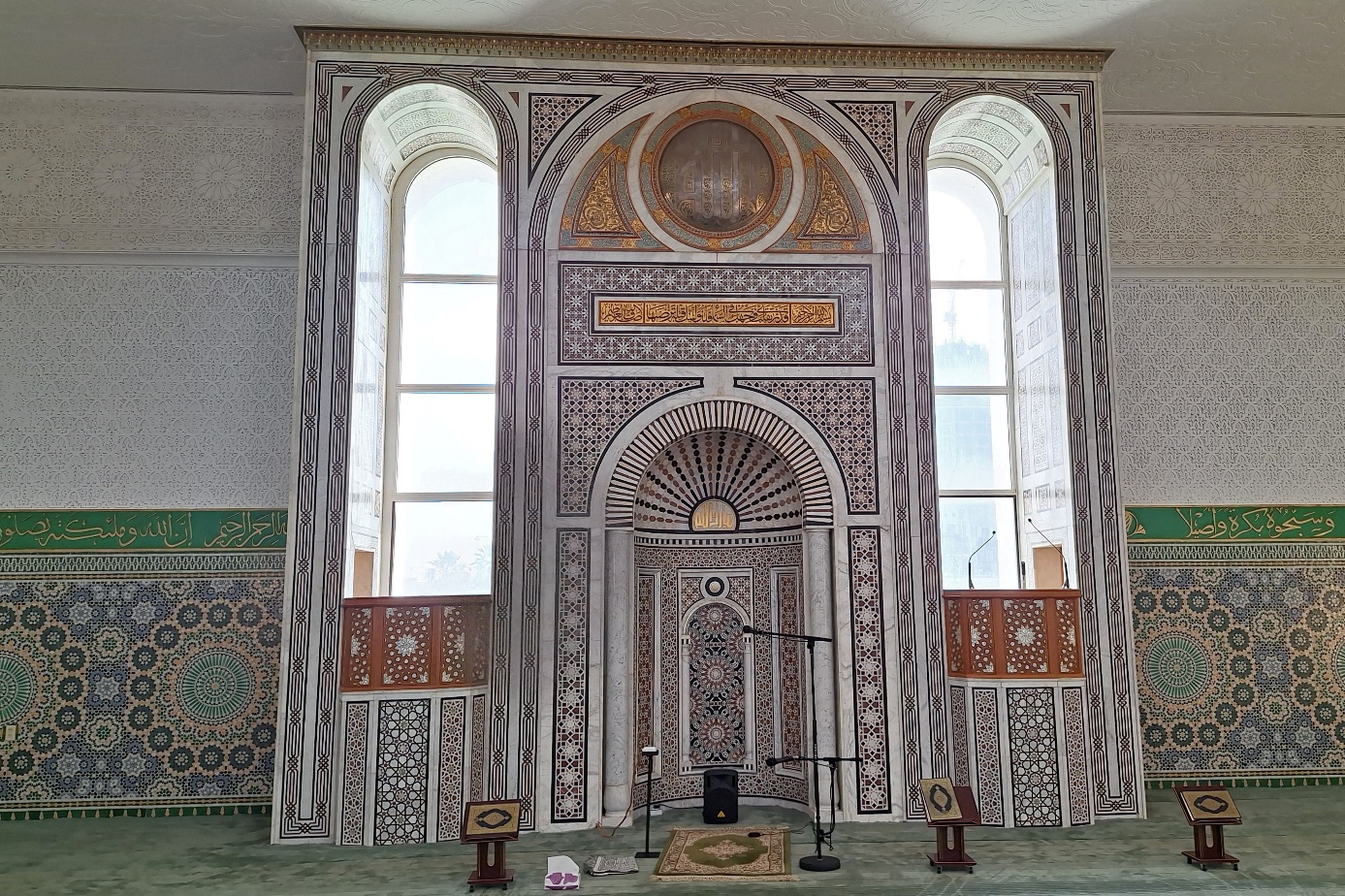
The mihrab, the prayer niche that indicates the direction of Mecca, is decorated with ceramic tiles featuring beautiful geometric leaf motifs. In fact, the niche also serves as a sound amplifier for the imam’s prayers, in the hope that everyone present will pray in unison. To its right, we recognise the minbar, the imam’s pulpit.
In the past, men and women used to pray together in the same area. Later, they were separated, officially to give women more privacy
Only men occupy this space. We do not see any women. In the past, men and women used to pray together in the same area, according to Kholood, with the men at the front so that, during sujud — the kneeling position with the forehead touching the ground — they would not have to look at the women’s backsides. Later, they were separated, officially to give women more privacy. This explanation sounds unconvincing, because in practice women are usually confined to a much smaller area where they have little or no view of the mihrab.
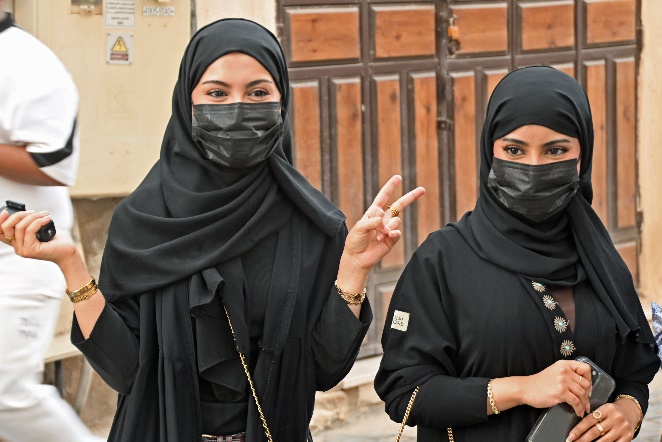
By chance, as we leave the mosque, we come across a group of women. Within no time, the ice is broken. The clothing, language, culture and religion of both groups might seem destined to create distance, but the opposite proves true. These are warm-hearted people: friendly, hospitable and genuinely curious. Before we realise it, we are all posing together for a photograph.
The clothing, language, culture and religion of both groups might seem destined to create distance, but the opposite proves true
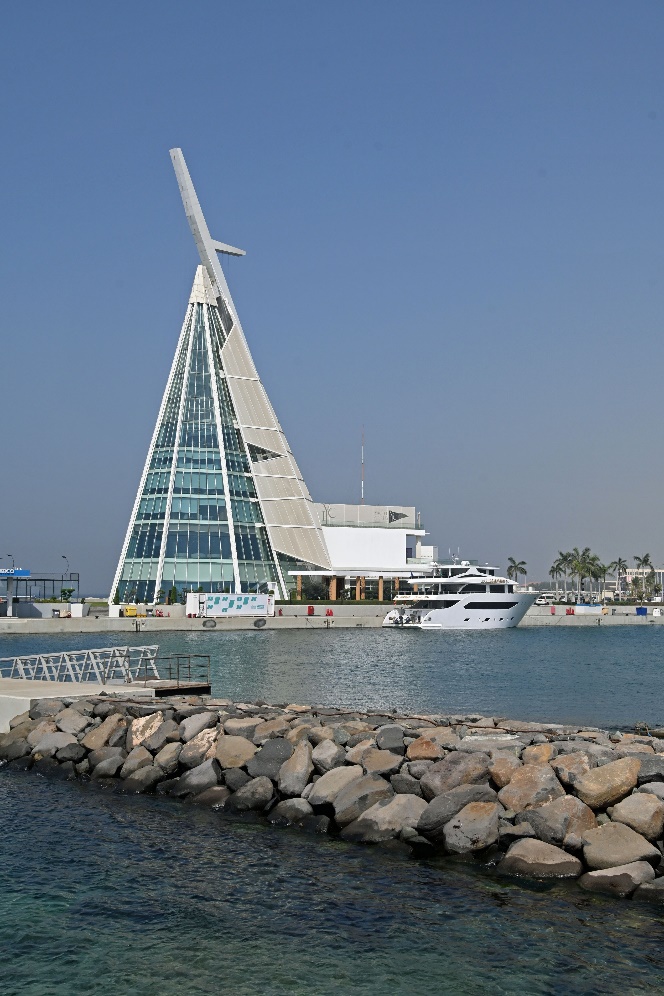
Like any self-respecting port city, Jeddah has a waterfront promenade. And what a promenade it is. The Corniche, as this broad boulevard is known, stretches for no less than thirty kilometres (18.6 miles). We stroll around near the Jeddah Sign, the huge green letters — taller than a person — that spell out the city’s name. Parks, food kiosks, picnic areas, artworks and more provide entertainment in the leafy surroundings. A wide pedestrian zone between the two carriageways of the boulevard offers space for walking, jogging, cycling…
Marina |
|
|
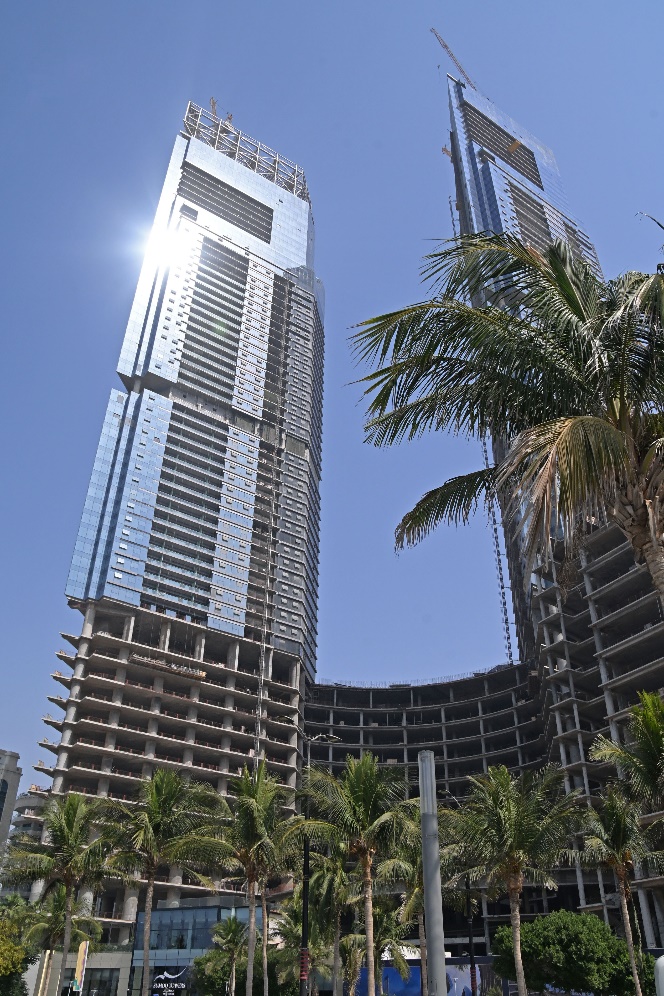
Less rosy is the story of the Jeddah Tower. It was intended to become the tallest building in the world, the very first structure to exceed one mile in height – more than 1,609 metres. However, soil surveys carried out in 2008 revealed that this ambition was, quite literally, too high a target. The plans were scaled back considerably: the tower would be just over a kilometre tall (0.6 miles), but it would still be able to claim the title of the world’s tallest building.
Work finally began on 1 April 2013. Suspicions of corruption led to the arrest of the owner and the main contractor in 2017, and not long afterwards the Covid-19 pandemic threw another spanner in the works. It was not until 2023 that construction could resume. At the beginning of 2026, the 80th floor was completed. It should not be long now before the structural work is finished.
Khobz also makes an appearance at the table: a delicious flatbread baked in a tannour, an oven made of baked clay
Corniche |
|
Tannour |
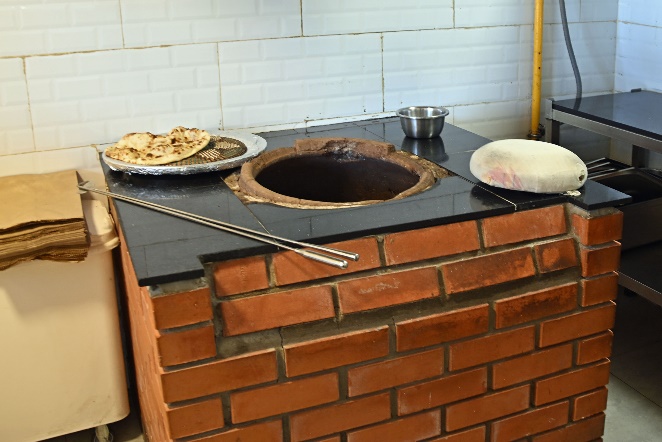
Zorbiyan, chicken served on a bed of basmati rice, is our first introduction to the local cuisine. Originally a Yemeni dish inspired by Indian biryani, it is now popular throughout the Arabian Peninsula. Khobz also makes an appearance at the table: a delicious flatbread baked in a tannour, an oven made of baked clay in which the dough is stuck against the wall – essentially the Arab version of a tandoor.
Any preconceptions about primitive desert civilisations quickly disappear here
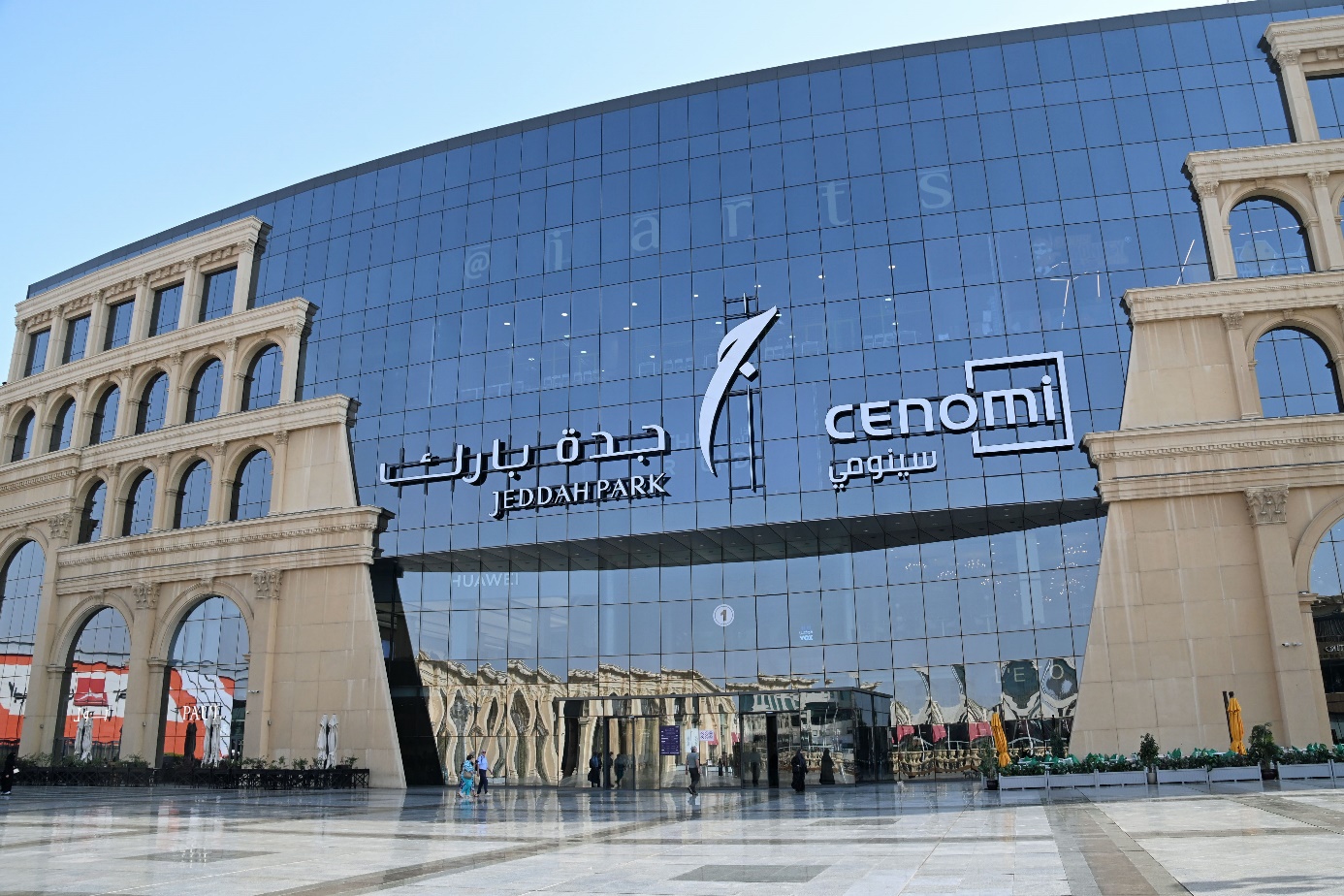
Cenomi Jeddah Park
You would not necessarily expect to find it in a shopping centre like Cenomi Jeddah Park, but tucked away among the shoe shops and lingerie boutiques, hairdressers and cosmetics stores, jewellers and fast-food outlets lies a cultural and historical gem: the Museum of Islamic Art. It only opened its doors in 2023 and currently houses around a thousand artefacts spread across six themed galleries.
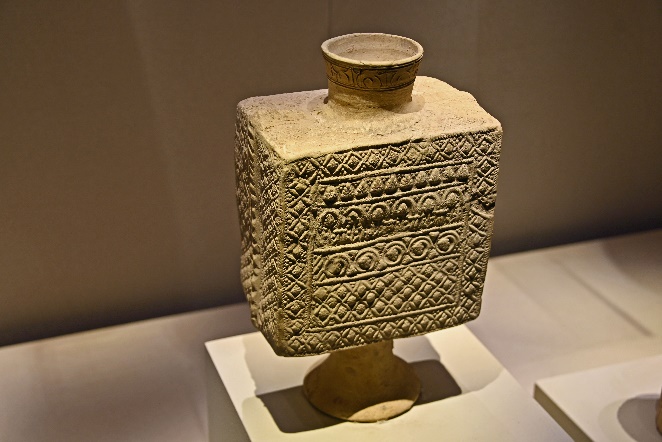
Ewer with Calligraphic Decoration (Iraq, 7th century) |
|
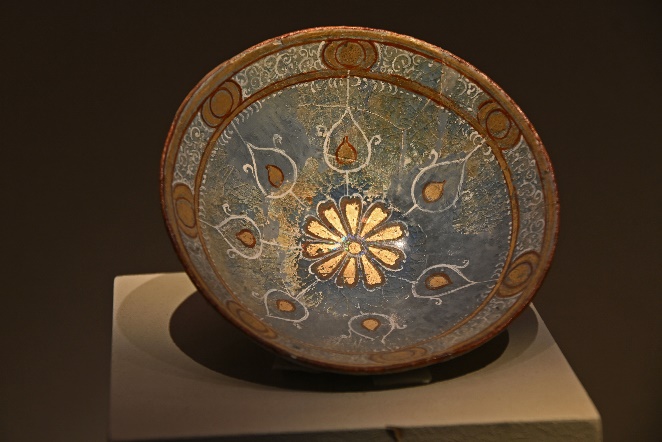
Lajvardina Pottery (Central Asia, 13th–14th century) |
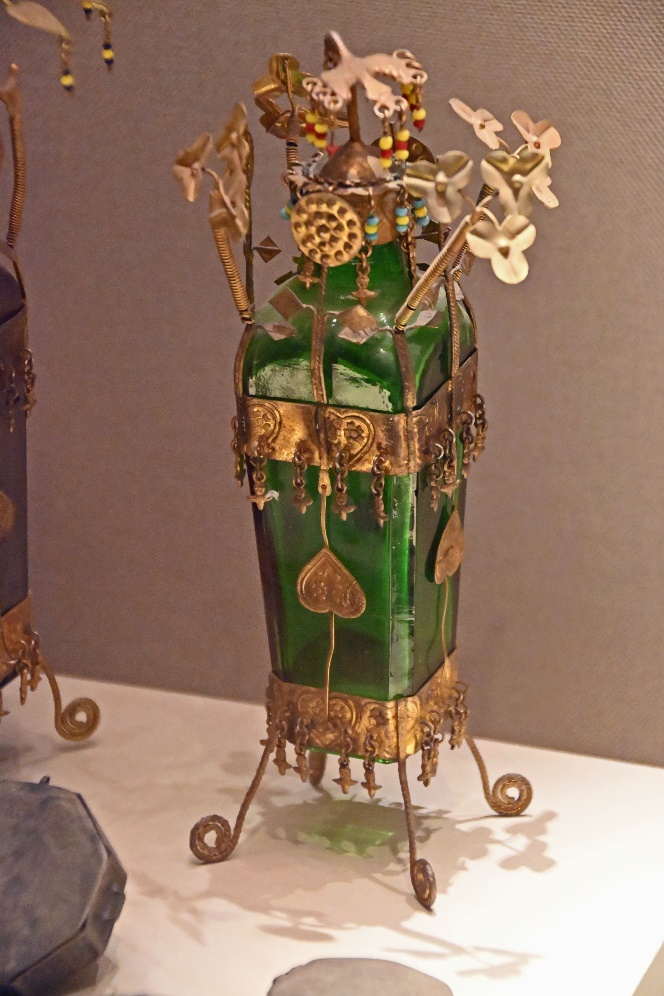
Perfume Sprinkler (Saudi Arabia, early 20th century) |
|
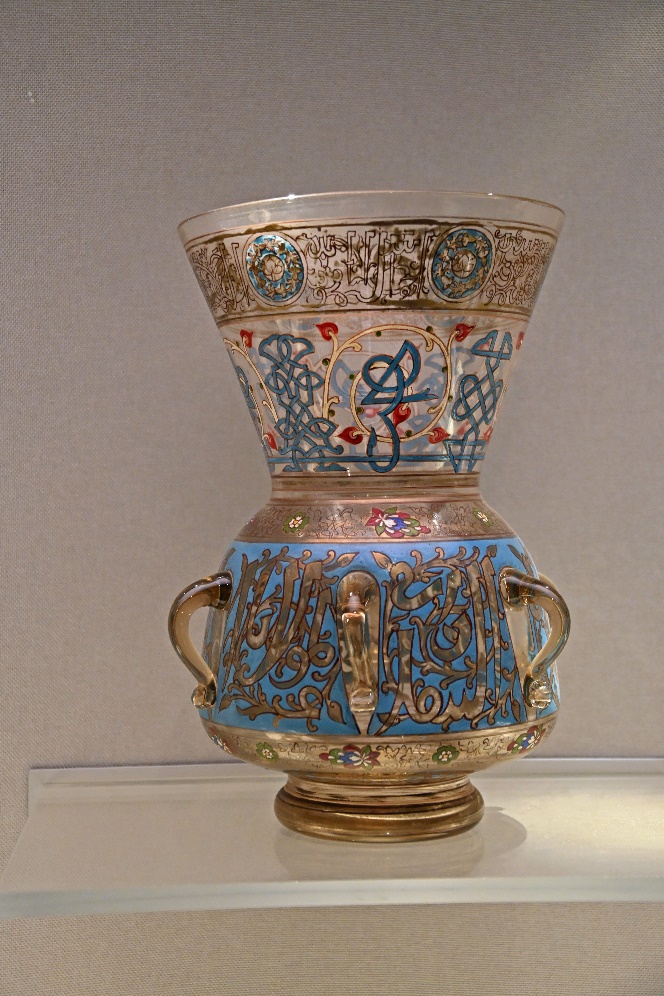
Mosque Lamp (Europe, 19th–20th century) |
Mina'i Ware (Kashan, 13th century) |
|
Jewellery Casket (Toledo, 19th–20th century) |
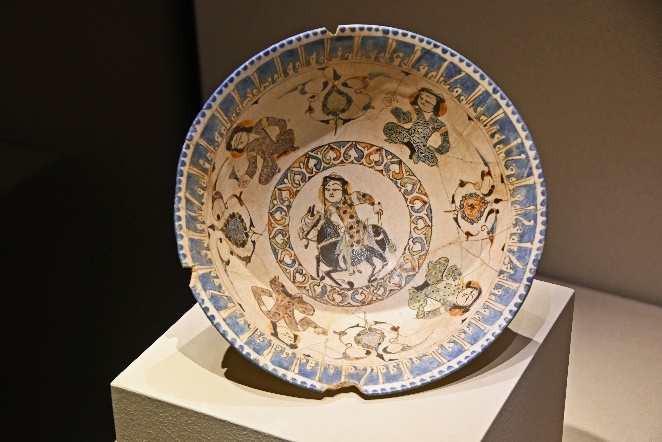
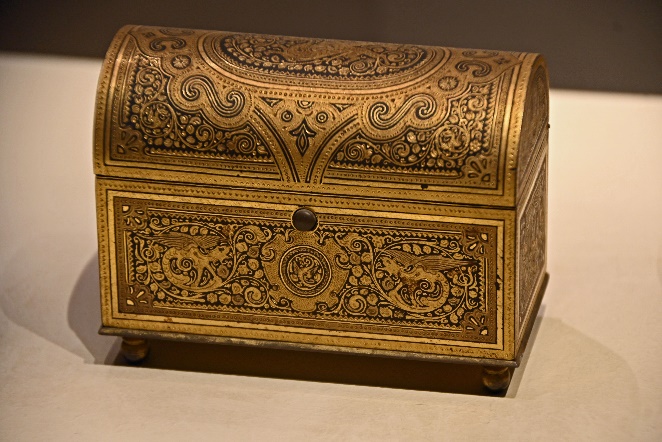
Many of the objects are truly magnificent. Any preconceptions about primitive desert civilisations quickly disappear here. Ceramics, glass and metal – Islamic craftsmen mastered them all. Calligraphic manuscripts reached exceptional artistic heights. In the fields of philosophy, science and mathematics, Muslim scholars developed innovations that spread to both the Western and Eastern worlds.
At its centre stand two mahmals – square ceremonial pavilions topped with pyramid-shaped roofs
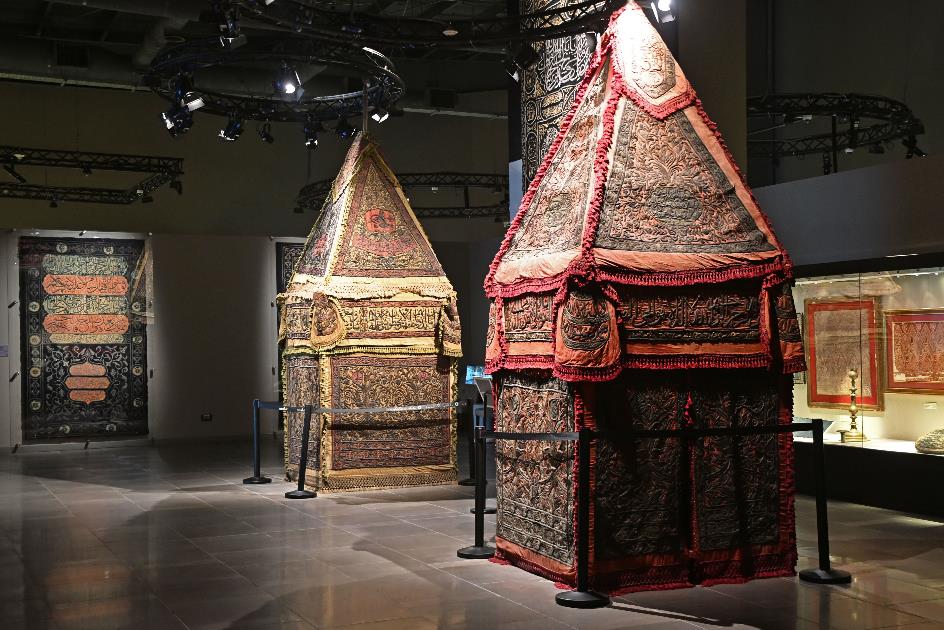
Mahmals
The greatest surprise, however, comes right at the end, when we enter the Hall of Textiles from the Two Holy Mosques. At its centre stand two mahmals – square ceremonial pavilions topped with pyramid-shaped roofs. Hanging on the walls are two kiswahs, vast textiles of cotton and silk embroidered with silver and gold. They are undeniably impressive, although they do require some explanation.
Today, the Kaaba in Mecca is one of the world's most important pilgrimage sites, but it already held that status long before the advent of Islam. One of the annual rituals in those days involved covering the polytheistic sanctuary with a cloth known as a kiswah. Muhammad adopted this custom. At the beginning of the Hajj, the Kaaba is draped in a white covering so that it takes on the same colour as the pilgrims performing their circuits around the sanctuary. At the end of the Hajj, this is replaced with a brand-new kiswah made of black brocade. The kiswahs displayed here in the museum are, in fact, the cloths that once hung over the doors of the Kaaba.
At the end of the Hajj, a brand-new kiswah is draped over the Kaaba – a vast cloth of black brocade
Kiswah |
|
|
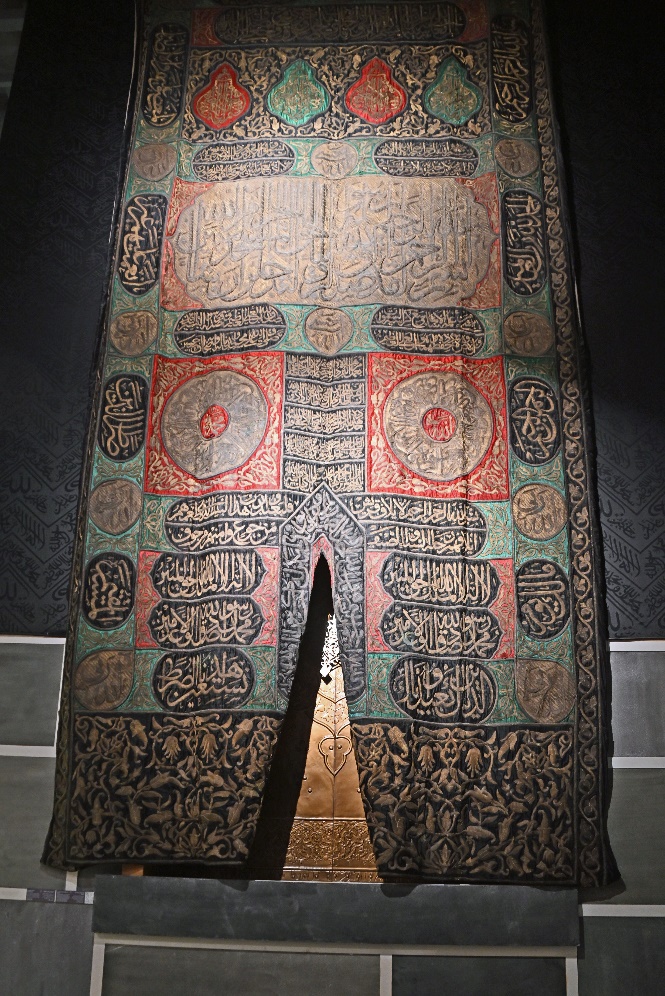
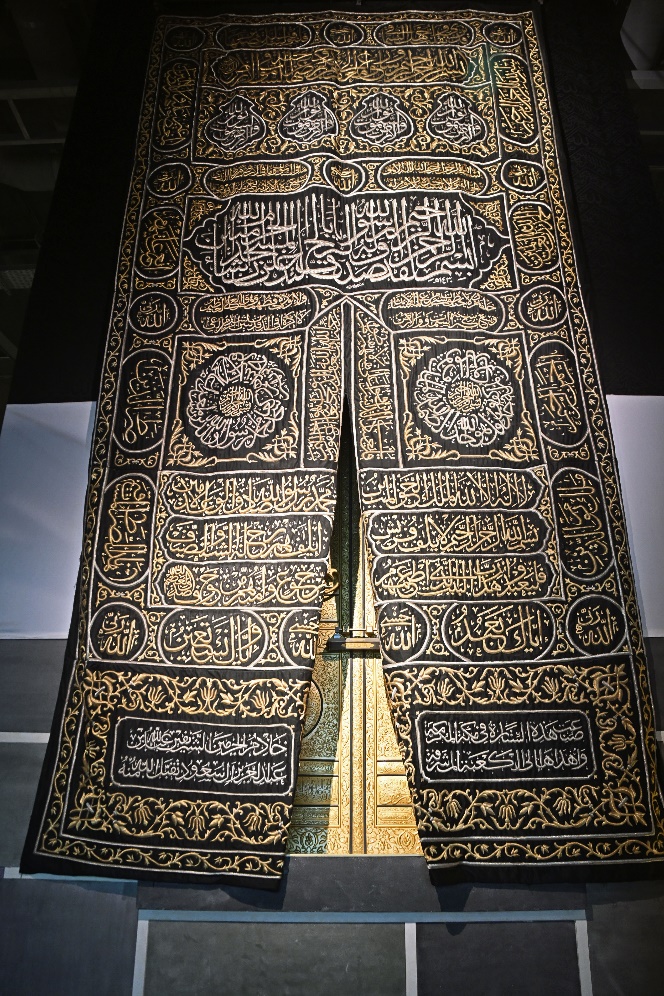
Originally, each new kiswah was simply placed over the previous one. In 777, however, it was realised that the Kaaba might one day collapse under the weight of so many layers of fabric. From then on, the kiswah was replaced annually. For many centuries, these coverings were produced in Cairo, from where the precious cloth was transported to Mecca.
Contemporary engravings show how this was done. A mahmal – a ceremonial pavilion like those on display in the museum – was mounted on the back of a carefully selected dromedary. The folded kiswah was placed inside it. The procession was accompanied by soldiers and by jubilant crowds of believers, dancing and beating drums. Being appointed commander of such a caravan was considered a great honour.
In 777 it was realised that the Kaaba might one day collapse under the weight of so many layers of fabric
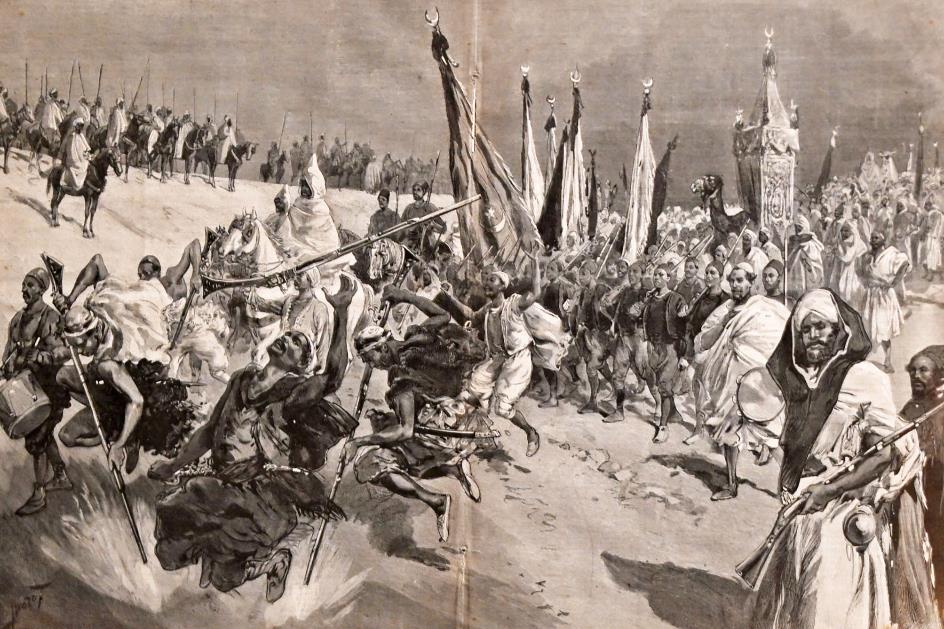
The mahmal (back right) being transported to Mecca (copper engraving, 1894)
King Abdulaziz was unhappy that Mecca depended on a foreign country for something so important. When, in 1926, the caravan was attacked by fundamentalist Muslims who objected to the non-Islamic music accompanying the procession, he seized upon the incident as a reason to move production to Mecca. Since then, the kiswah has been made at the King Abdulaziz Complex for the Holy Kaaba Kiswah.
The tomb of Eve – who may justly be called the grandmother of humankind – is said to be located in Jeddah
We are on our way now to Al Balad, the old town where it all began. The origin of the name Jeddah is uncertain. One possible explanation is that it derives from the Arabic word for grandmother, for it is here that the tomb of Eve – who may justly be called the grandmother of humankind – is said to be located. This is hardly surprising, since, as we all know, Adam is also believed to have dwelt in this region. According to Islamic tradition, it was he who laid the foundations of the first Kaaba in Mecca.
For devout Muslims, however, such veneration of distant ancestors borders on idolatry. As soon as Prince Faisal came to power, he ordered the tomb to be demolished in 1928. Even that, however, was not considered sufficient. In 1975, the site was simply covered over with concrete.
Jeddah was once surrounded by a city wall. It was built as a defence against the Portuguese, who began sailing up the Red Sea from the early sixteenth century onwards. In time, the wall outlived its purpose and was dismantled. The city's handsome gates, however, have since been restored. It is at one of these seven gates, Bab Alfurdah, that Mujahir drops us off.
Originally, Al Shona served a military purpose and was probably used as an armoury or a garrison
Al Shona |
|
Mihrab of the Mosque of Uthman ibn Affan |
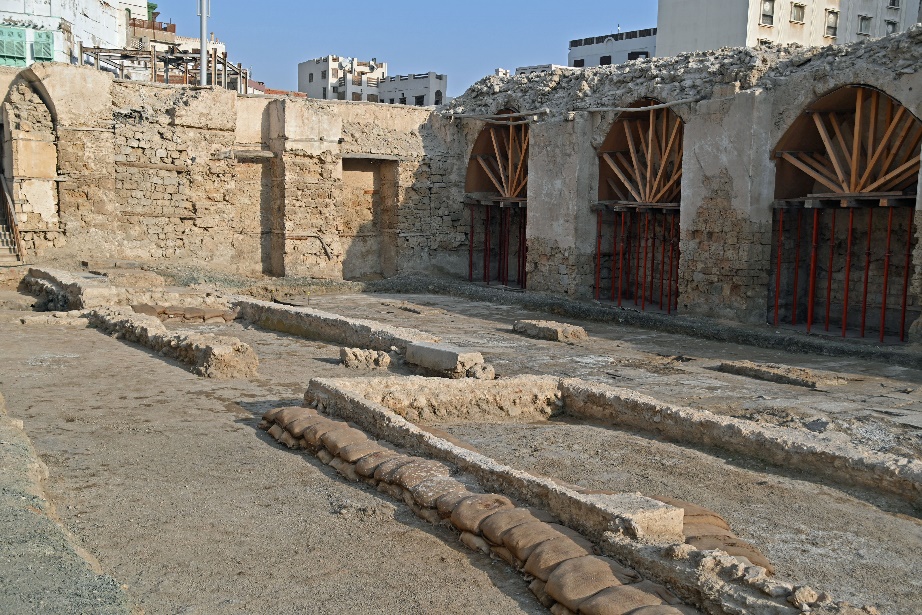
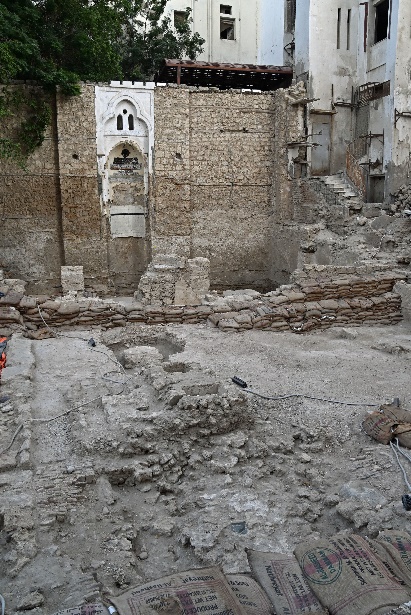
Al Shona is one of the few places that still bears witness to that era. The ruins of this natural stone building date back to the sixteenth century. Originally, it served a military purpose and was probably used as an armoury or a garrison, as suggested by the remains of a fortified tower still visible in one corner. From the nineteenth century onwards, it became a government warehouse for storing grain, timber and ammunition. It later passed into the hands of a merchant, who used it to stock goods from all over the world.
Further on lie the remains of the Mosque of Uthman ibn Affan, the man who gave Jeddah a decisive boost by making it the gateway to Mecca. The wall containing the mihrab, the prayer niche, still stands, even though the mosque dates from the seventh century and remained in continuous use for at least twelve hundred years. Beneath the ruins, archaeologists discovered water cisterns. According to reports, they had been sealed and still contained crystal-clear water that had remained untouched for almost eight hundred years. Given the chronic scarcity of water in the city, storing reserves in this way was not unusual in old Jeddah.
Nowhere else in Saudi Arabia will you find such rawashin; they are a source of great pride for the city
Rawashin |
|
|
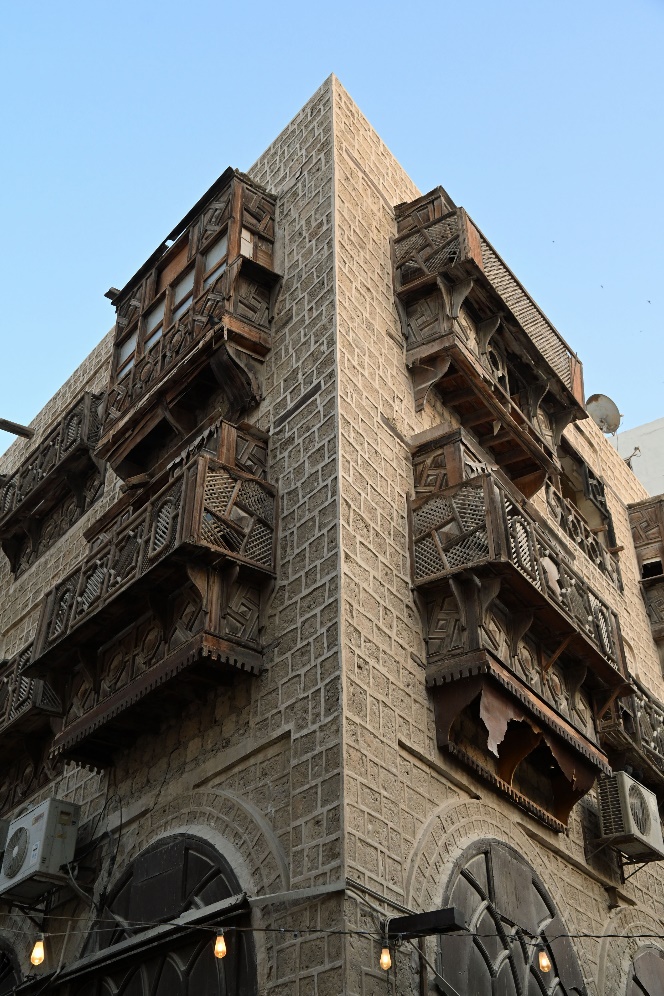
Via the Al Alawi Souq, we gradually make our way among the houses of the old city. What immediately stands out is the remarkable contrast between old, dilapidated houses that are barely managing to stay upright on the one hand, and clinically restored architectural gems on the other. The fact that Al Balad was largely abandoned by its residents is primarily due to the lack of electricity and running water, Kholood explains. Six thousand houses are still standing here, of which the Ministry of Culture intends to restore six hundred. They began this monumental task in 2018, and by the end of last year the first eighty-five houses had been completed.
Never call a rawshan a mashrabiya, because any true Jeddawi would take offence
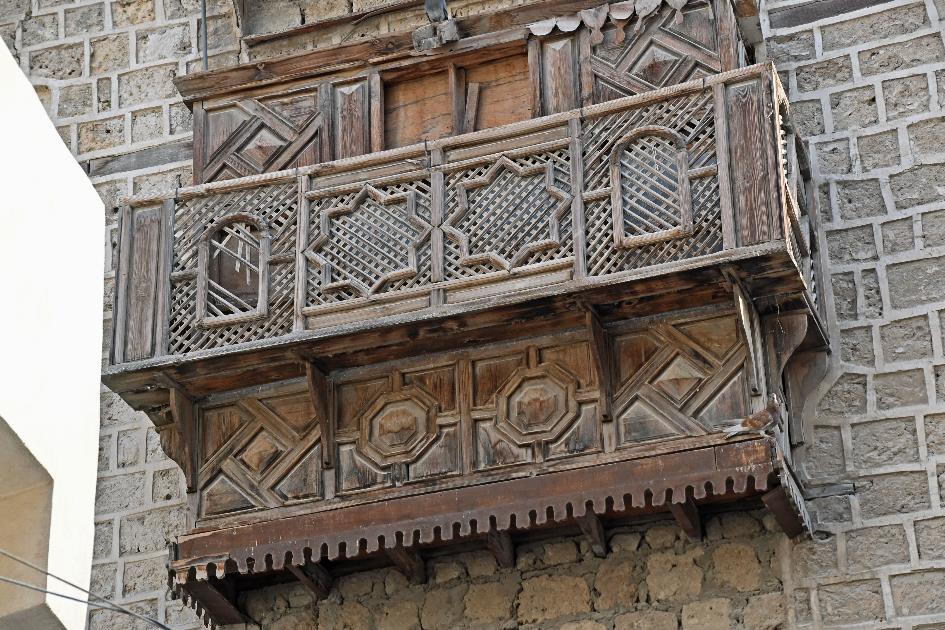
Rawshan
It has to be said: the wooden oriel windows attached to the façades here are breathtakingly beautiful. Nowhere else in Saudi Arabia will you find such rawashin (singular: rawshan); they are a source of great pride for the city. Their purpose was threefold: to allow a gentle breeze to pass through, to keep out the heat of the sun while still letting daylight in, and to provide privacy. From behind their rawshan, women could look outside without being seen themselves. They did not, however, keep out dust or insects.
Elsewhere in the Arab world, you can also find decorative wooden window screens. These are known as mashrabiyas. But never call a rawshan a mashrabiya, because any true Jeddawi would take offence. No flat mashrabiya, they will explain, can compete with the intricate three-dimensional structure of a rawshan.
Roughly half a century ago, the area around the Al Shafi’i Mosque was still a lively neighbourhood, where ordinary people lived, children played in the streets and shopkeepers traded their wares. Directly opposite the mosque stood the family home of Kholood’s grandfather, and next to it was that of her grandmother. So grandpa married the girl next door.
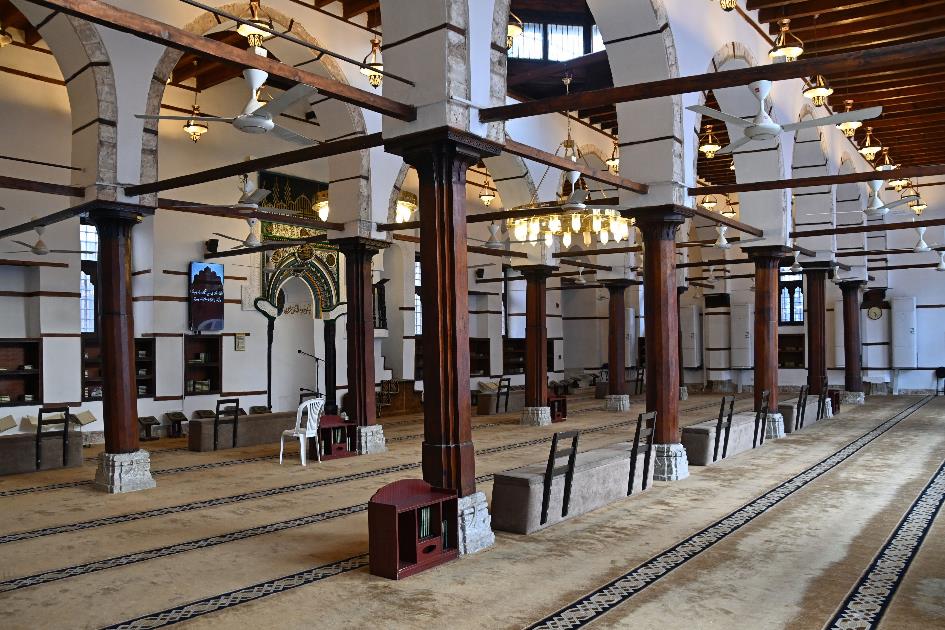
Al Shafi’i Mosque
Although most of the residents have now moved away and textile shops have taken over many of the buildings, the modest mosque continues to fulfil its religious and social role. It is more than 1,400 years old and has been renovated several times. The minaret, however, built in the Mamluk style, is only 900 years old. The fact that the city has gradually risen in level over all those centuries is clearly demonstrated by the need to descend several steps before entering the mosque.
The obligatory annual fast of Ramadan will not begin for another week or two. But alongside this collective observance, there are also other voluntary fasting practices. Following the example of Muhammad, some devout Muslims, for instance, fast every Monday and Thursday as well. They believe this earns them merit that will be of benefit when they later stand before Allah. If a married woman wishes to undertake voluntary fasting, however, she must first ask her husband for permission.
We too – non-fasting, non-Muslim visitors – are spontaneously offered one of these warm, fritter-like pastries
Al Shafi’i Mosque |
|
|
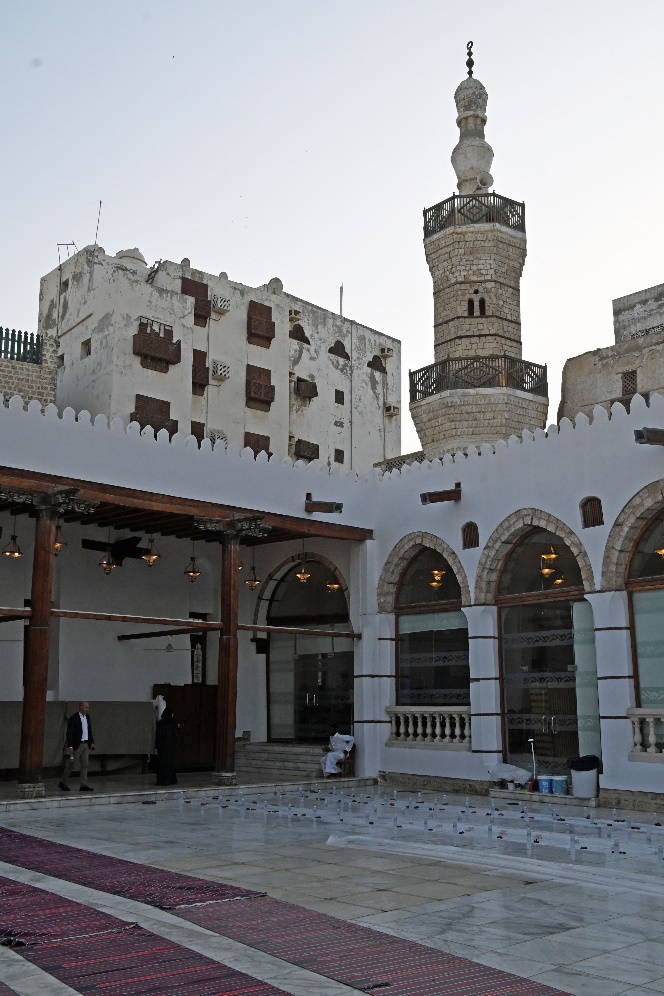
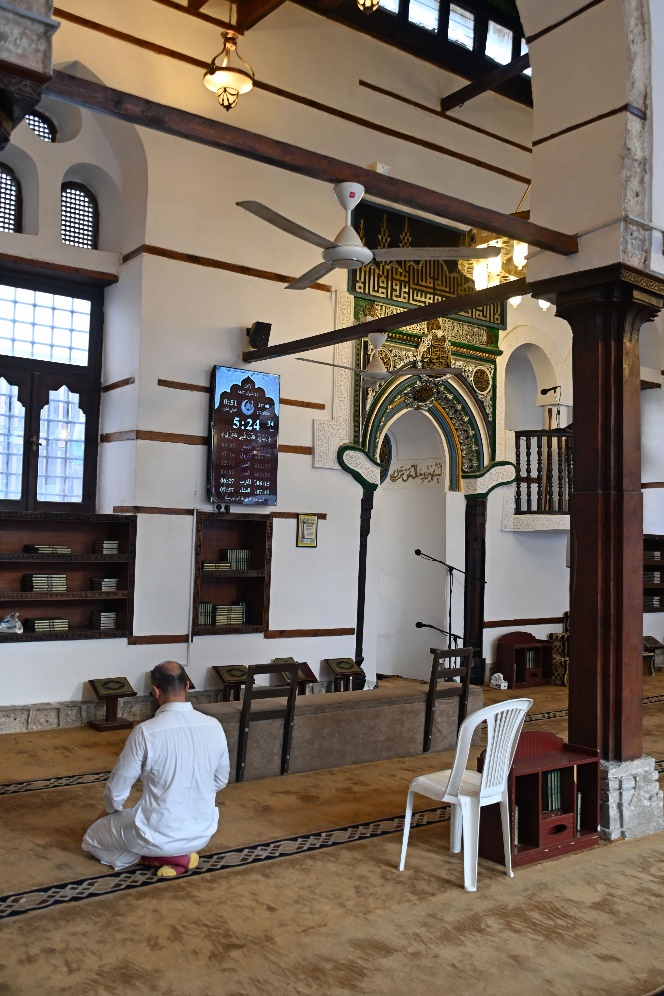
What the mosque staff are doing in the courtyard now is preparing food for those who are fasting. Later, at sunset, they will gather here for the iftar, the meal with which they break the fast together. Once again, the proverbial hospitality of the Saudis is evident, for we too – non-fasting, non-Muslim visitors – are spontaneously offered one of these warm, fritter-like pastries.
If we thought that a rawshan was carved from wooden planks, we would be mistaken. This becomes clear when we visit a workshop. Modular components, no larger than around six centimetres, are cut from mahogany or walnut using a simple milling machine. They are then fitted together with remarkable precision, like the pieces of a complex three-dimensional puzzle, until they lock firmly into place.
If a married woman wishes to undertake voluntary fasting, she must first ask her husband for permission
|
|
|
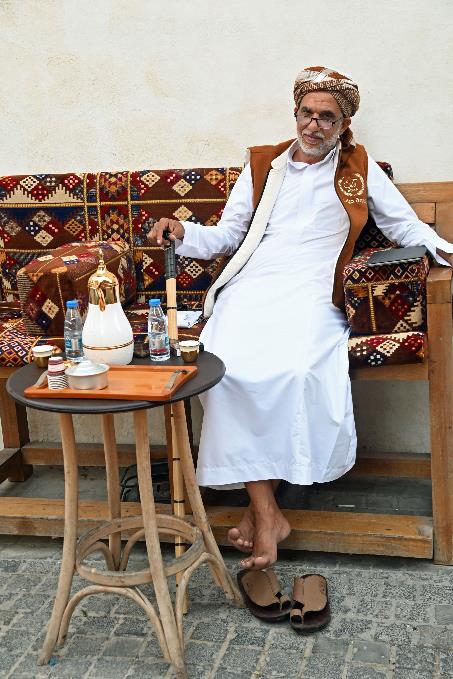
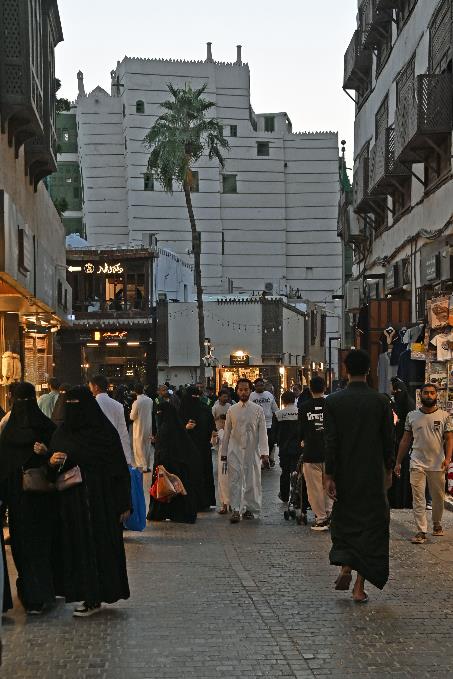
Our city walk ends at the Nassif House. It is a magnificent building dating from 1872, with, according to reports, 106 rooms. Local folklore has it that a burglar was once arrested here after losing his way and being unable to find the exit. In 1925, Abdulaziz, the founder of modern Saudi Arabia, used it as his royal residence after besieging and capturing Jeddah.
Two attendants in traditional dress even appear at the entrance to console us with pre-packaged dates and qahwa
Nassif House – Attendants in traditional dress |
|
|
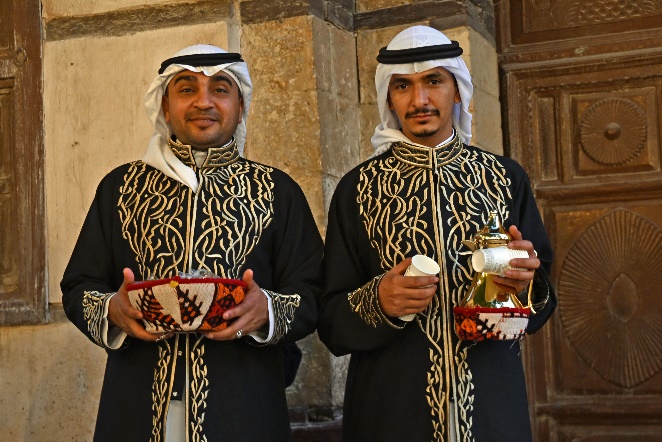
Particularly striking is the enormous tree standing in front of the house. It is probably as old as the house itself, meaning around 150 years. It is a neem, a tree species native to India that tolerates drought well. It has to, in this climate. Ask anyone in Al Balad about the house with the tree and they will know exactly which one you mean, because there is only a single such tree.
Inside, a fine museum dedicated to the history of Jeddah has been established. For some reason, however, the door remains closed to us. A pity, but there is little to be done about it. That does not prevent us from experiencing Saudi hospitality. Two attendants in traditional attire actually appear at the door to comfort us with pre-packaged dates and qahwa, Arabic coffee, in a dallah, a typical coffee pot.
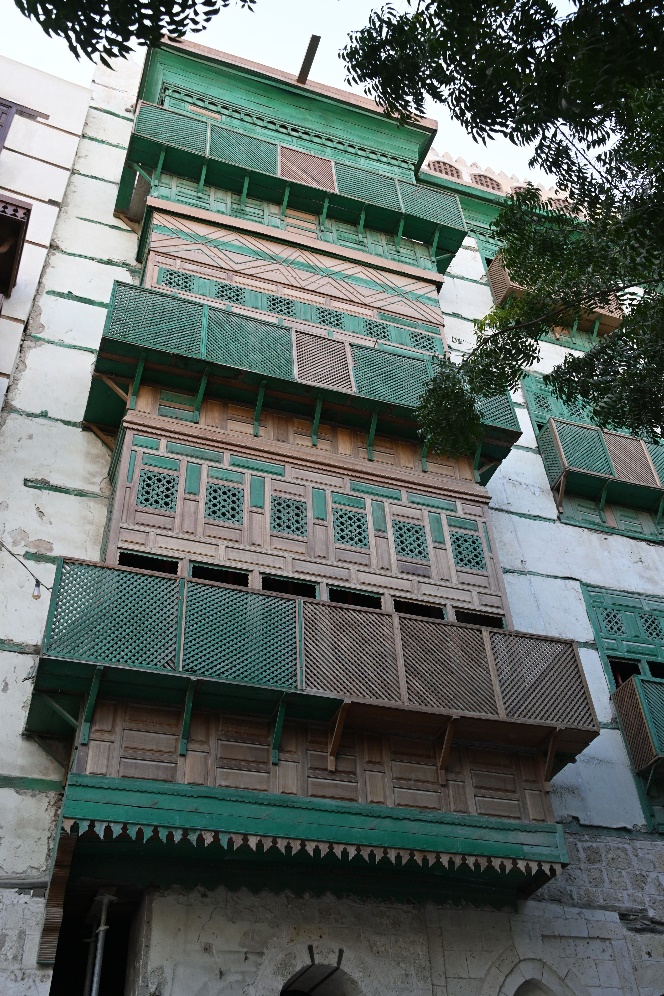
Some rawashin even extend from the ground floor all the way to the fourth storey
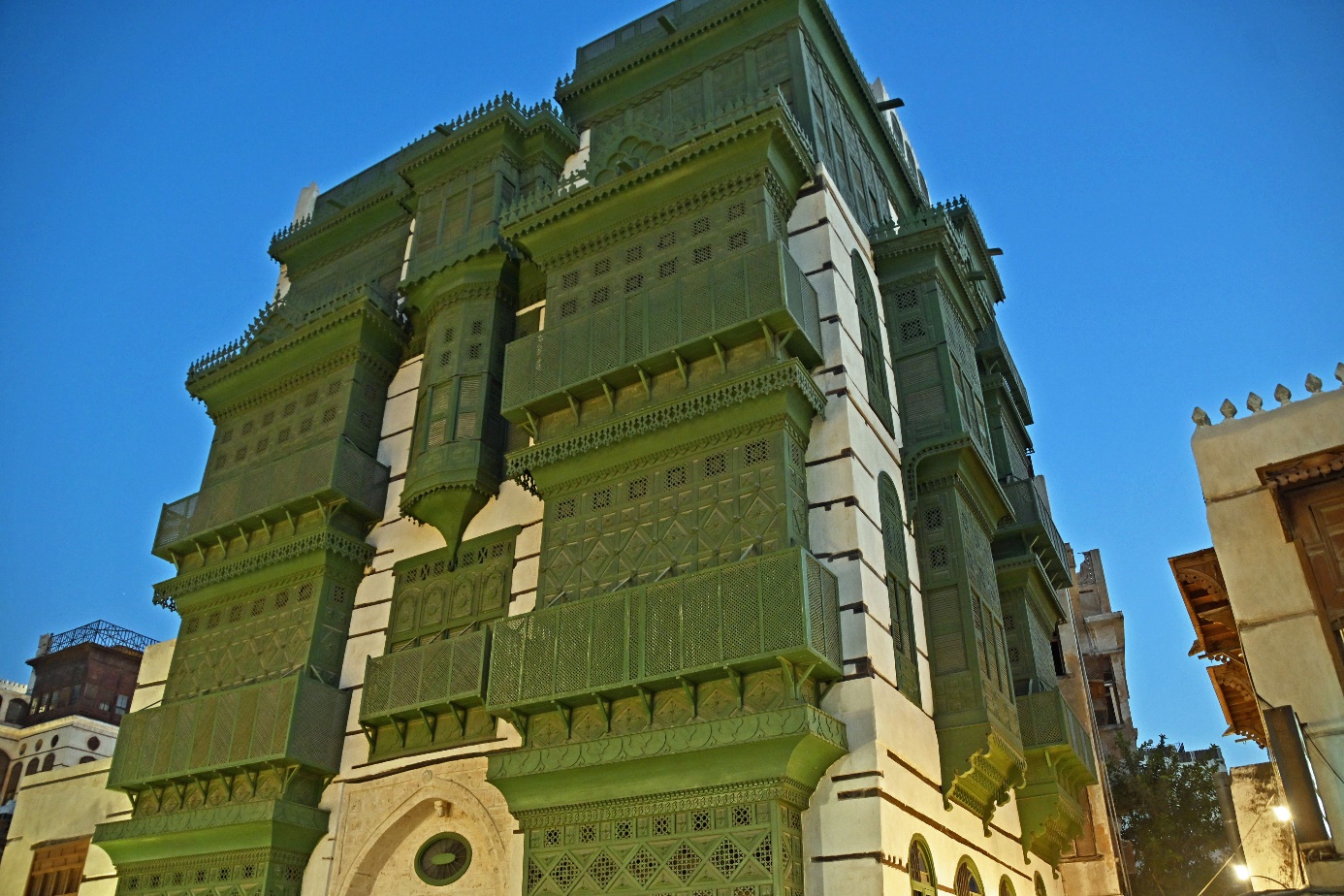
Noor Wali House
A little further on stands the iconic Noor Wali House. At six storeys high, this limestone building with its elegant entrance portal is one of the tallest houses in Jeddah. But that is not what makes it remarkable; it is the impressive green rawasheen that have earned the house its fame. Some even extend from the ground floor all the way to the fourth storey, making them the largest in Jeddah. The hexagonal rawshan in the centre of the front façade is particularly regarded as an exceptional example of traditional carpentry.
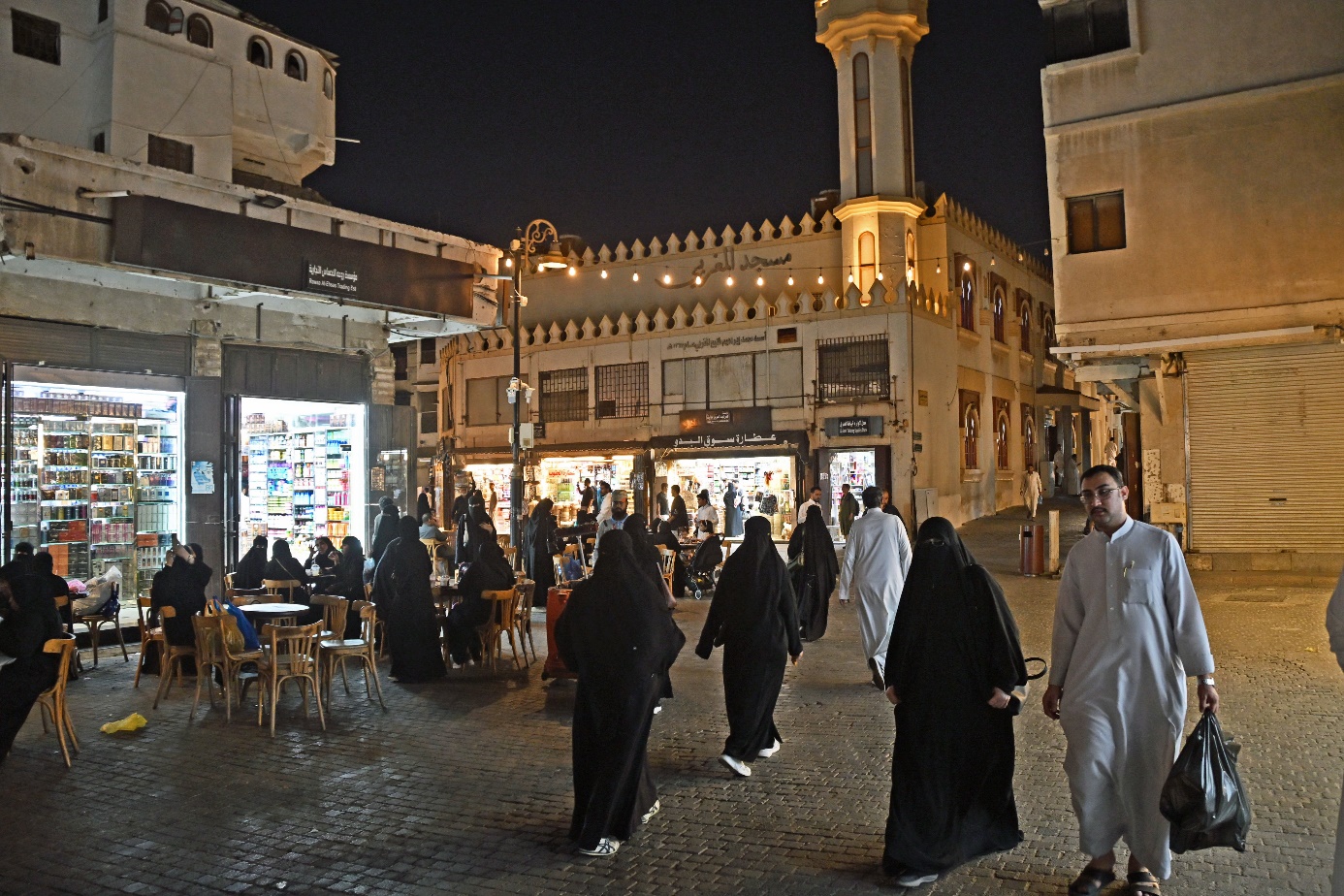
Al Maghribi Mosque
By now, darkness has fallen. On our way back to the hotel, we make one final stop at the Al Hamra Corniche for yet another one of the superlatives Saudi Arabia takes pride in. We have never before looked at a fountain from a distance of more than eight hundred metres. But this is no ordinary fountain; this is the King Fahd Fountain.
The water jet of the King Fahd Fountain reaches almost as high as the Chrysler Building in New York
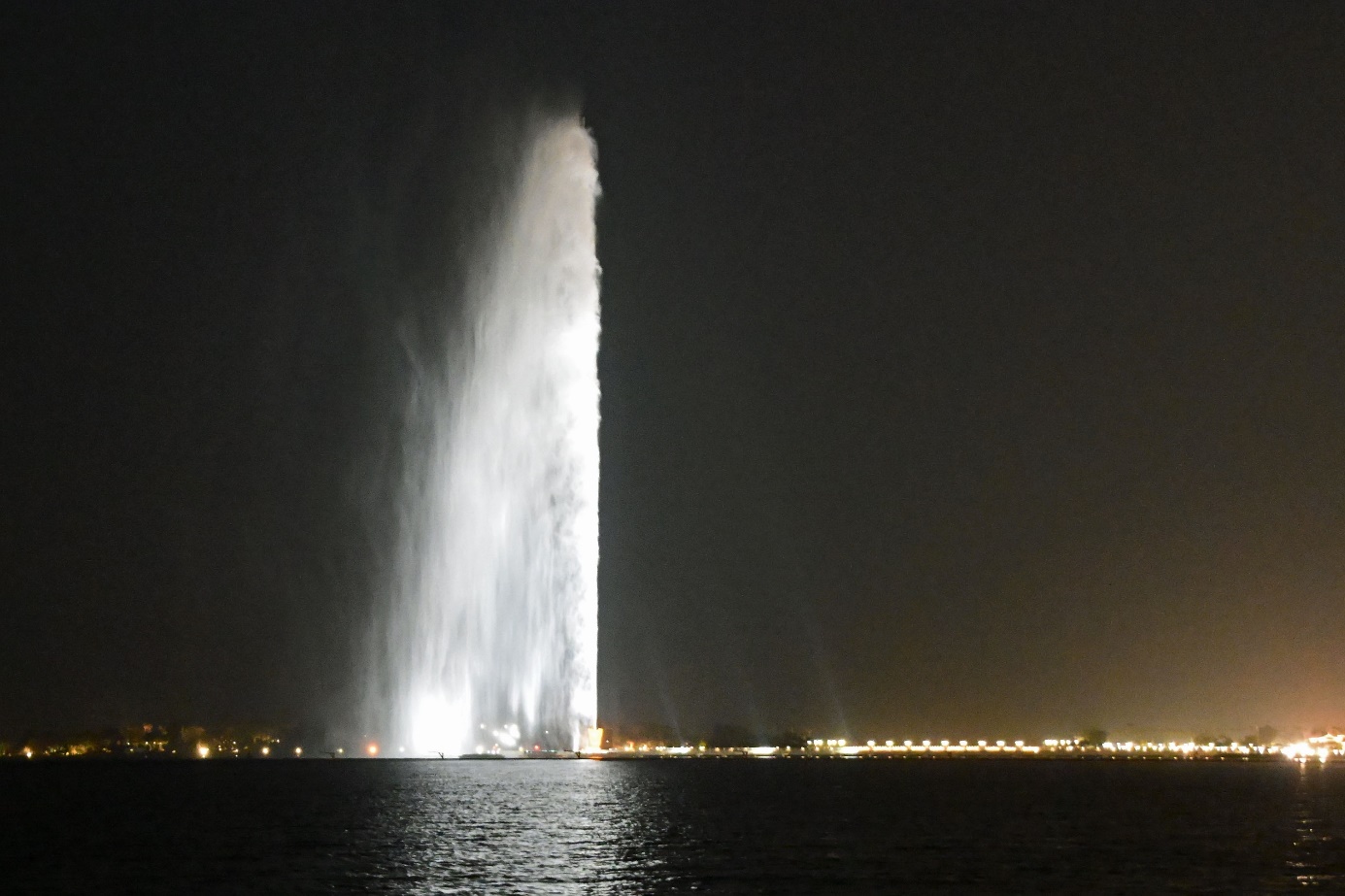
King Fahd Fountain, seen from a distance of 800 m
In the distance, we see the brilliantly illuminated jet of water standing out sharply against the black sky. At its base, the water leaves the nozzle at a speed of 375 km per hour (223 miles per hour) to reach an unimaginable height of 312 m. That is roughly the same height as the Chrysler Building in New York. No other fountain in the world can match it. Photography is not permitted, though – at least not with a camera; a smartphone is allowed.
At his Seafood Restaurant, Kareem Ramadan serves prawn soup and various types of fish, unfortunately all of it fried or deep-fried. After that, it is time for bed – albeit with a jet lag of only two hours.
Jaak Palmans
© 2026 | Version 2026-07-22 15:00
Continue reading in (2/7)
A spoonful of honey here, a date there
