A spoonful of honey here, a date there
Saudi Arabia | Anno 2026
Tuesday 3 February | Jeddah – Taif – Al Manazil – Al Hada
Tuesday 3 February | Jeddah – Taif – Al Manazil – Al Hada
|
|
|
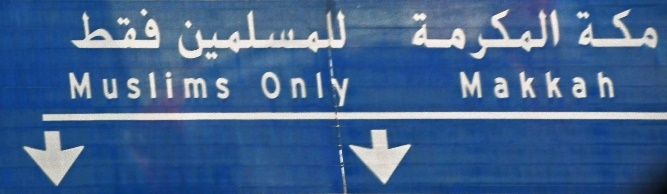
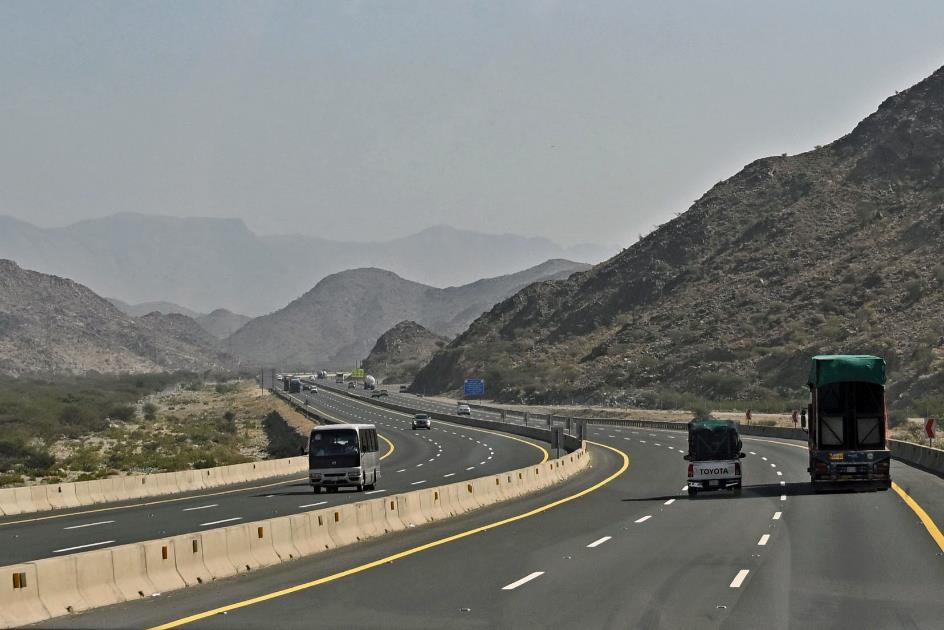
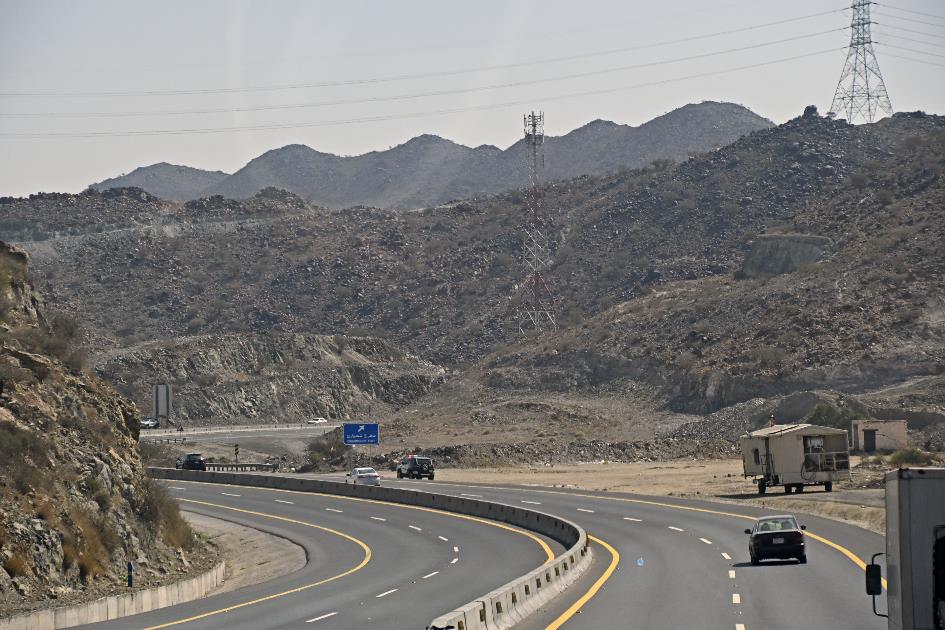
Muslims Only. The motorway signs leave no room for doubt. Although we are still some thirty kilometres (18.6 miles) from the Kaaba in Mecca, non-Muslims such as ourselves are not permitted to go any closer. At the Al Jumum interchange, we must take the exit northwards and then make a wide detour through the mountainous countryside around the Holy City. Fortunately, there is little to complain about on the comfortable dual three-lane motorway.
The concept of a ‘non-Muslim’ is not quite as straightforward as it might seem
Incidentally, the concept of a ‘non-Muslim’ is not quite as straightforward as it might seem. Jews and Christians are indeed non-Muslims, yet Islam places them in a distinct category: they are regarded as People of the Book. This means that they are generally tolerated and often even respected. Zoroastrians, too, are counted among the People of the Book, despite having no connection with the Bible. Like Jews and Christians, however, they are monotheists.
Polytheists, on the other hand, are regarded as kafirs. – Heretics, in other words. The worship of multiple gods is something that finds little sympathy among Muslims. Atheists and adherents of animist religions are also described as kafirs. They are looked down upon, despised and, all too often, persecuted. Enslaving a kafir has traditionally been considered entirely permissible. The black peoples of Africa experienced this harsh reality for centuries. It was only in 1962 that slavery was abolished in Saudi Arabia. Strictly speaking, Christians, with their doctrine of the Holy Trinity, might also be seen as professing a form of polytheism, but Muslims are generally willing to overlook this.
Enslaving a kafir has traditionally been considered entirely permissible. The black peoples of Africa experienced this harsh reality for centuries
Underlying all of this is the Islamic belief that Allah created every soul before the physical creation of the world. Every child, wherever it is born, therefore enters the world as a Muslim. Whether that child remains a Muslim or instead becomes a Jew, a Christian or a Zoroastrian – or, worse still, a kafir – depends on the environment in which it is raised, and on its parents and educators.
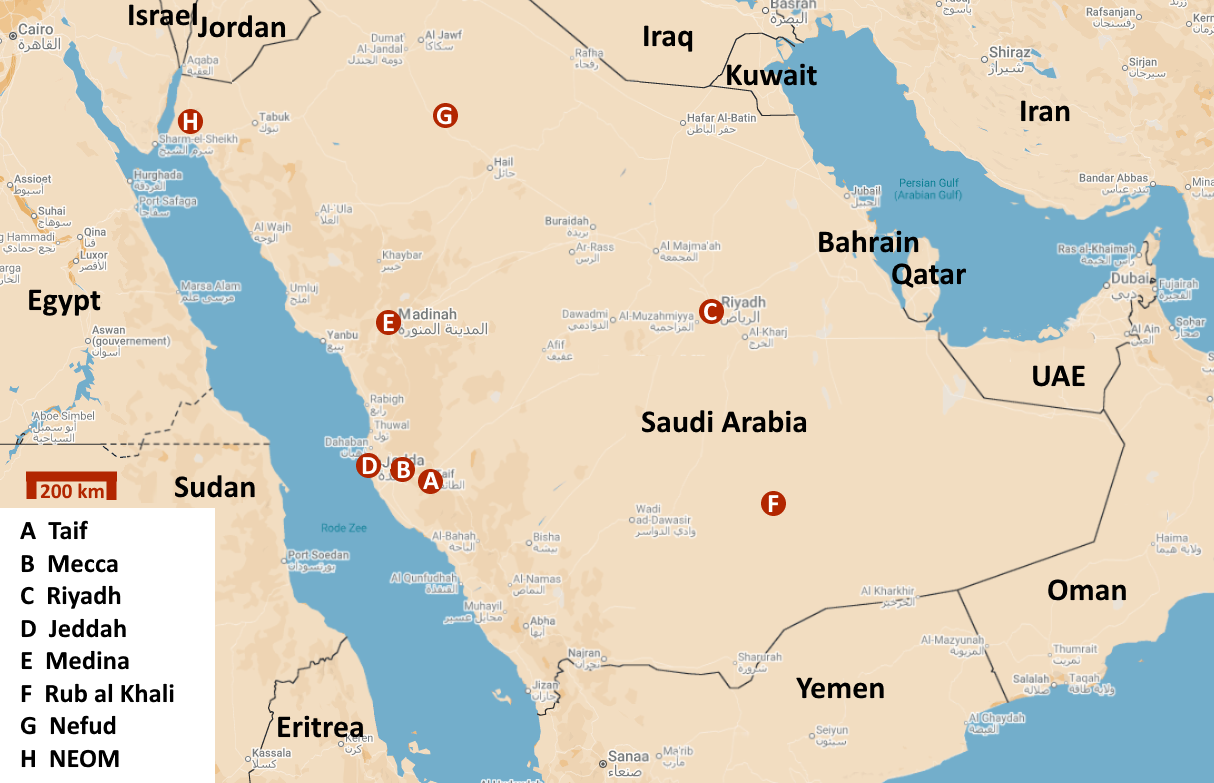
As our driver, Mujahir, obediently steers us along the wide arc around Mecca, we are told more about this country and its religion. Covering an area of 2.2 million square kilometres (850 000 square miles), Saudi Arabia is roughly the size of Greenland or nine times larger than the United Kingdom.
That is no small territory. Yet, with a total population of around 36 million, it has an average population density of just sixteen inhabitants per square kilometre (41 per square mile). Around forty per cent of the population lives in one of the country's four largest cities: Riyadh, Jeddah, Mecca and Medina.
Covering some 247 000 square miles, Rub al Khali is the largest continuous sand desert in the world
In 1950, Saudi Arabia's population numbered only three million. What has happened since can only be described as a population explosion. Much of this growth is, of course, attributable to the large-scale influx of foreign guest workers. Their number is now estimated at between ten and twelve million. Most come from the Indian subcontinent, the Philippines, Egypt, Lebanon, Syria and Jordan. There are also around one hundred thousand expatriates from Western countries. But they generally occupy the opposite end of the pay scale.
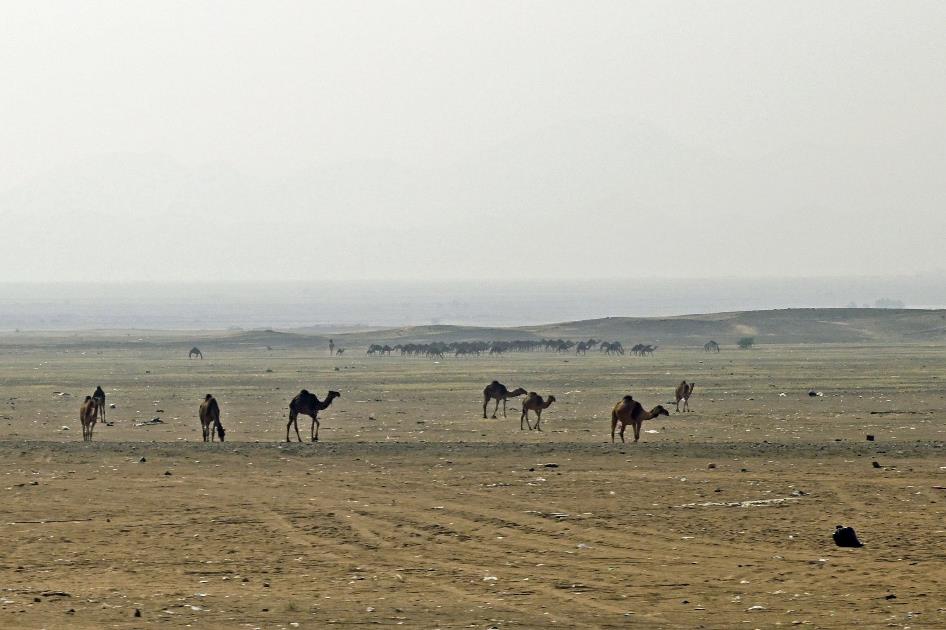
Mention Saudi Arabia and most people think immediately of desert. That is not entirely justified. Alongside its deserts, the country also has extensive lowlands, steppes and mountain ranges. Yet the infamous Rub' al Khali – the Empty Quarter in the south – is a desert on a truly monumental scale. Covering some 640,000 square kilometres (247 000 square miles), it is the largest continuous sand desert in the world, almost exactly the size of France. Its smaller northern counterpart, the Nefud, extends over a mere 78,000 square kilometres (30 100 square miles) – roughly the size of Ireland.
The Saudi Arabia we know today came into being only in 1932. It was then a land of sand, Bedouin, camels and dates, a Kingdom of which we would probably have heard very little had oil not been discovered just six years later, in 1938.
Yet those oil reserves are not inexhaustible. The Saudis are only too aware of that. This is why the country is investing heavily in hydrogen, carbon reduction and sustainability
That black gold immediately placed the fledgling nation on the world map. The Americans, in particular, were quick to assist with its exploitation. Oil production was entrusted to Aramco, the Arabian American Oil Company. It was not until 1988 that the Saudis succeeded in buying out their American partners. Today, producing an average of ten million barrels of oil a day, Saudi Aramco accounts for around 90 per cent of the country's oil output. The principal oilfields lie in the north-east of the country, close to what is known locally as the Arabian Gulf, but which the rest of the world knows as the Persian Gulf.
Yet those oil reserves are not inexhaustible. The Saudis are only too aware of that. This is why the country is investing heavily in hydrogen, carbon reduction and sustainability. The driving force behind this change of direction is Crown Prince Mohammed bin Salman. He is not yet king, but since 2017 he has held the reins of power firmly in his hands, thanks largely to his father, King Salman, who, because of his advanced age, has chosen to withdraw from the day-to-day running of the country.
Since then, MBS, as the energetic Crown Prince has come to be known, has been the driving force behind the fresh winds sweeping through Saudi society. One ambitious blueprint for a mega-project has followed another, each more grandiose than the last. Vision 2030 is the umbrella under which all these initiatives fall. Among them is NEOM, a carbon-neutral city without cars or streets, designed to run entirely on wind and solar power. One of its most striking features is The Line, a project whose name is to be taken literally: a city stretching 170 kilometres in length (106 miles) while measuring just 200 metres across. In the meantime, however, it has become clear that even in Saudi Arabia there is many a slip ‘twixt cup and lip. Spiralling costs, for one, have proved a formidable obstacle.
In the meantime, however, it has become clear that even in Saudi Arabia there is many a slip ‘twixt cup and lip. Spiralling costs, for one, have proved a formidable obstacle
For all this drive towards modernisation, Saudi Arabia remains the absolute monarchy it has always been. MBS governs with an iron fist. He alone decides which ideas will set the country on the right course. Those who dare to criticise him may find themselves with ample time to reflect on their supposed error – from the confines of a prison cell.
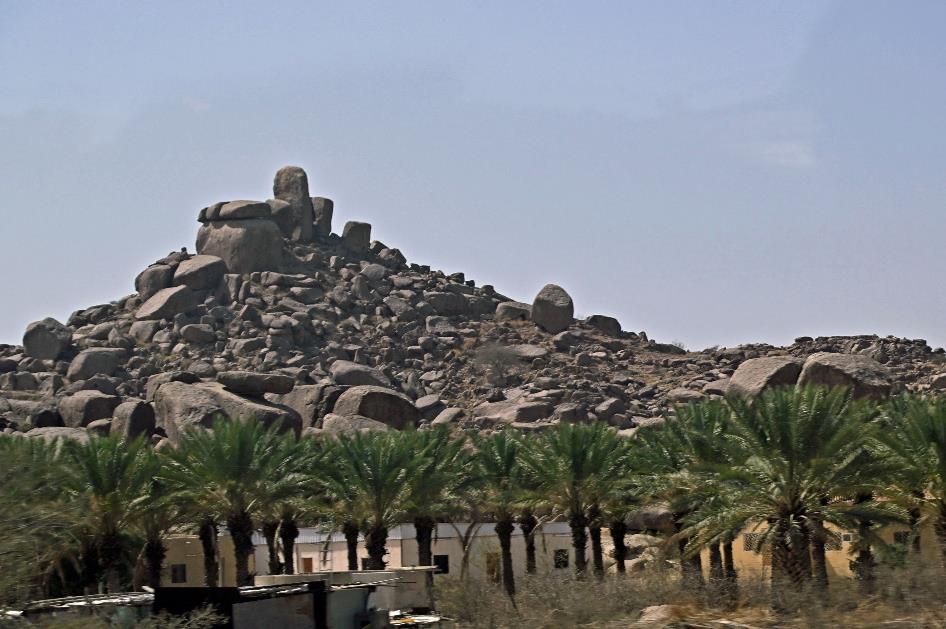
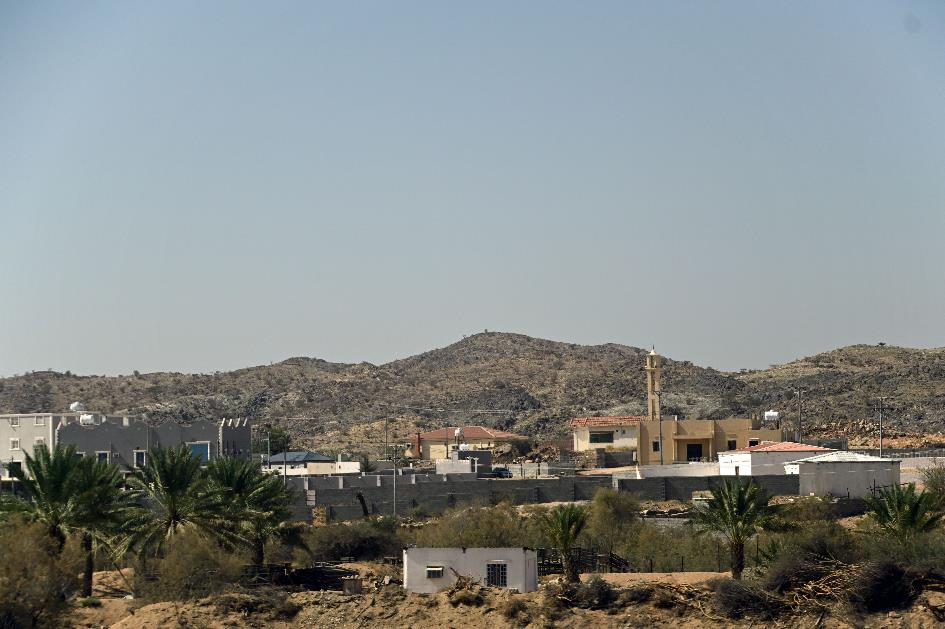
It is striking how frequently vast stretches of green fields appear outside the window, particularly around Ar Rayan. Beans, grapes, pomegranates and even flowers are grown here. Evidently, the surrounding mountains receive rather more rainfall, providing ample water from both underground sources and mountain run-off.
We are more than a little surprised to learn that it rains here on average seven days out of every ten – and even every day during the summer months
Gradually, we approach our destination: Taif. It is regarded as one of the most conservative cities in Saudi Arabia, the very opposite of the more progressive Jeddah, which we left behind this morning. We are curious to see what awaits us. Perched at an altitude of 1,900 metres in the Hejaz Mountains, the city enjoys a pleasantly mild climate, earning it the unofficial title of Saudi Arabia's summer capital. This afternoon, we can look forward to a temperature of around 23°C (73°F).
This is an exceptionally fertile valley. Cereals, grapes, plums, figs, pomegranates, roses – you name it, it grows here. The abundance is due above all to the generous rainfall, which not only provides precious water but also washes mineral-rich sediments down from the surrounding mountains. We are more than a little surprised to learn that it rains here on average seven days out of every ten – and even every day during the summer months.
The exterior combines two architectural traditions: the local Hejazi style with Roman influences
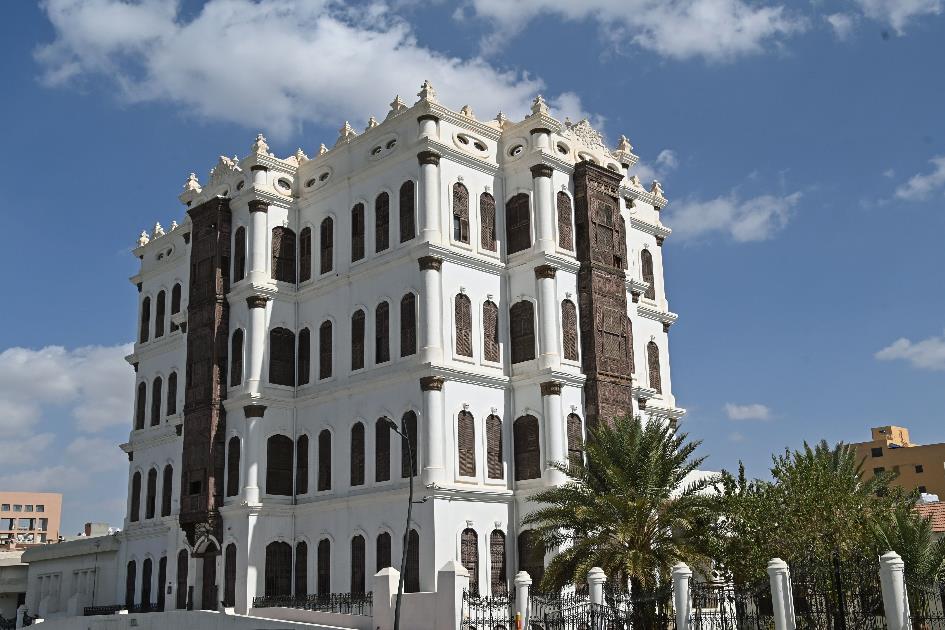
Taif – Shubra Palace
For lunch we head to the Achlan Wasachlan restaurant, only to find it closed for dhuhr, the second of the day's five daily prayers. We therefore make our way to Shubra Palace, where our local guide, Raghad, soon joins us, dressed in a niqab. The black garment appears, if anything, even more austere than an abaya, as it leaves only the eyes visible. Yet beneath that seemingly stifling black fabric is a cheerful, spirited young woman with an infectious laugh, who, as it happens, spent two years studying in the United Kingdom. This country never ceases to surprise.
It was the Ottomans who built a modest residence on this site in 1858, transforming it into Shubra Palace in 1905. By then, however, the Saudis were well on their way to forging their own kingdom. In 1924 they brought the Turkish occupation of Taif to an end.
Shubra Palace |
|
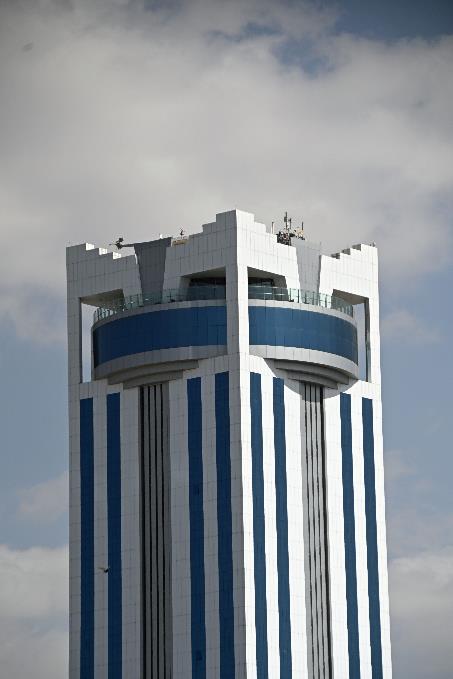
Awaliw International Hotel |
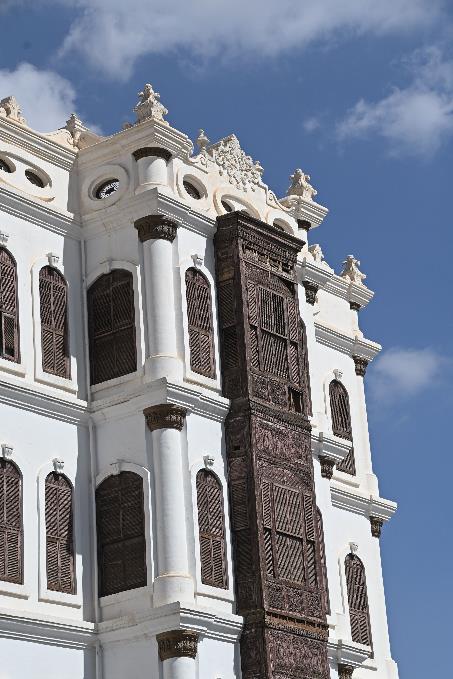
King Abdulaziz, the founder and first king of Saudi Arabia, was particularly fond of the valley's agreeable climate. So much so, in fact, that he regularly spent his summers in this palace, where he died in 1953. One of his sons, King Faisal, was equally attached to the place, until his doctors advised him in later life to stop coming because the high altitude was detrimental to his blood pressure.
Today, the palace serves as a museum, although it is currently undergoing renovation. As a result, our visit leaves us feeling somewhat unsatisfied. According to Raghad, the exterior combines two architectural traditions: the local Hejazi style with Roman influences, the latter supposedly evident in the column-like structures at the corners of the building. Most striking of all, however, are the elegant rawashin adorning the central windows on each of the four façades. They rise to an impressive height of three storeys.
The Family Section in the restaurant appears to be a separate dining area divided into private booths by walls standing just over head height
Family Section in a restaurant |
|
Private booth in the Family Section |
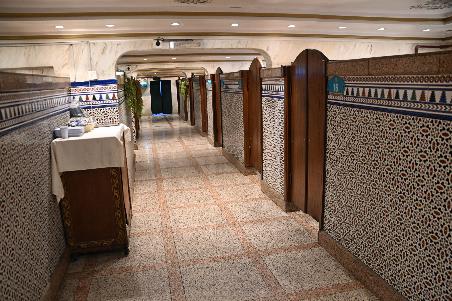
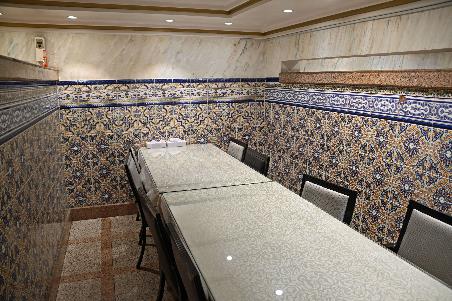
The Achlan Wasachlan restaurant turns out to have a dedicated Family Section. This is a separate dining area divided into private booths by walls clad in attractive ceramic tiles and standing just over head height. Families can dine there in complete privacy, allowing women to remove their face veils and eat more comfortably. That is not an option for us, however, so we settle in the public dining hall, where we are served hummus and aubergine with khobz, the delicious flatbread, followed by two chicken legs with chips.
Although it is not quite the right season – we still have to wait a few weeks before the roses are in full bloom – a visit to a rose distillery is not to be missed. We are even assigned a specialist guide, Majid, a man for whom roses hold no secrets.
The roses of Taif enjoy a worldwide reputation. The days here are hot, while the evenings bring welcome coolness – exactly the conditions roses thrive in. An entire industry has grown up around them, with around a thousand family-run businesses collectively tending some 100 million rose bushes. Each bush produces between one hundred and two hundred blooms. Every flower is picked by hand before being processed in one of the area's hundred distilleries.
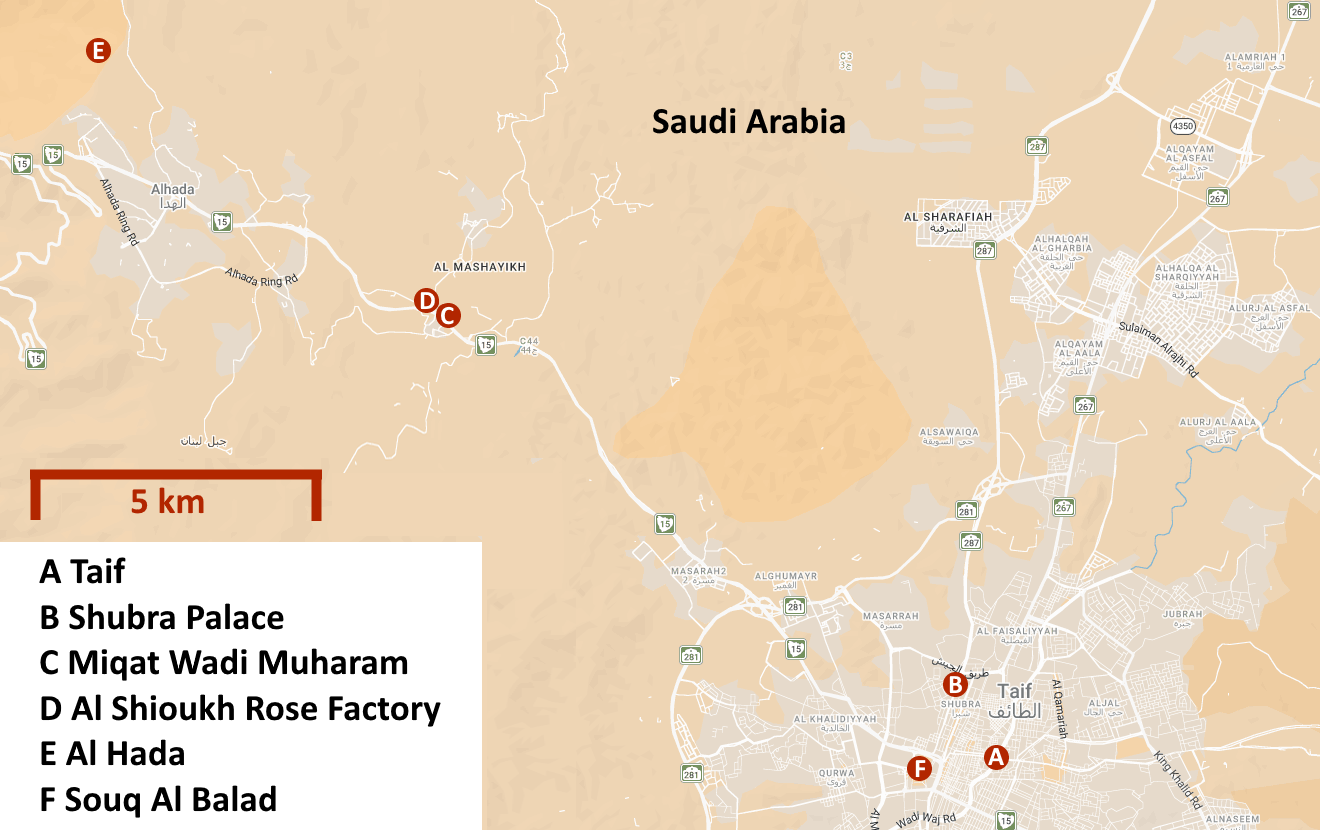
Would you like to see a miqat? Raghad suddenly asks. Naturally, we say yes, even though we have not the faintest idea what a miqat actually is. As luck would have it, we happen to pass the miqat of Wadi Muharam on our way to the rose farm, so we might just as well stop and take a look.
Every pilgrim travelling to the Kaaba in Mecca must, at a certain point, enter the sacred state known as ihram. This is done at one of the five miqats located around Mecca
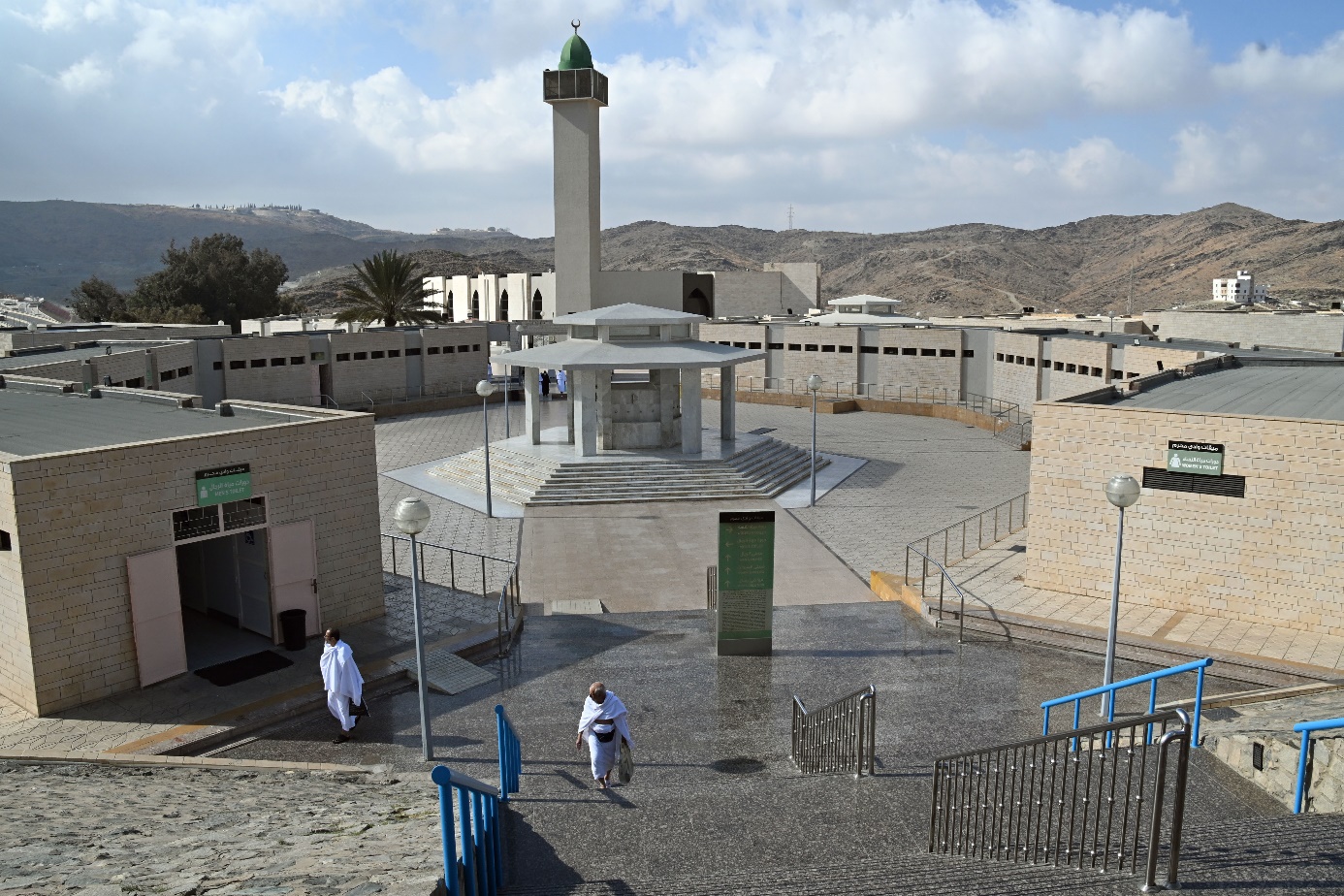
Miqat of Wadi Muharam
Every pilgrim travelling to the Kaaba in Mecca – whether for the obligatory Hajj or for the optional lesser pilgrimage, the Umrah – must, at a certain point, enter the sacred state known as ihram. This is done by performing the prescribed ritual purification and putting on the special garments that are themselves also called ihram. And where does this take place? In one of the five miqats situated around Mecca.
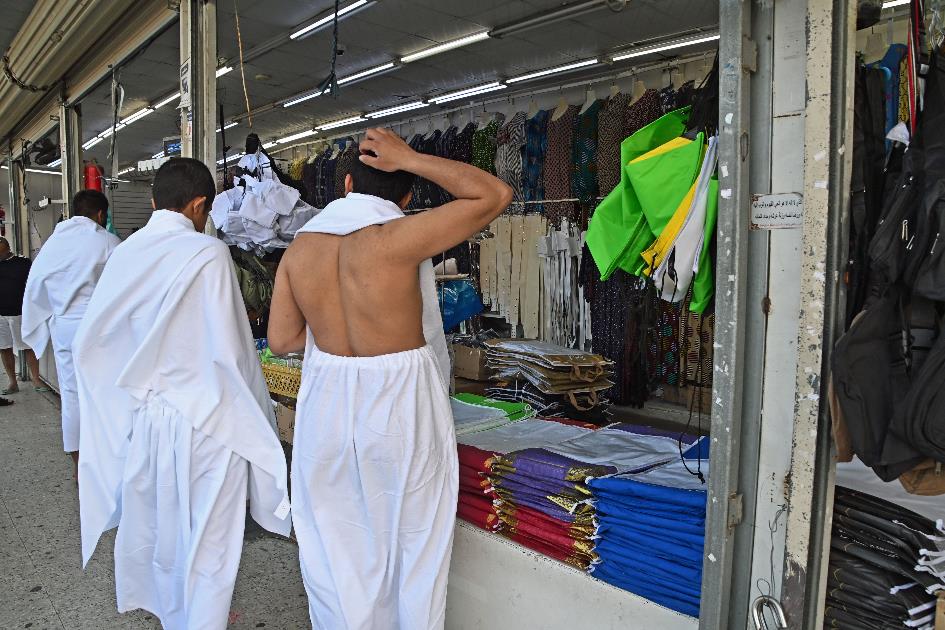
For men, the ihram consists of two seamless white cloths. Buttons and stitched garments are strictly forbidden
Pilgrims in ihram
For men, the ihram consists of two seamless white cloths. One is draped around the upper body, while the other is wrapped around the waist and secured with a belt. Buttons and stitched garments are strictly forbidden. For women, there are no such detailed prescriptions, provided they wear their customary black clothing. Most simply wear a niqab.
The purpose of all this is clear: before Allah, everyone is equal. There is no distinction between a prince and a beggar; all are dressed alike in white. The garments also foster a sense of unity among the pilgrims. Entering the sacred state, however, brings with it a whole series of obligations. Hunting or killing any living creature, engaging in sexual relations, cutting one's hair or nails, wearing make-up or perfume – all of these are forbidden. Anyone who disregards these rules risks having their Hajj or Umrah deemed unacceptable before Allah, rendering all their efforts in vain.
As a pilgrim, you may only enter Al Haram, the holy area that extends 8 to 15 km around the Kaaba, if you are in ihram
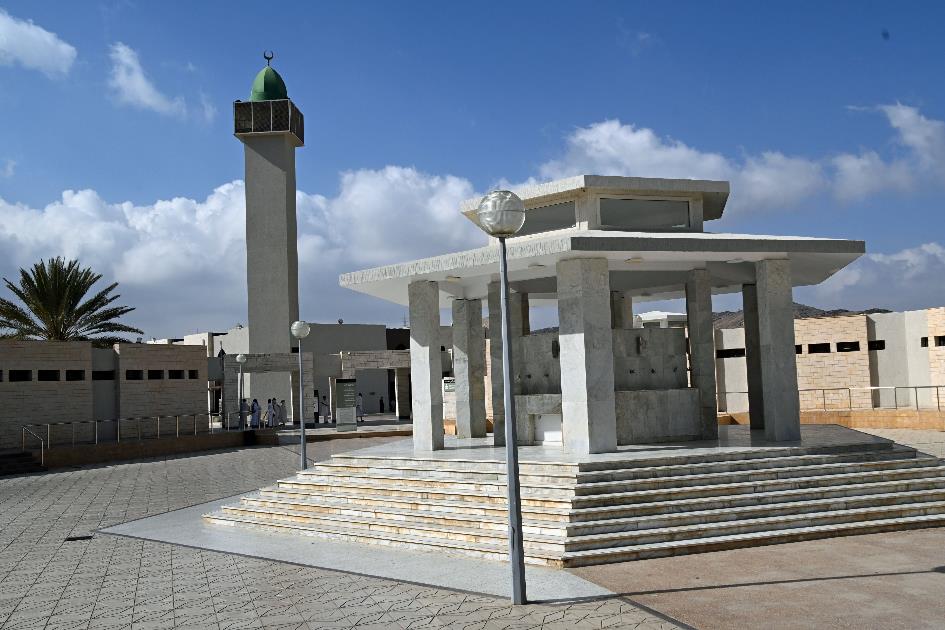
Ablution pavilion
Together, the five miqats define the boundaries of the sacred area of Al-Haram, which extends for 8 to 15 kilometres (5 to 9 miles) around the Kaaba in Mecca. As a pilgrim, you may enter Al-Haram only while in a state of ihram. Now it becomes clear to us why, this morning, we came across Muslims Only signs some thirty kilometres (18.6 miles) from Mecca.
But what about the many pilgrims who arrive in Mecca by plane via Jeddah? Opinions differ somewhat on this matter
But what about the many pilgrims who arrive in Mecca by plane via Jeddah? Opinions differ somewhat on this matter. Most Islamic scholars are of the view that pilgrims should put on their ihram before boarding the aircraft. We had ample opportunity to observe this the day before yesterday. The vast majority of our fellow passengers on the flight to Jeddah were already dressed in ihram. Maybe they had changed clothes at Abu Dhabi Airport, in an Ihram Room provided specifically for that purpose.
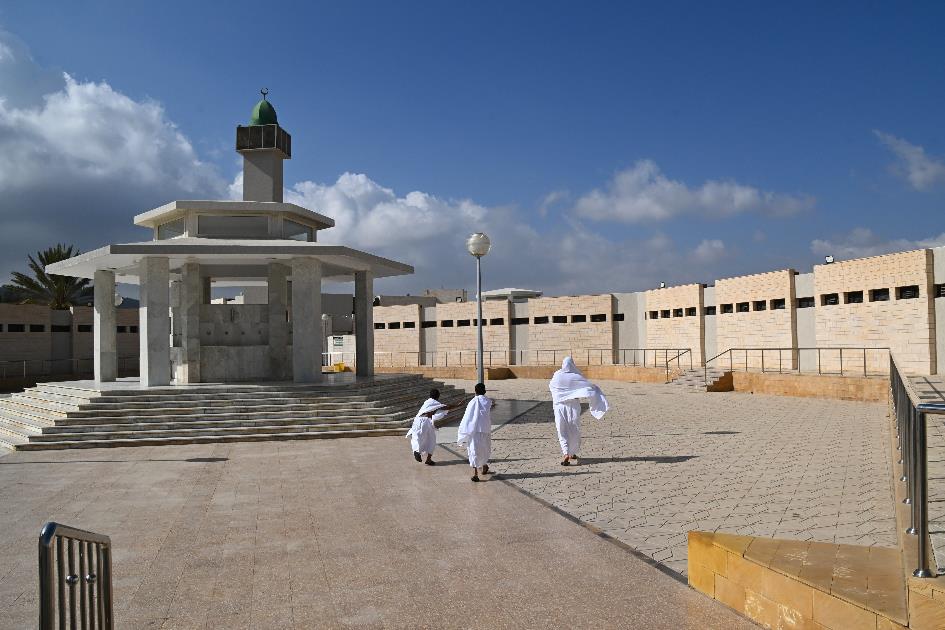
Ablution pavilion with the women’s quarters on the right
Some scholars, however, argue that pilgrims need only put on the ihram once the aircraft enters the miqat zone. Only now do the mysterious announcements made shortly before landing the day before yesterday begin to make sense to us: “Thirty minutes to go…”, “Fifteen minutes to go…”, “Ten minutes to go…”. It was the approach of the miqat zone that was being announced by the flight attendant. Anyone who had not yet put on their ihram knew what they had to do. Yet we did not witness any rush to the toilets.
From a hilltop, we look down upon the miqat of Wadi Muharam. On the left, arranged in a semicircle, are the buildings for men; on the right, those for women. A pavilion in the centre provides a place to wash one's hands. It is not particularly busy; we see no more than a few dozen pilgrims. That is hardly surprising, as this year's Hajj does not take place until the end of May. Moreover, this modest miqat is in fact little more than a satellite facility of the much larger Miqat Qarn Al Manazil.
What particularly catches our eye are the complete ihram clothing sets available for purchase
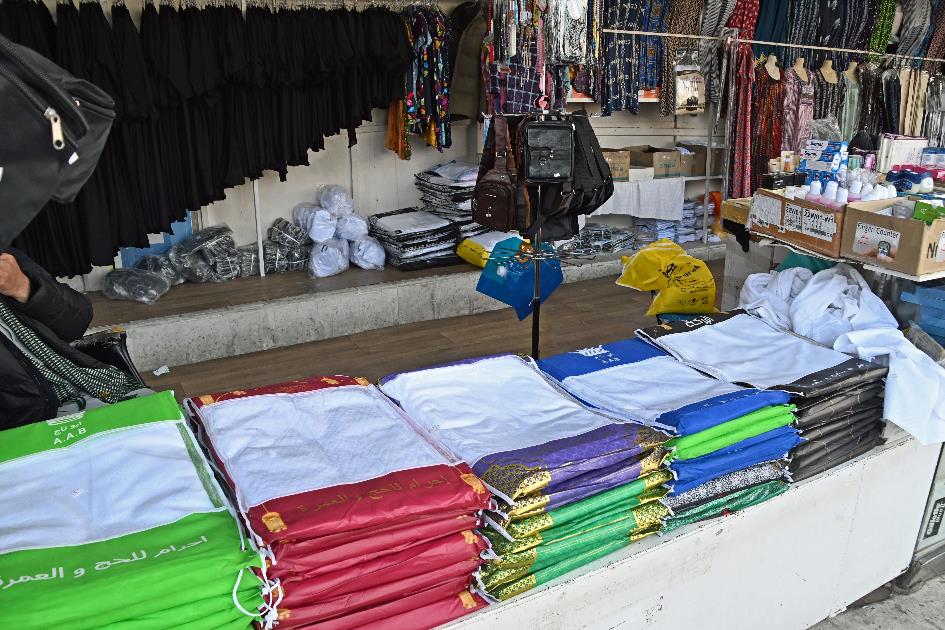
Ihram clothing sets
The stalls present therefore have little business. They sell all sorts of items, especially clothing and personal hygiene products. What particularly catches our eye are the complete ihram clothing sets available for purchase. Naturally, you can also order your Umrah clothing package online, often complete with a belt, safety pins, carry bag, Type G travel adapter and first-aid kit.
But back to the roses, for that was, after all, the reason for our visit. Just around the corner lies Al Shioukh, a rose distillery that warmly welcomes visitors. No one knows exactly why rose cultivation became so deeply rooted in Taif. The most likely explanation is that the Ottomans introduced the rose here. They called these flowers Kazanlik, a name that literally means suitable for the cauldron. It immediately becomes clear that these roses were destined not for ornamental vases, but for the distilling flask. Since the West came to know the rose through Damascus, it became known as Rosa damascena, or the Damask rose. Here, of course, they simply call it the Taif rose.
The fact that the roses are not yet in bloom does not mean that the growers can sit back and relax. Quite the opposite. Every day, beginning in December, the rose bushes must be pruned. If this is neglected, the bushes become unusable. In a few weeks, flowering will begin, lasting from the end of February until the end of April.
The roses of Taif have a worldwide reputation. About a thousand family-run businesses collectively tend some 100 million rose bushes
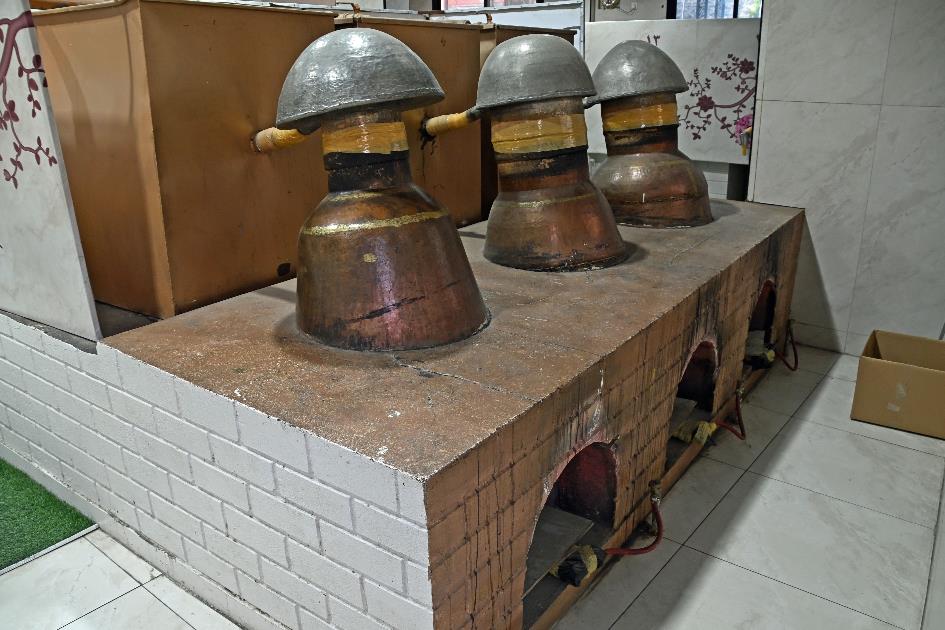
Rose-water alembics
Harvesting takes place from March to April. Just after sunrise, at the break of day, the pickers set out to gather by hand all the flowers that have fully opened. The petals are placed in a large copper pot, around ten thousand at a time. Another 25 litres of water (5,5 gallons) are then added, after which the mixture is boiled for eight to ten hours. The steam produced in the process is captured by the mushroom-shaped cap of the alembic and channelled through a pipe to a cooler chamber, where it condenses into rose water and is collected in a large glass bottle.
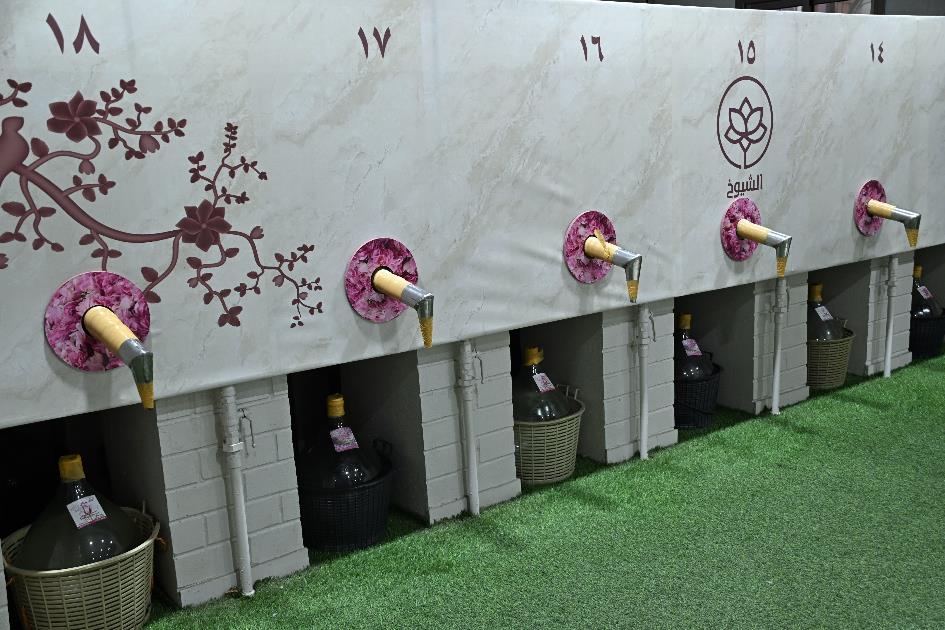
Collection of the distillate
Over time, a thin, golden layer forms on the surface of the rose water: the famous attar, or rose oil. After several days, it is carefully drawn off with a syringe and collected in small bottles, ready to be sold as an essential oil. The rose water is marketed as a toning lotion or used in cosmetic preparations. Finally, the rose petals are dried and used in infusions or floral baths – and why, all of a sudden, do we find ourselves thinking of the film American Beauty?
For more than a thousand years, this was an important caravan route linking Jeddah and Mecca with Taif and, beyond it, the interior
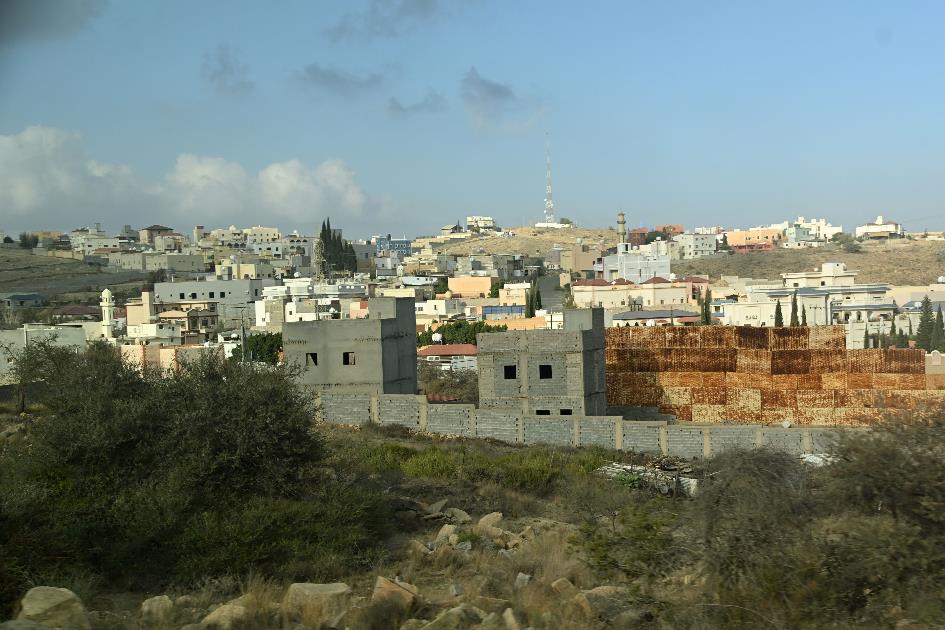
Al Hada
A little further on, at an altitude of two thousand metres in the Sarawat Mountains, lies a place somewhat grandiosely known as the End of the World. If you travel there from the coastal region, you follow the spectacular Al Hada Road, one of Saudi Arabia's most famous routes. It is a breathtaking ascent: 1,300 metres of elevation gain, 93 bends and a distance of 21 kilometres (13 miles). For more than a thousand years, this was an important caravan route linking Jeddah and Mecca with Taif and, beyond it, the interior.
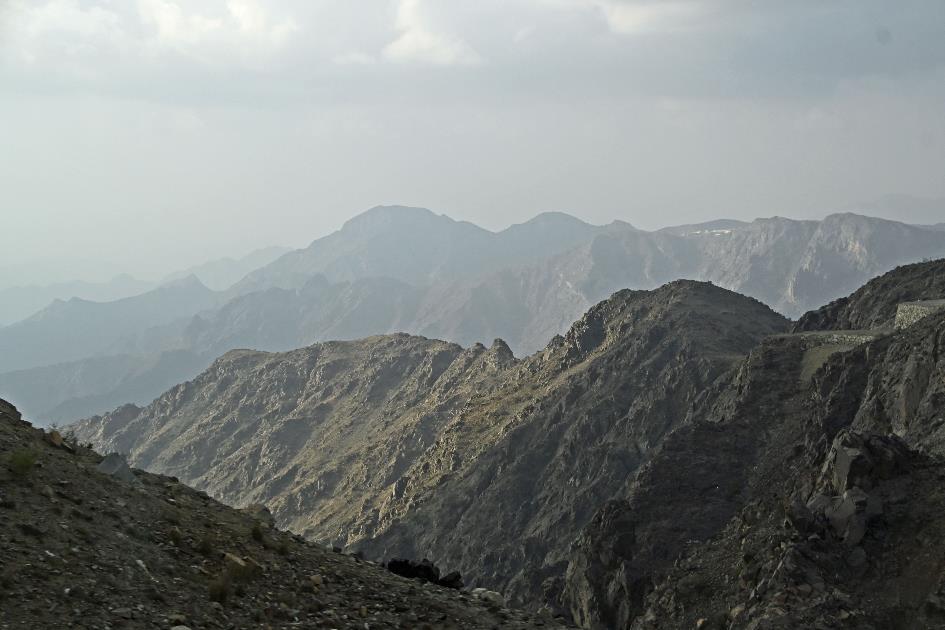
“The End of the World”
Approaching from the east, as we are doing, the route is rather less dramatic. Quite understandably, since we are already at an altitude of 1,900 metres. The celebrated End of the World turns out to be a 2,000-metre-high cliff from which we look out over the coastal plain lying 1,300 metres below. It is a magnificent landscape spread out beneath us, consisting largely of volcanic rock. In the distance, one can even make out Mecca – provided, that is, that the clouds do not spoil the view, as they do today.
Forget the dusty alleyways, adobe houses and humble little shops that so often come to mind when one thinks of a traditional souq
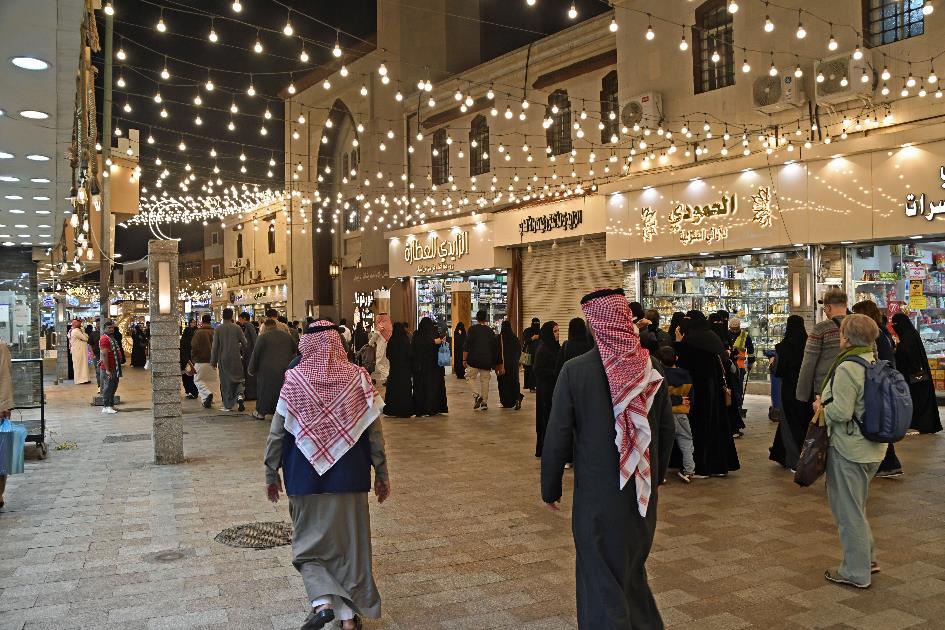
Taif – Al Balad Souq
With the sun hanging low above the western horizon, we arrive back in the centre of Taif shortly after five o'clock. Our driver, Mujahir, drops us off at Bab al Hazm, the principal of the three gates through which the city could once be entered when it was still enclosed by its defensive walls. The historical importance of Taif can scarcely be overstated. In its heyday, the city stood at the crossroads of major trade routes: from west to east ran the road from Mecca, while from south to north stretched the famous Incense Route linking Yemen with cities such as Petra, Gaza, Amman and Damascus. Along this route travelled not only frankincense and myrrh, but also spices, gemstones, pearls, ebony, ivory, silk and even enslaved people from sub-Saharan Africa.
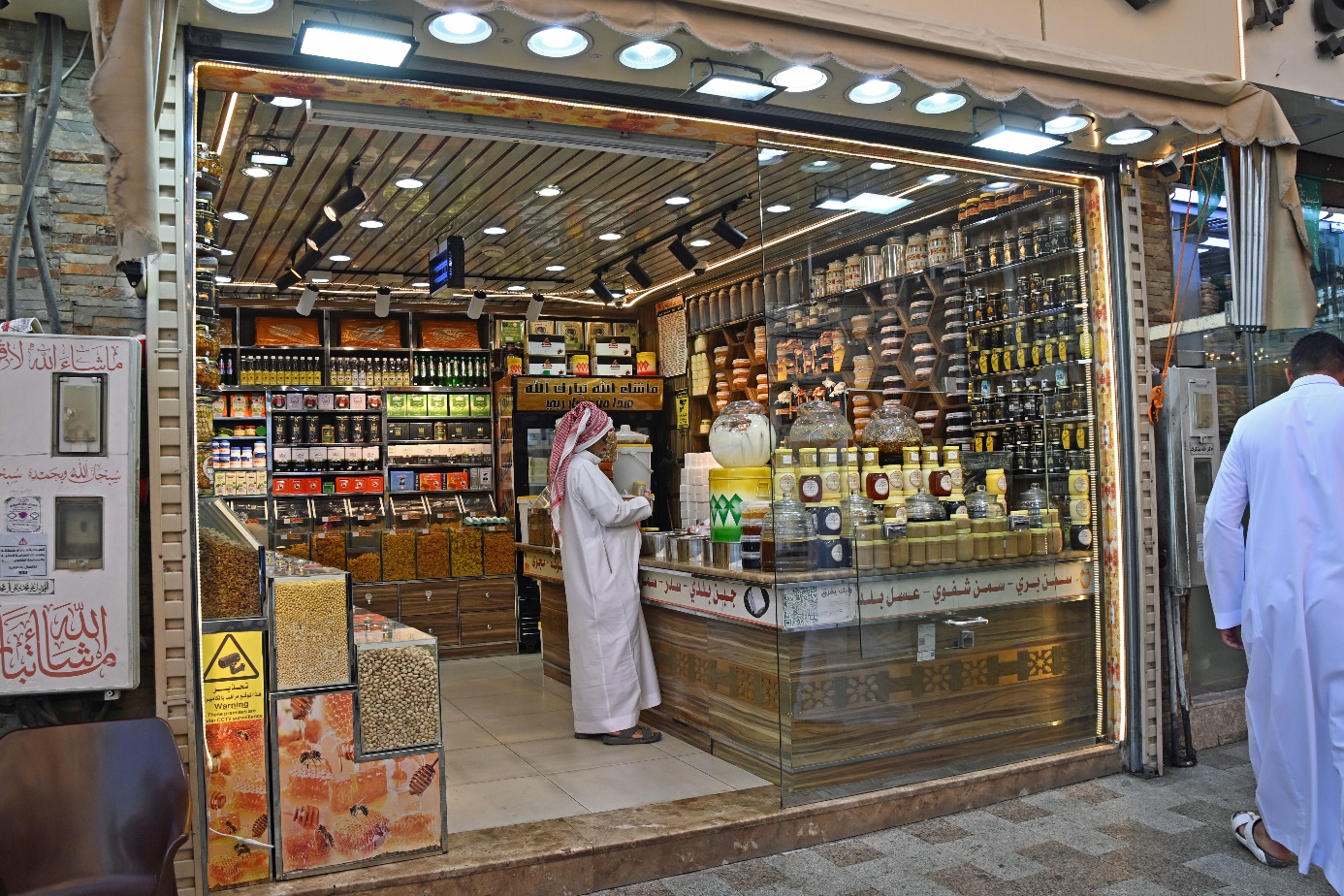
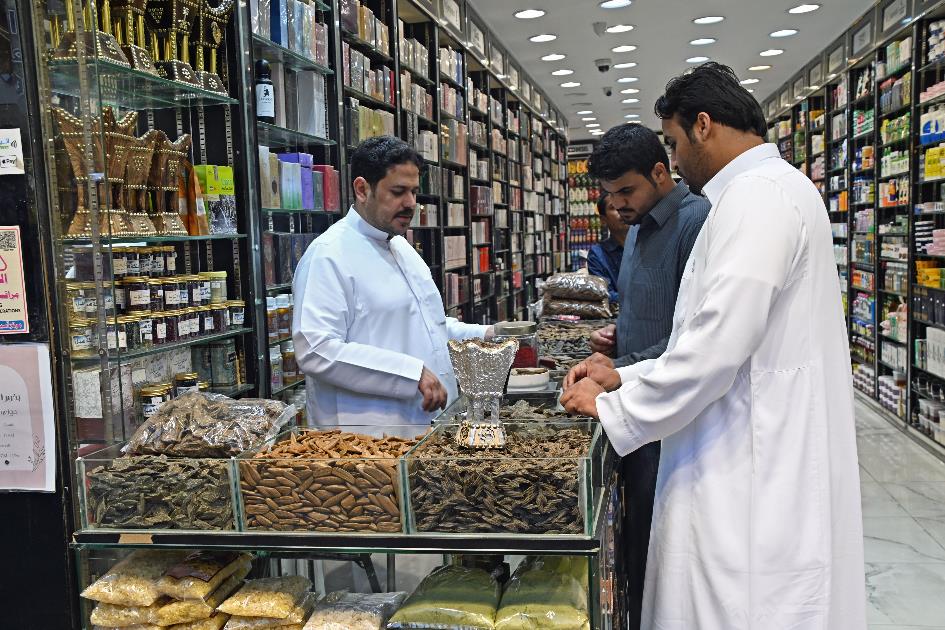
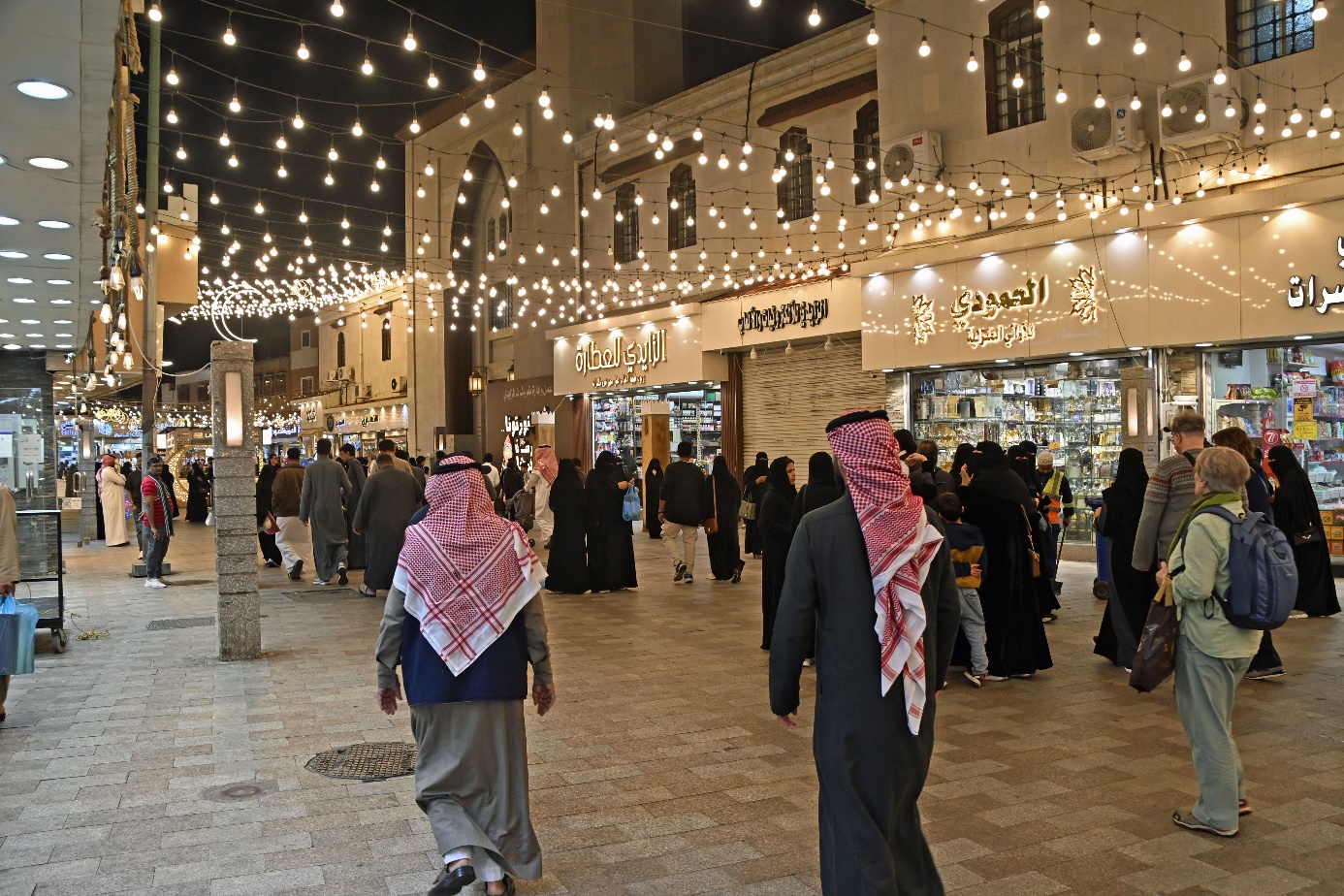
Trade, then, is something the people here know all about. Our visit to Al Balad Souq proves to be a genuine revelation. Forget the dusty alleyways, adobe houses and humble little shops that so often come to mind when one thinks of a traditional souq. This is a modern district, an inviting place to shop, with contemporary stores, impeccably clean streets and lavish lighting. The festive Ramadan illuminations, already in place even though the holy month is still a fortnight away, add to the atmosphere. Only the winding maze of narrow streets still reminds us that this commercial quarter grew organically out of a centuries-old souq.
Literally every woman wears a niqab. Even the abaya is apparently considered insufficiently modest here. Taif is indeed a deeply conservative city
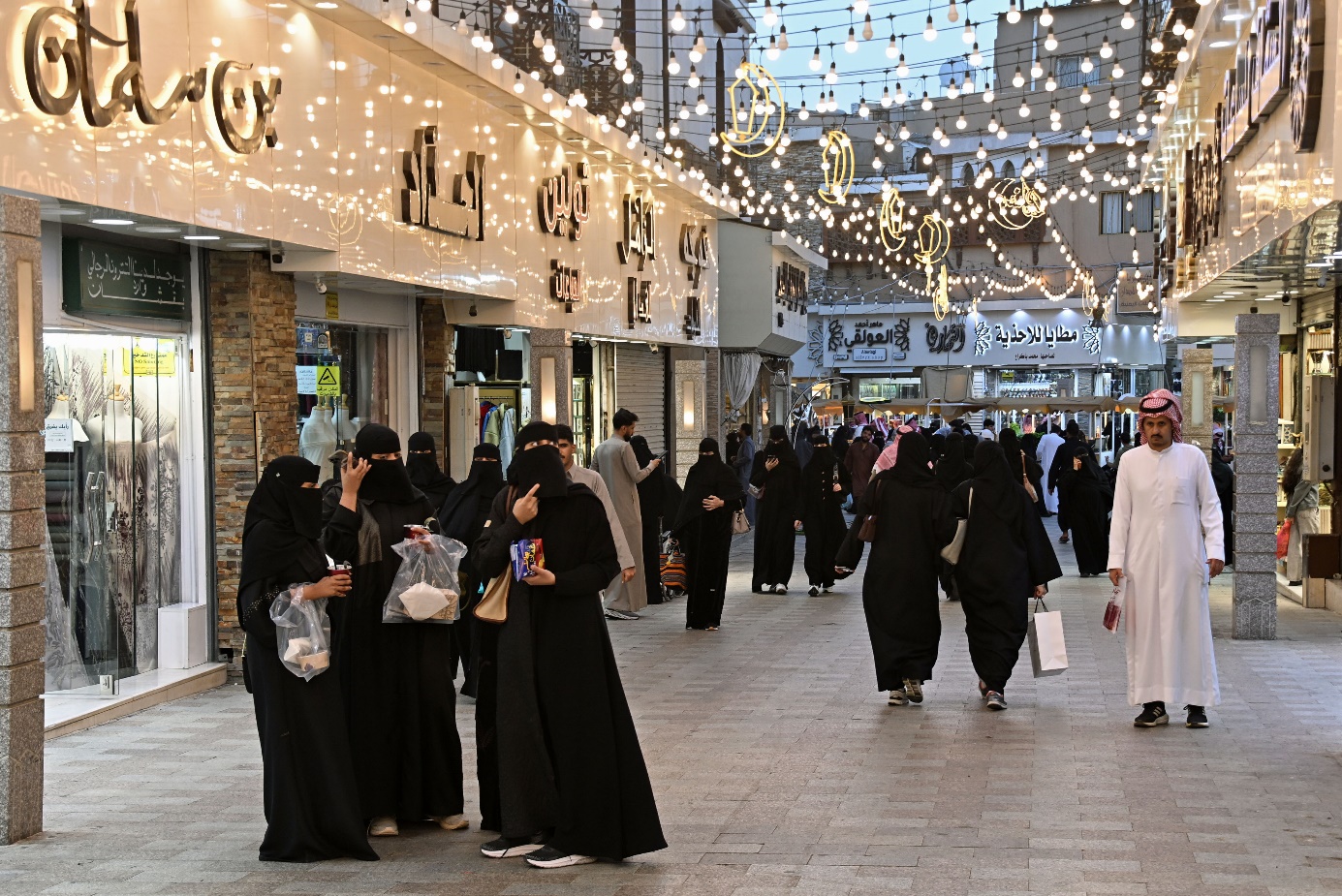
The broad streets are so crowded that it is almost impossible to move through them. Literally every woman wears a niqab, the black garment that leaves only the eyes and hands visible. Even the abaya – the black cloak that reveals a woman's face but conceals her hair – is apparently considered insufficiently modest here. Taif is indeed a deeply conservative city.
Those cheerful eyes peering through the narrow opening frequently seek out contact with Western visitors. Posing together for a photograph is by no means unusual
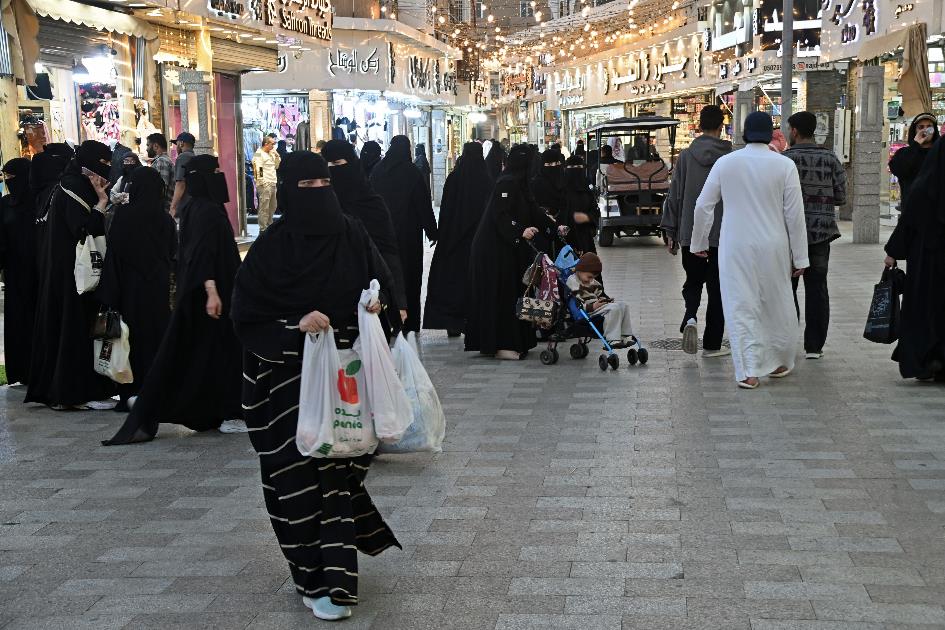
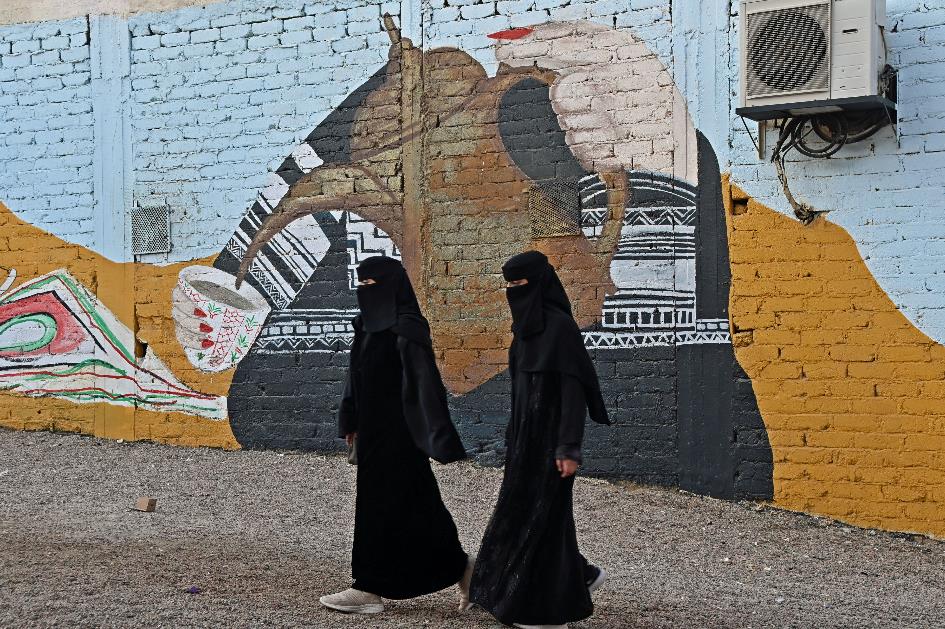
Yet it does not escape our notice that beneath all that black fabric are often lively young women. With carefully applied eye make-up, perfectly shaped eyebrows, rings and bracelets adorning their hands and wrists, and niqabs worn a little more casually than prescribed, they still find ways to express their individuality and to test the boundaries of haya, the Islamic ideal of modesty and proper conduct. Those cheerful eyes peering through the narrow opening frequently seek out contact with Western visitors. Posing together for a photograph is by no means unusual.
|
|
|
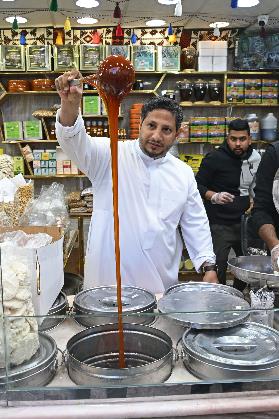
From time to time, brief conversations spring up with young men, such as:
– Where are you from?
– Belgium!
– Ah! Kevin De Bruyne! Lukaku!
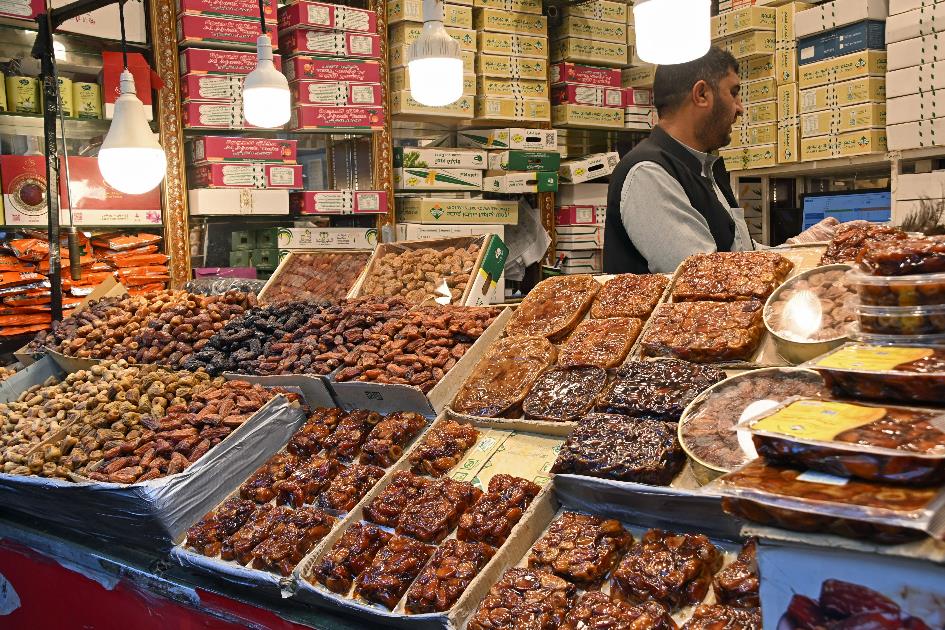
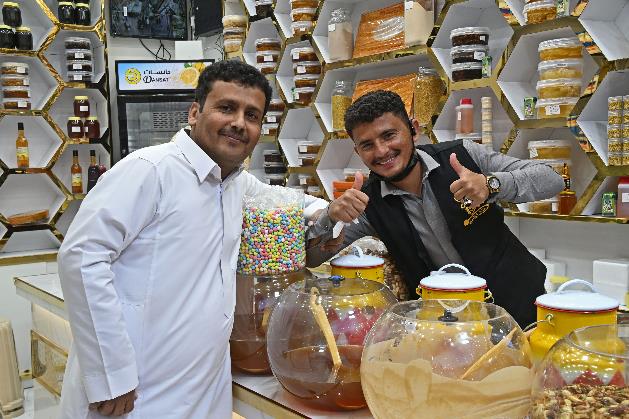
This is certainly not the reserved, distant people we had expected to encounter. The shopkeepers, too, excel in friendliness and hospitality. A spoonful of honey here, a date there – if we are not careful, we shall have eaten our evening meal before we even sit down for dinner.
Particularly striking is the reaction of one shopkeeper when someone in our group wants to buy spices. Rather than making the sale himself, he directs the interested customer to another stall because, he explains, his colleague has not yet had a single customer that day. How does he know? Each morning, when opening their stall, the traders place a chair outside. As soon as the first customer arrives, the chair is taken back inside. Such a display of solidarity gives us genuine pause.
Particularly striking is the reaction of one shopkeeper when someone wants to buy spices. Rather than making the sale himself, he directs the customer to an-other stall because his colleague has not yet had a single customer that day
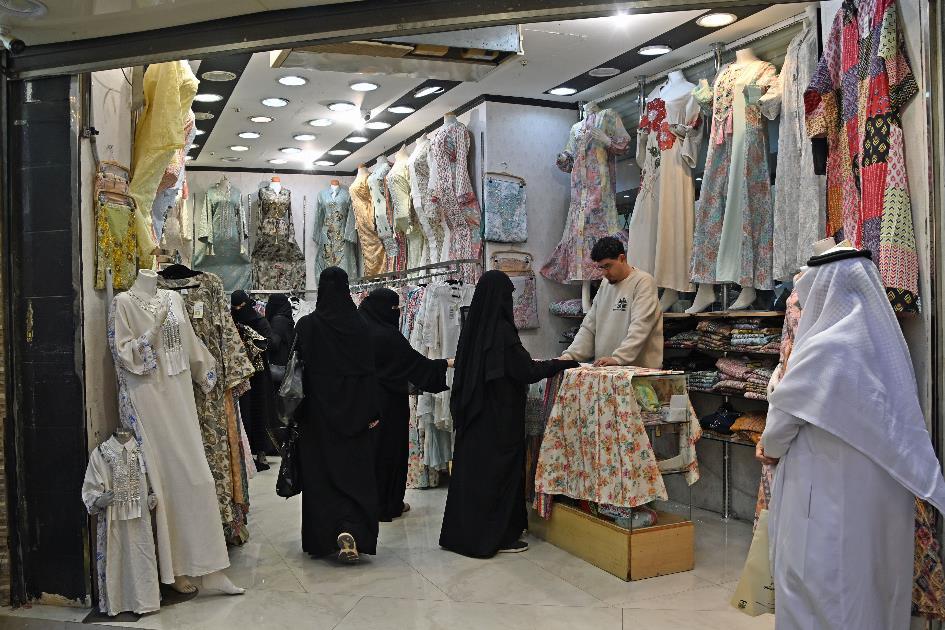
Tomorrow, in Medina, the women in our group will also have to observe the conventions of haya. In the Holy City this means wearing an abaya. So, we settle into a clothing shop and examine the many styles and colours of this seemingly simple garment. It does not take long before everyone has found the abaya of her dreams for the modest sum of one hundred riyals—about 23 euro or 27 USD. Some even receive a matching headscarf free of charge.
Shemagh (traditional head covering, aka keffiyeh) |
|
Agal (black cord used to secure the shemagh) |
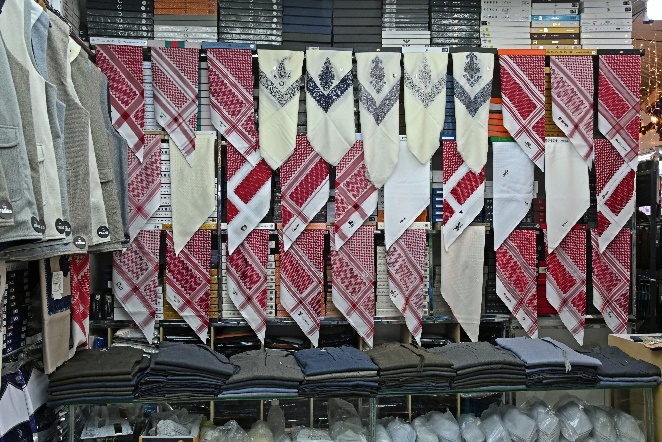
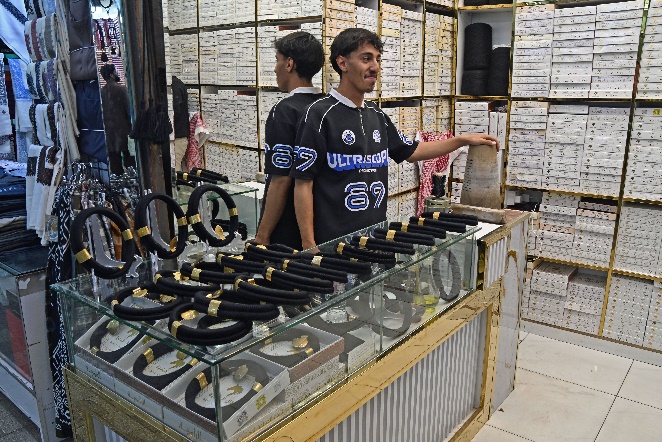
A little further on, the jewellery quarter is just as busy. Thousands of gold rings, bracelets, brooches, necklaces and every imaginable ornament sparkle from the display cases and wall-mounted showcases under the glare of countless spotlights. Customers and shopkeepers bargain energetically in search of the best price.
Jewellery quarter |
|
|
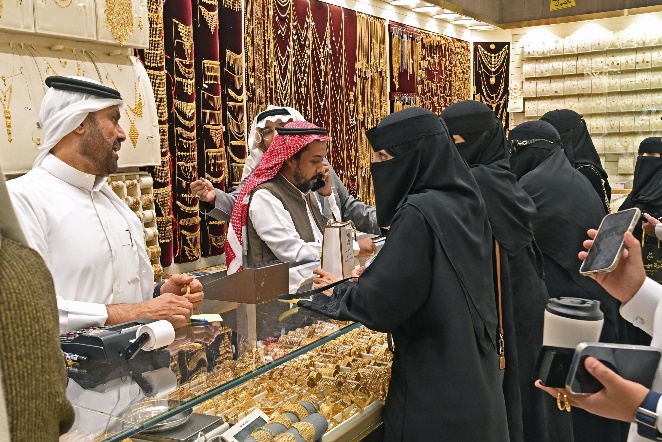
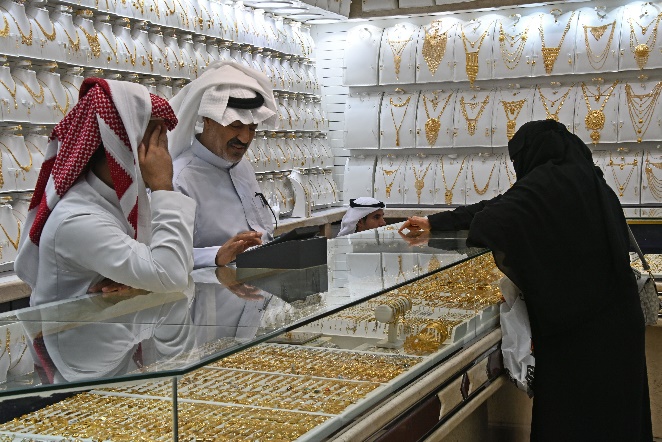
Then, shortly after six o'clock, the call to maghrib, the fourth of the five daily prayers, rings out. Strictly speaking, however, it is the first prayer of the day, for in Islam the new day begins at sunset. As if by magic, the entire district is transformed. Commercial activity almost grinds to a halt. Customers who had been negotiating only moments before quietly leave the shops. One by one, traders lower their shutters, and the streets rapidly empty. The jeweller who had just been selling necklaces is now kneeling in prayer alongside his fellow shopkeepers. One of the jewellers turns out to be the imam, leading the congregation in prayer.
As if by magic, the entire district is transformed. Commercial activity almost grinds to a halt
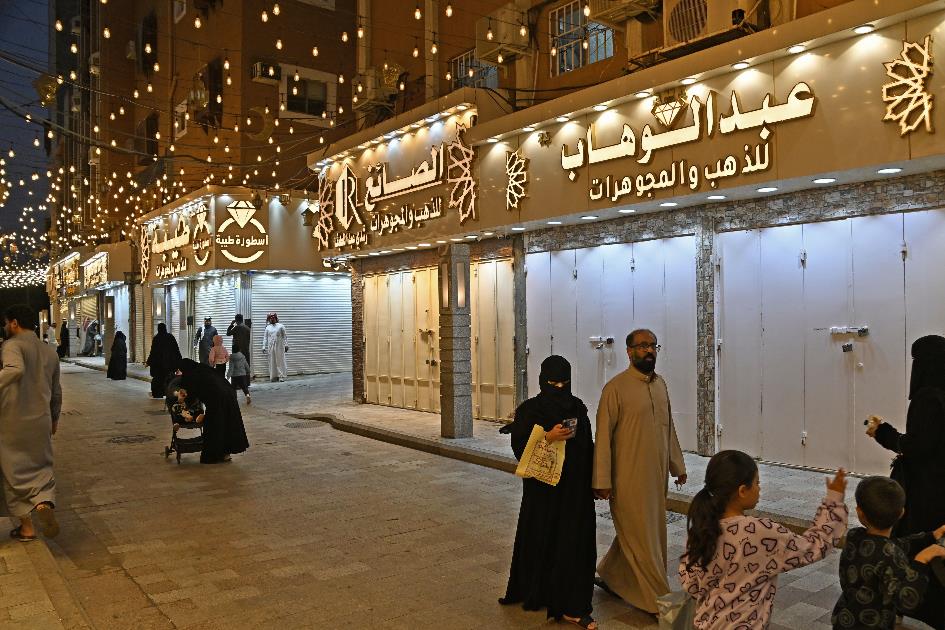
Shops closing for the maghrib prayer
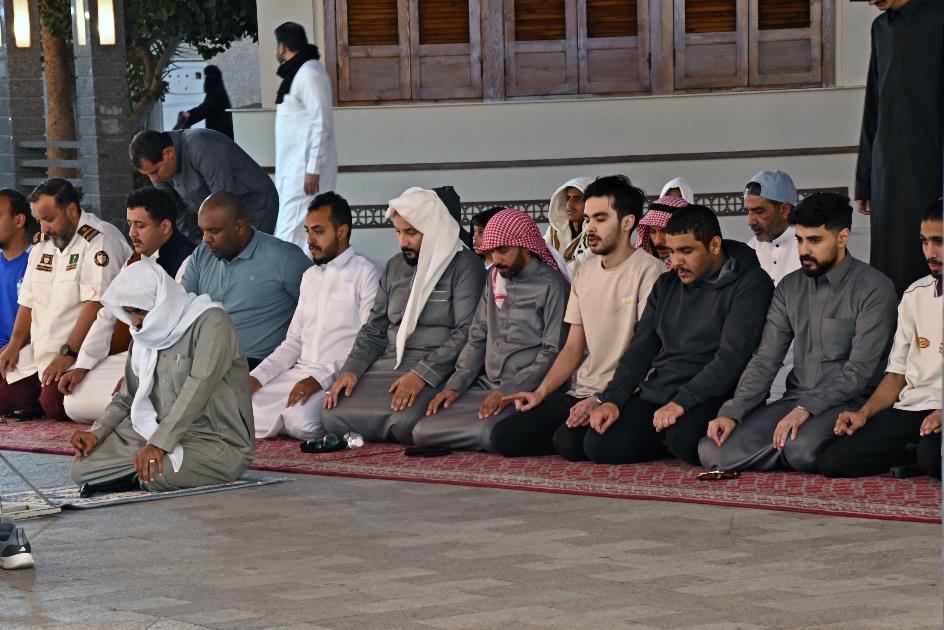
Maghrib prayer in the jewellery quarter
Five prayers a day, every day of the week – we are gradually beginning to appreciate the discipline that this demands of a practising Muslim. Few, if any, other religions require such regular and visible acts of devotion from their followers.
Knife-maker |
|
Coppersmith |
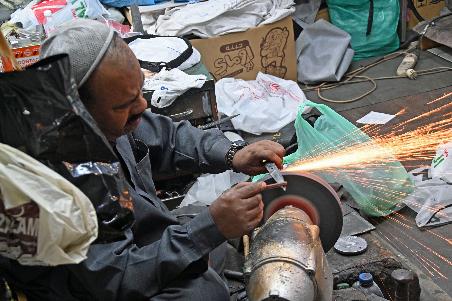
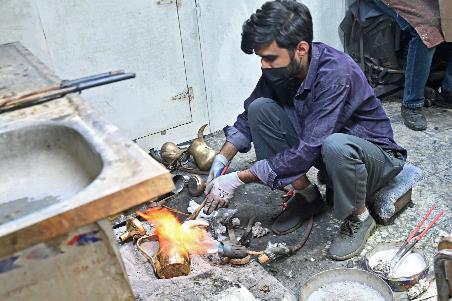
Coppersmith |
|
Cobbler |
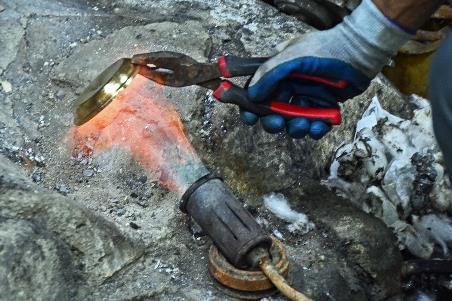
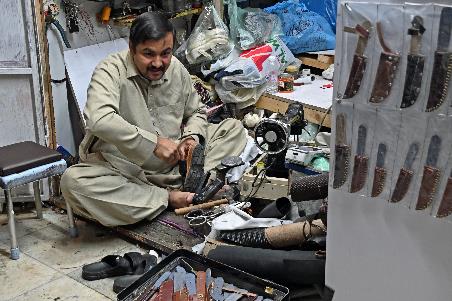
Not everyone, however, observes the practice with the same degree of strictness. Many shops remain open, and in the craftsmen's quarter several artisans continue their work without interruption – a knife-maker, a coppersmith and a cobbler among them.
Jaak Palmans
© 2026 | Version 2026-07-22 14:00
Continue reading in (3/7)
The archers were to blame
