Patras – Thermopylae

Central Greece | Anno 2018


Patras
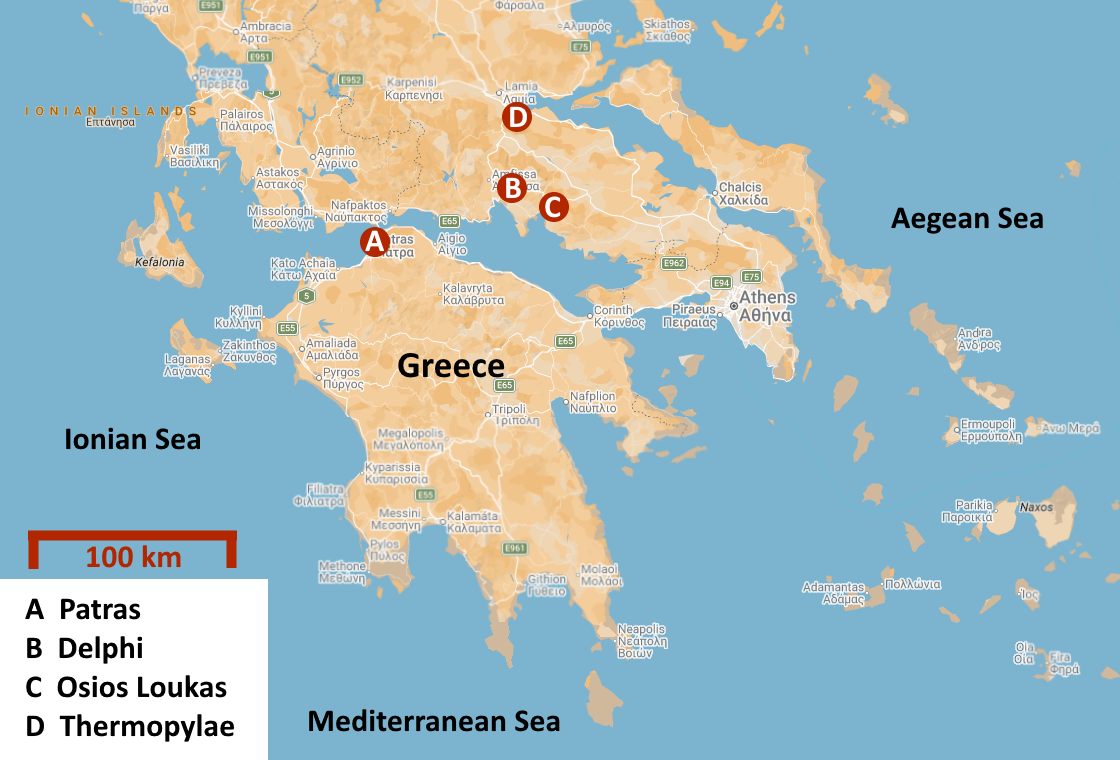
Delphi

Osios Loukas

Thermopylae


The image depicts a map of Greece, highlighting major cities and regions such as Athens, Thessaloniki, Crete, and the islands of Santorini and Mykonos, with distances marked between locations.

Door AI gegenereerde inhoud is mogelijk onjuist.


Patras


Image

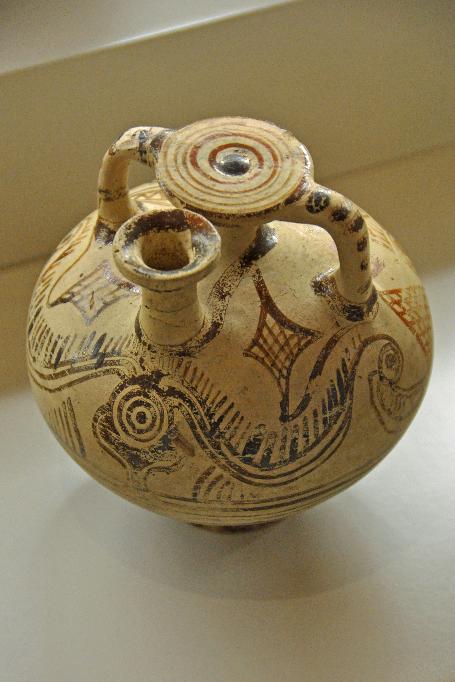
Archaeological Museum of Patras – The highly modern Archaeological Museum was opened in 2009


Image

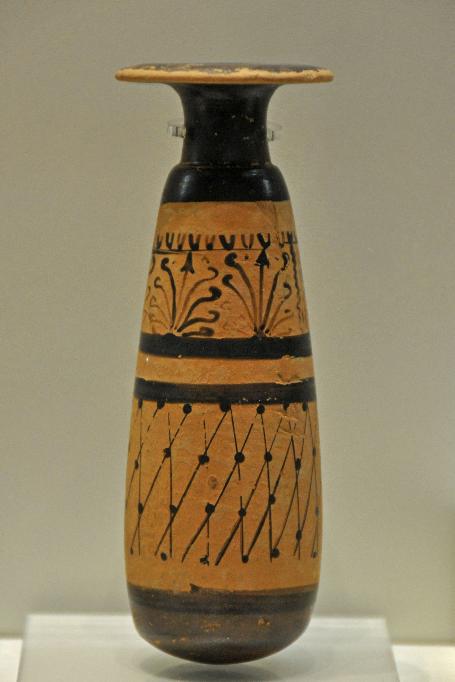
Alabastron for storing perfume or massage oil


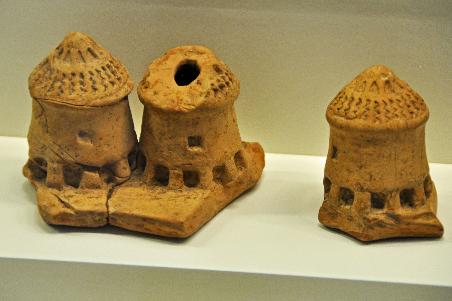
The image shows three ancient clay pottery structures, each with a distinctive conical shape, sitting on a flat surface.

Door AI gegenereerde inhoud is mogelijk onjuist.

Scale models of grain storage buildings


Image

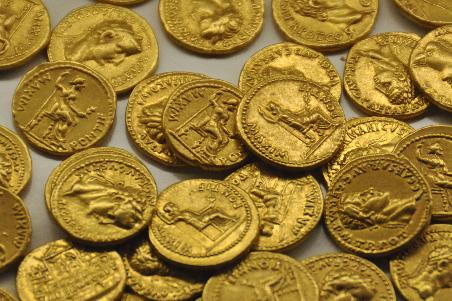
A hidden treasure of gold, probably left behind by someone who had to flee and hoped to return one day


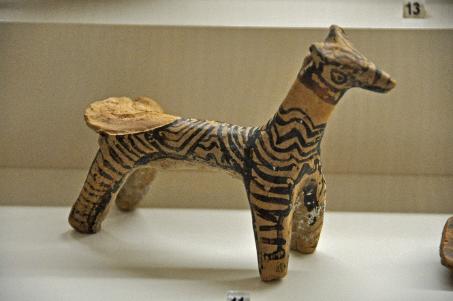
The image depicts an ancient Egyptian-style sculpted animal figurine, characterized by zigzag stripes, mounted on a pedestal.

Door AI gegenereerde inhoud is mogelijk onjuist.


Image


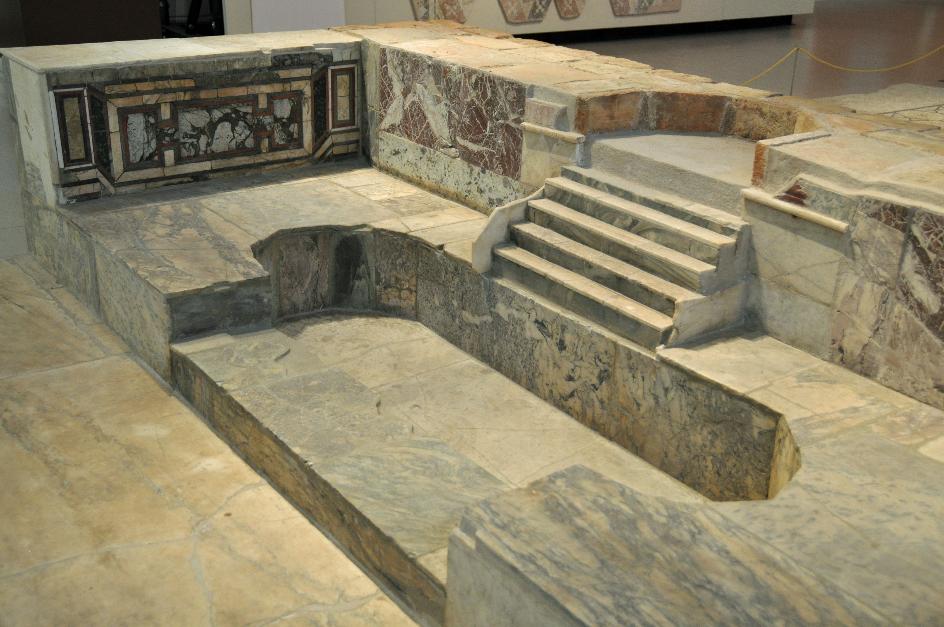
The image depicts an ancient mosaic floor with intricate designs and a series of steps leading into a room.

Door AI gegenereerde inhoud is mogelijk onjuist.

Bathroom in a patrician house


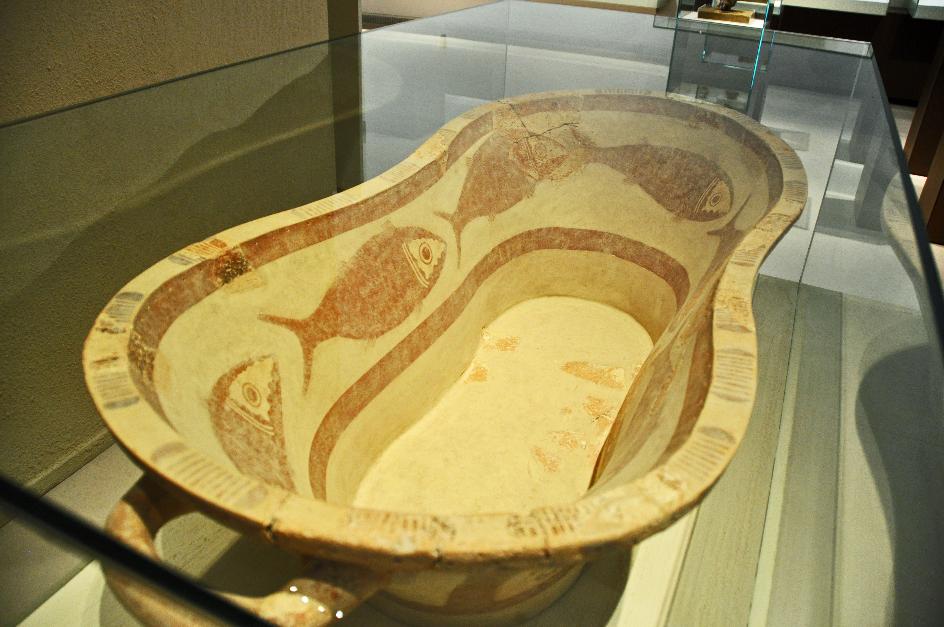
The image depicts a beautifully preserved ancient ceramic basin, adorned with intricate carvings of fish and other marine life, showcasing the artistry of early human craftsmanship.

Door AI gegenereerde inhoud is mogelijk onjuist.

Bathtub


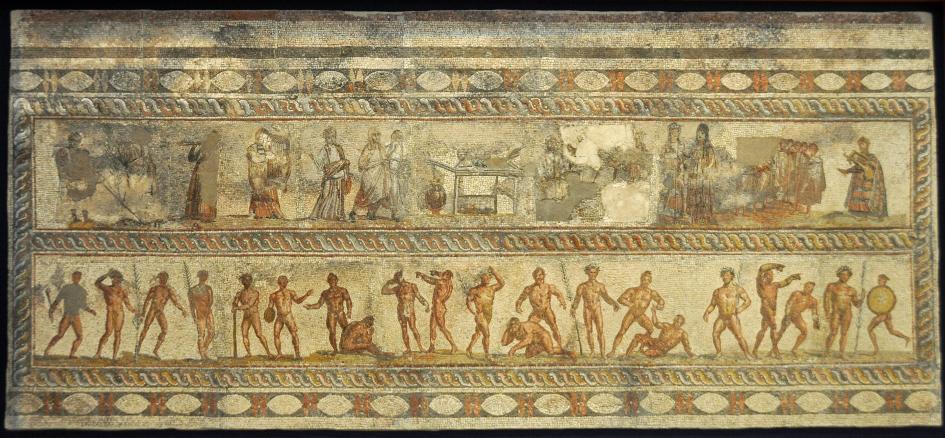
The image depicts a mosaic from ancient Greek art, showing a procession of figures, including humans and animals, in a row, with intricate geometric patterns surrounding them.

Door AI gegenereerde inhoud is mogelijk onjuist.

Floor mosaic – Athletes


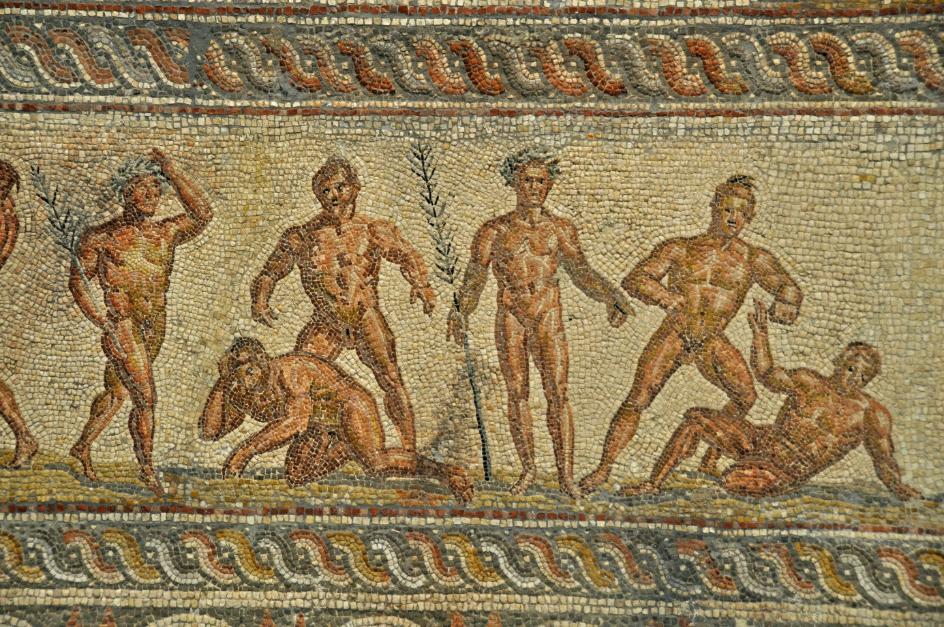
The image depicts a mosaic mural showing several figures in various poses, including a central group of men and animals, surrounded by intricate geometric patterns.

Door AI gegenereerde inhoud is mogelijk onjuist.

Same (detail)


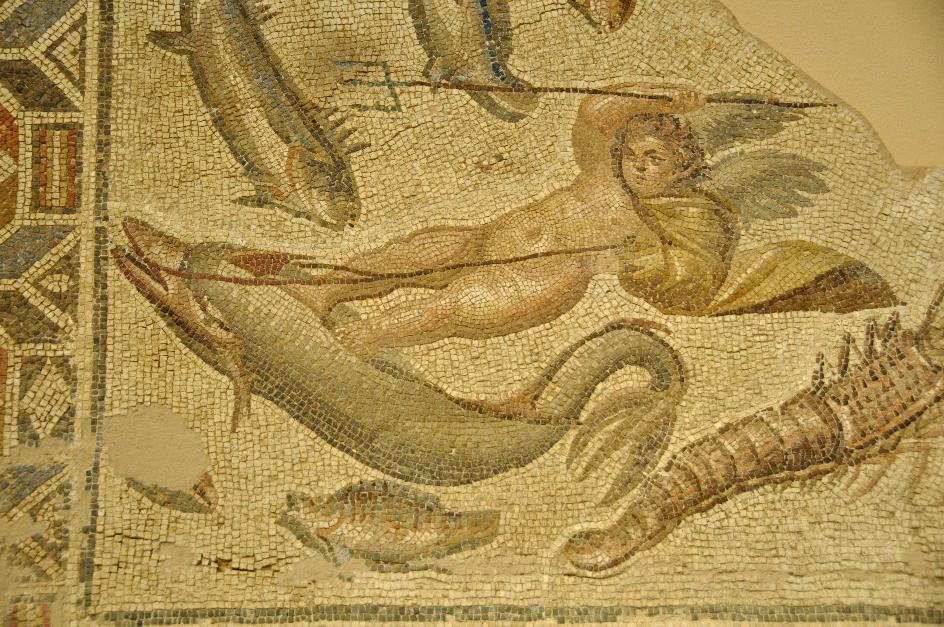
The image depicts a mosaic mural featuring a nude figure holding a fish, with a sea serpent and fish swimming in the background.

Door AI gegenereerde inhoud is mogelijk onjuist.

A water nymph riding a dolphin


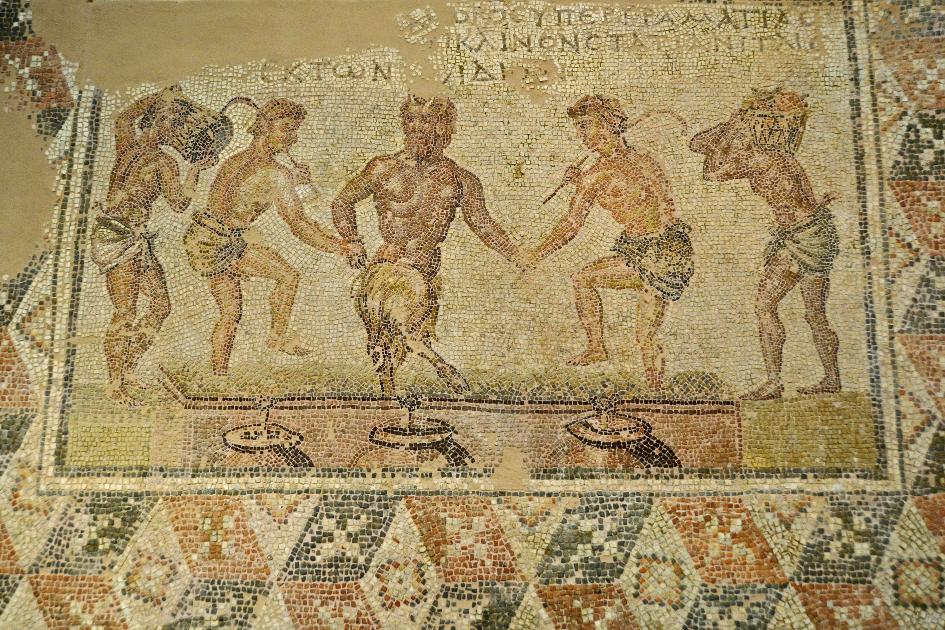
The image depicts a mosaic mural showing three nude men in ancient clothing, engaging in some form of interaction, surrounded by decorative geometric patterns.

Door AI gegenereerde inhoud is mogelijk onjuist.

Wine-press installation where the god Pan and his companions carry and press grapes
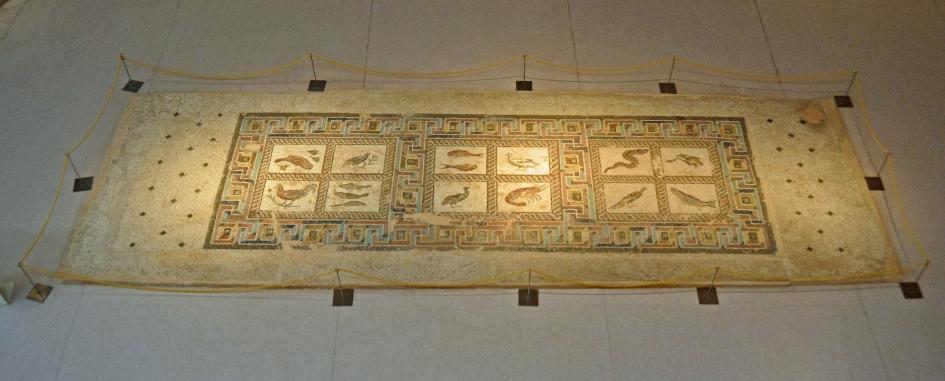
 

The image depicts an ancient, intricately decorated mosaic floor with various geometric patterns and animal figures, framed by a border of gold.

Door AI gegenereerde inhoud is mogelijk onjuist.

Impressive floor mosaic depicting animals
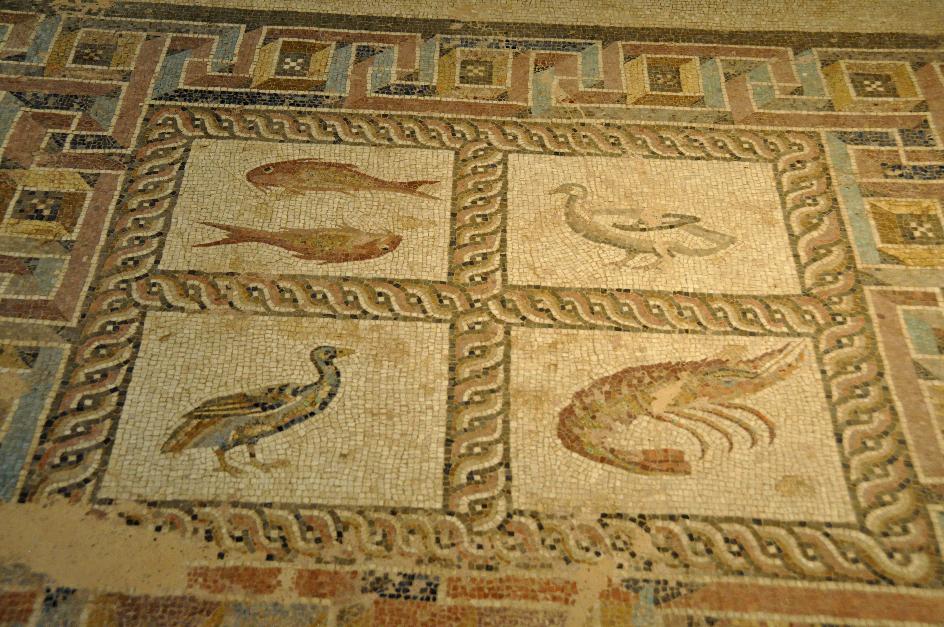
 

The image depicts a mosaic mural featuring intricate geometric patterns and various fish motifs, including a crab and a bird, arranged in a central medallion.

Door AI gegenereerde inhoud is mogelijk onjuist.

Same (detail)

Top

Delphi


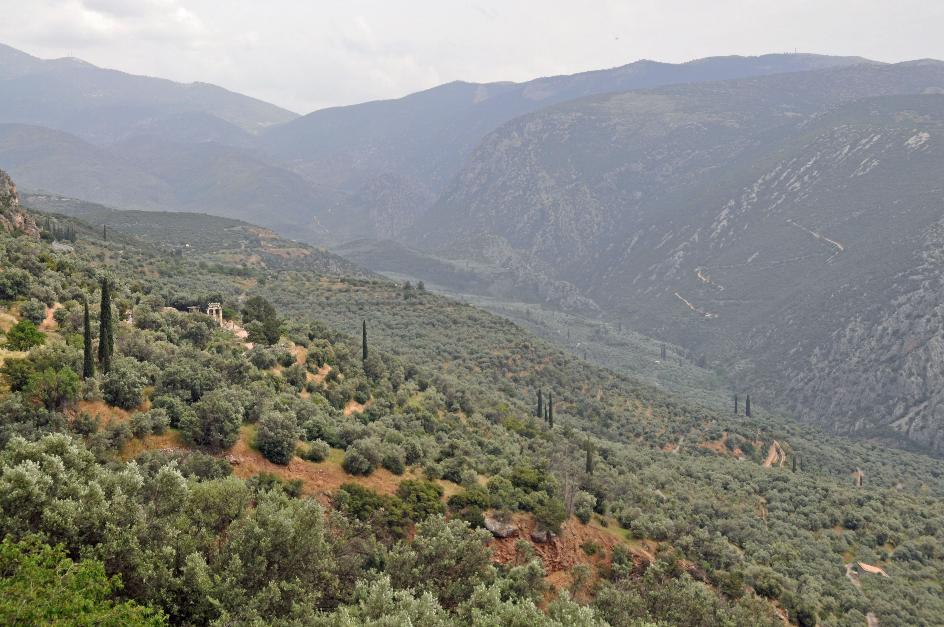
The image depicts a serene, densely forested mountainous landscape with rolling hills, shrubbery, and sparse vegetation under a cloudy sky.

Door AI gegenereerde inhoud is mogelijk onjuist.

The sanctuary of Delphi was located on a steep slope, several hundred metres above the valley floor. It was in use from the 8th century BCE until the 4th century CE but reached its peak between the 6th and 4th centuries BCE. Pilgrims approaching Delphi from the east, such as the Athenians, first encountered the sanctuary of Athena Pronaia (left of centre in the image)
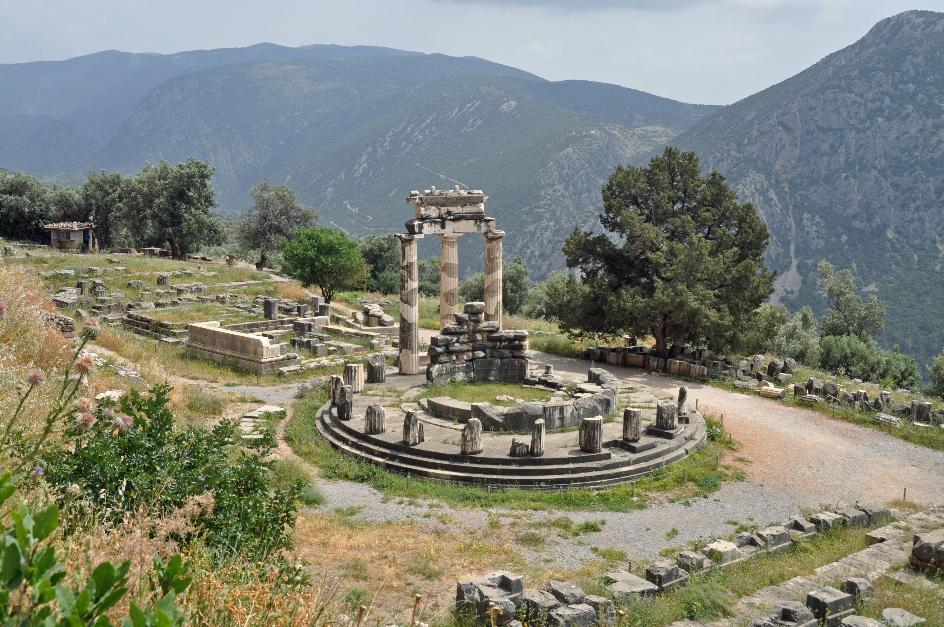
 

The image depicts the ancient Greek ruins of the Temple of Zeus, surrounded by lush greenery and overlooking a mountainous landscape.

Door AI gegenereerde inhoud is mogelijk onjuist.

The most famous building of the Athena Pronaia sanctuary was the Tholos of Delphi (380 – 360 BCE), a circular pavilion with twenty Doric columns surrounding a central cella
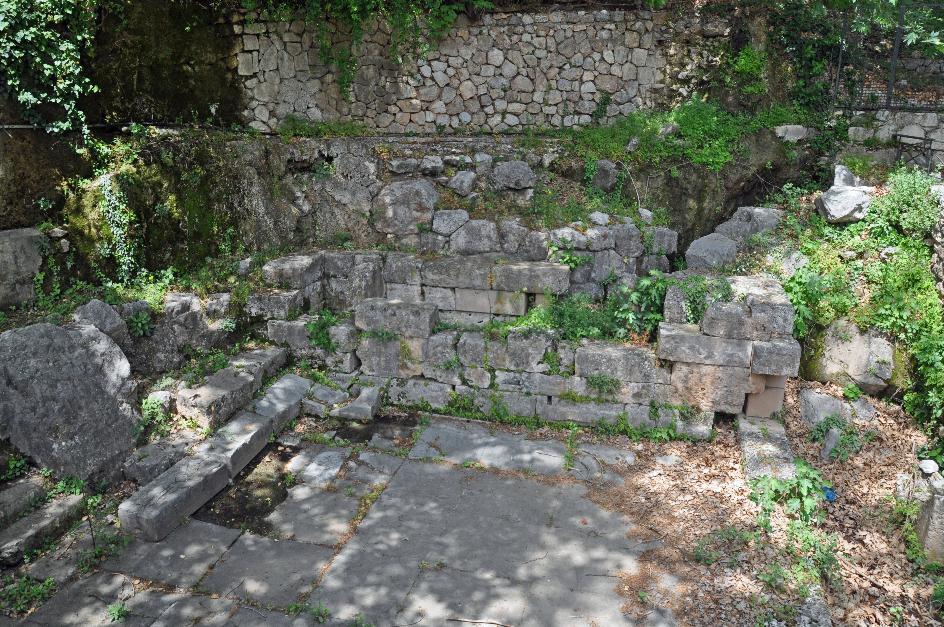
 

The image depicts a ruined ancient stone structure with overgrown vegetation, partially collapsed walls, and a paved surface.

Door AI gegenereerde inhoud is mogelijk onjuist.

From Athena Pronaia, the Sacred Way then led past the Castalian Spring, where pilgrims could purify themselves
 

The image shows a row of ancient stone columns with ruins and a mountainous, cloudy sky in the background.

Door AI gegenereerde inhoud is mogelijk onjuist.

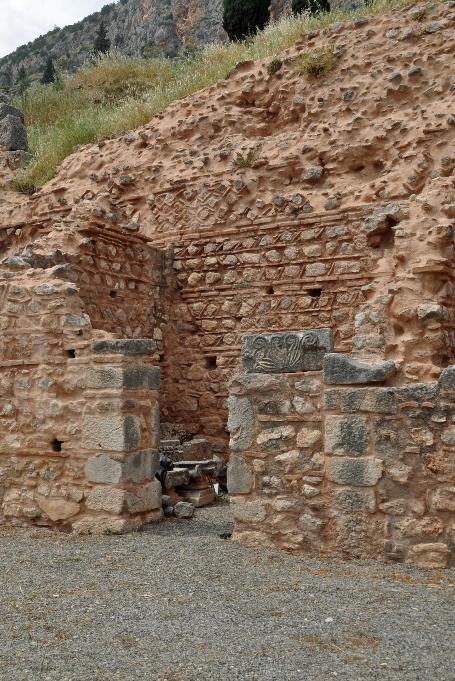
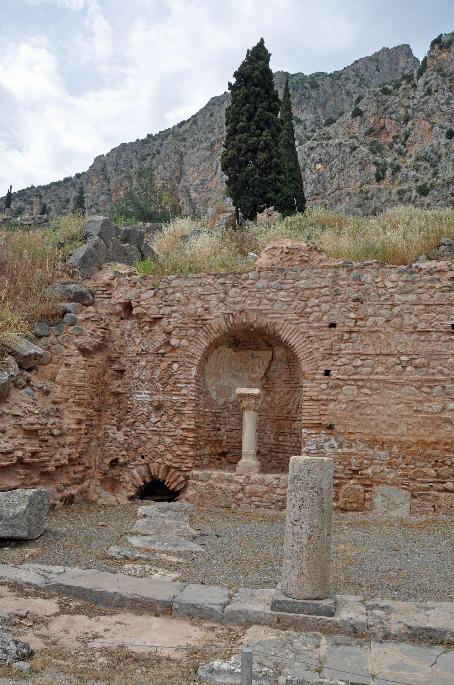
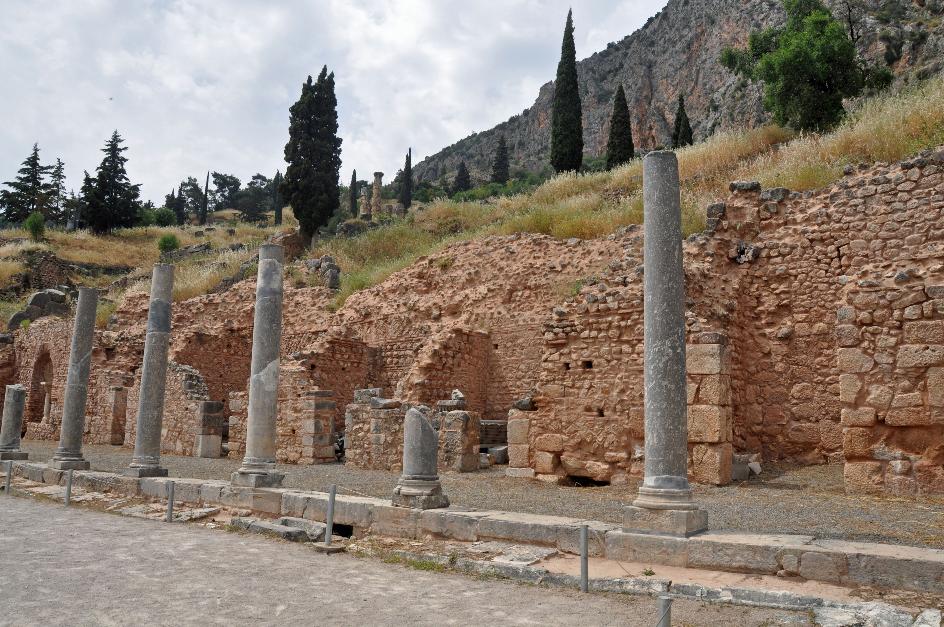
Just outside the walled sanctuary of Delphi lay the Roman agora, where pilgrims could purchase votive offerings or souvenirs for their visit


Image

Roman agora


Image


The image depicts a scenic, ancient Greek-style ruins with columns and statues, nestled among a landscape of rolling hills and a cloudy sky.

Door AI gegenereerde inhoud is mogelijk onjuist.

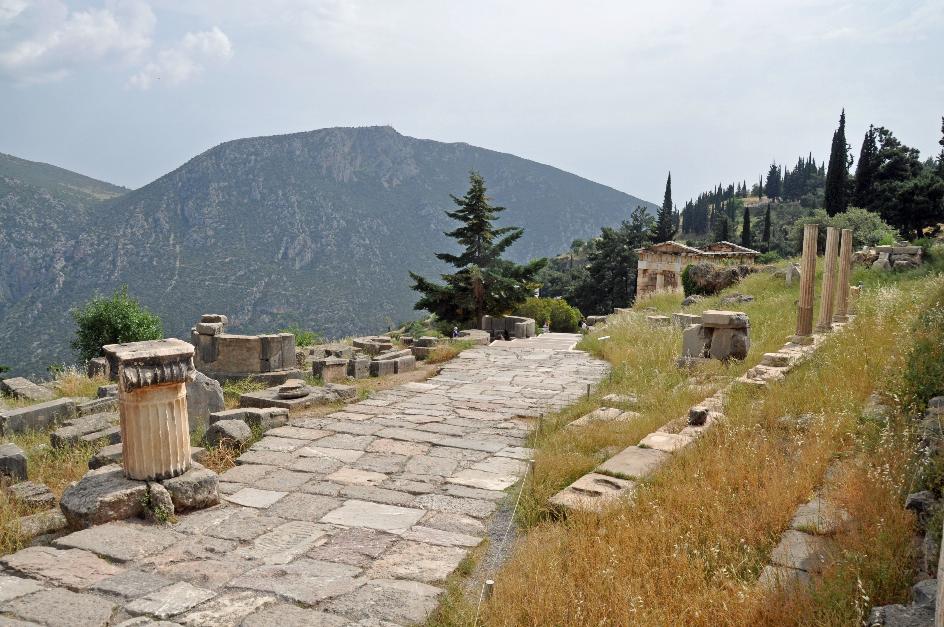
The Sacred Way led the pilgrim to the Temple of Apollo. Along the route, they encountered thousands of works of sculpture, statues, and temples placed there by wealthy pilgrims or city-states in gratitude for fulfilled wishes or military victories, but especially to impress other visitors
 

The image depicts an ancient Greco-Roman temple with columns, nestled amidst a lush, green landscape under a cloudy sky.

Door AI gegenereerde inhoud is mogelijk onjuist.

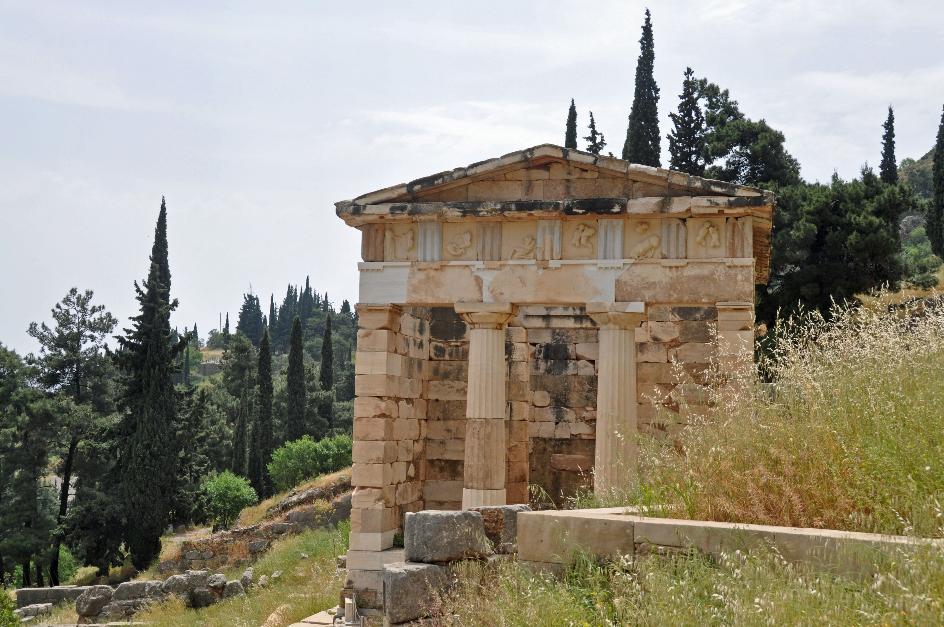
The best preserved is the Treasury of the Athenians, a showpiece built entirely of marble and funded with spoils from the victory at the Battle of Marathon. With it, the Athenians displayed their most important victories and achievements, establishing their identity as a people and showing the rest of Greece that they belonged to the elite


Image

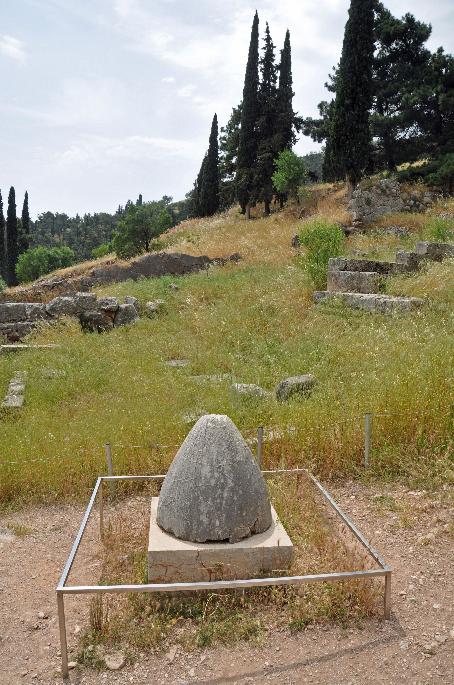
The Omphalos of Delphi, or “navel stone,” reminds us that Delphi was considered the centre, or navel, of the world. According to myth, Zeus proved this experimentally by releasing an eagle from both ends of the earth at the same time; the birds met exactly above Delphi


Image

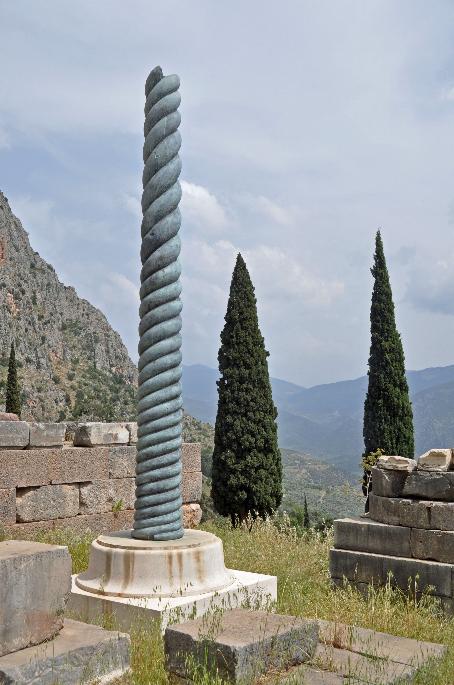
This copy of the Serpent Column of Plataea was installed in 2015. Part of the original is now located at the Hippodrome of Istanbul (Yılanlı Sütun)


The image depicts a large, weathered stone wall with rows of rectangular blocks, set against a backdrop of green grass and a distant mountainous landscape.

Door AI gegenereerde inhoud is mogelijk onjuist.

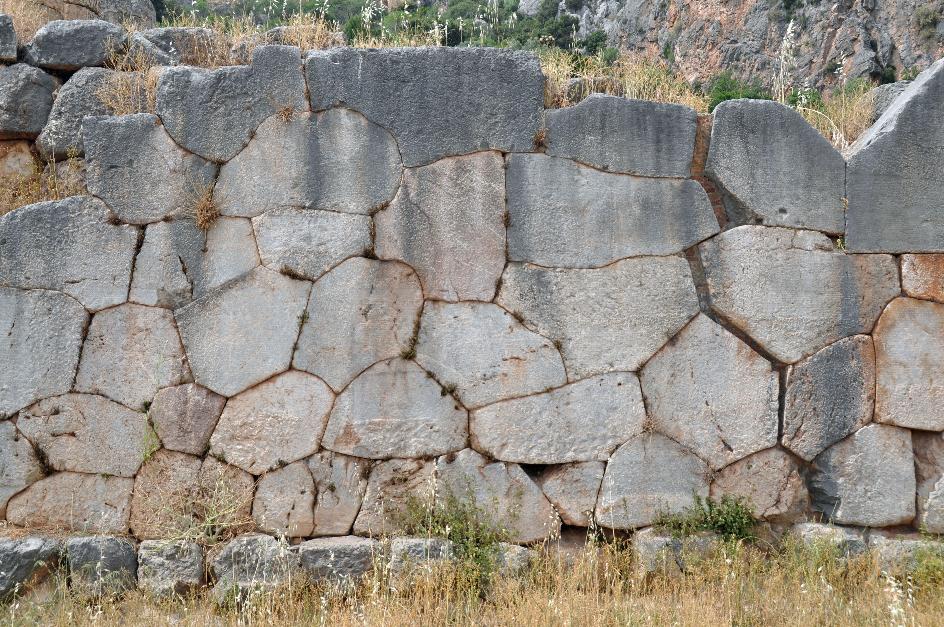
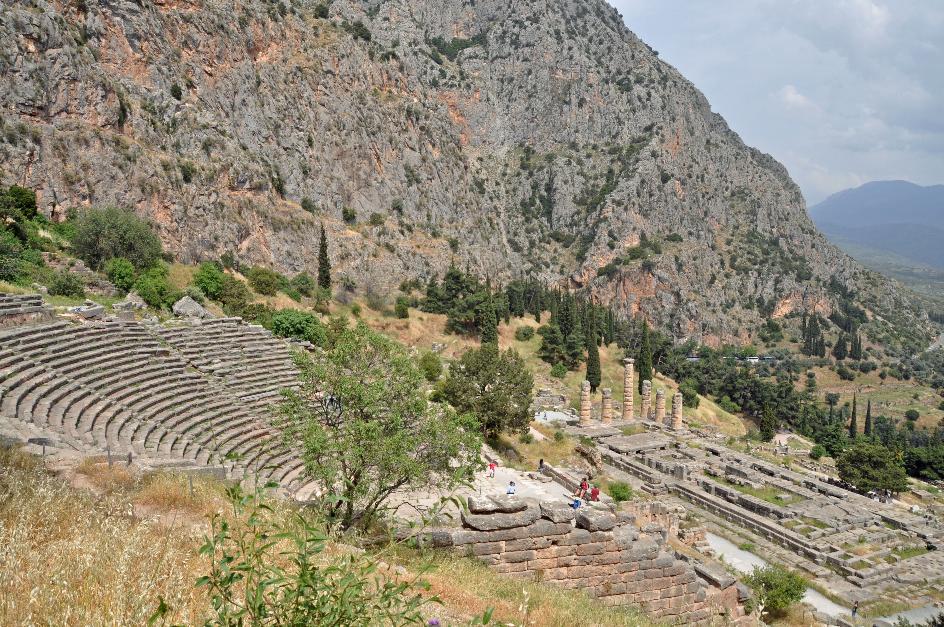
The beautiful polygonal wall supports the terrace on which the Temple of Apollo was built
 

The image shows an ancient amphitious with rows of seats, ruins, and a mountainous landscape under a cloudy sky.

Door AI gegenereerde inhoud is mogelijk onjuist.

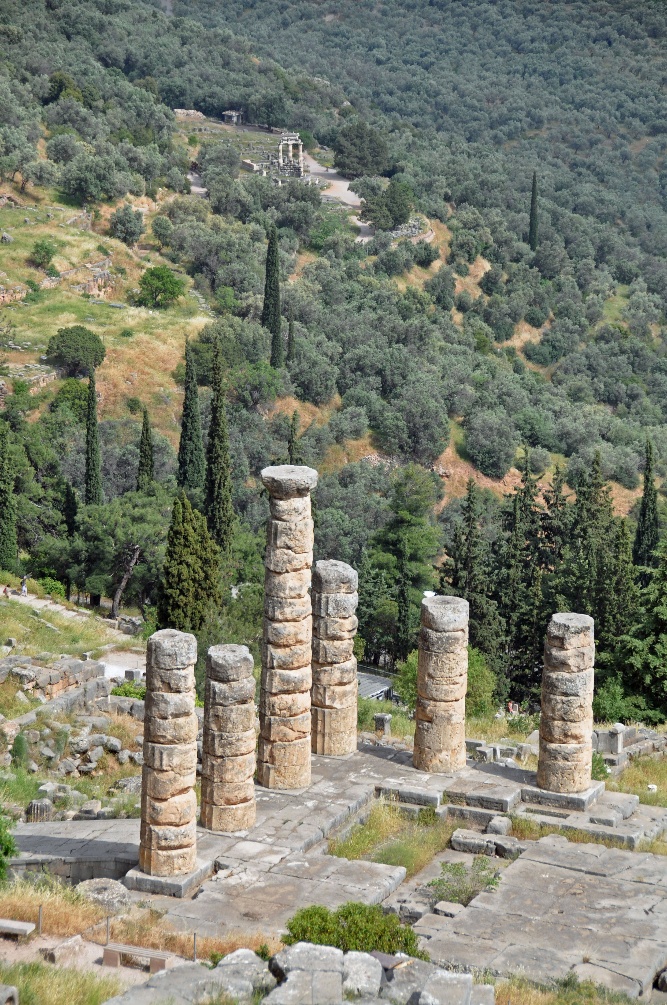
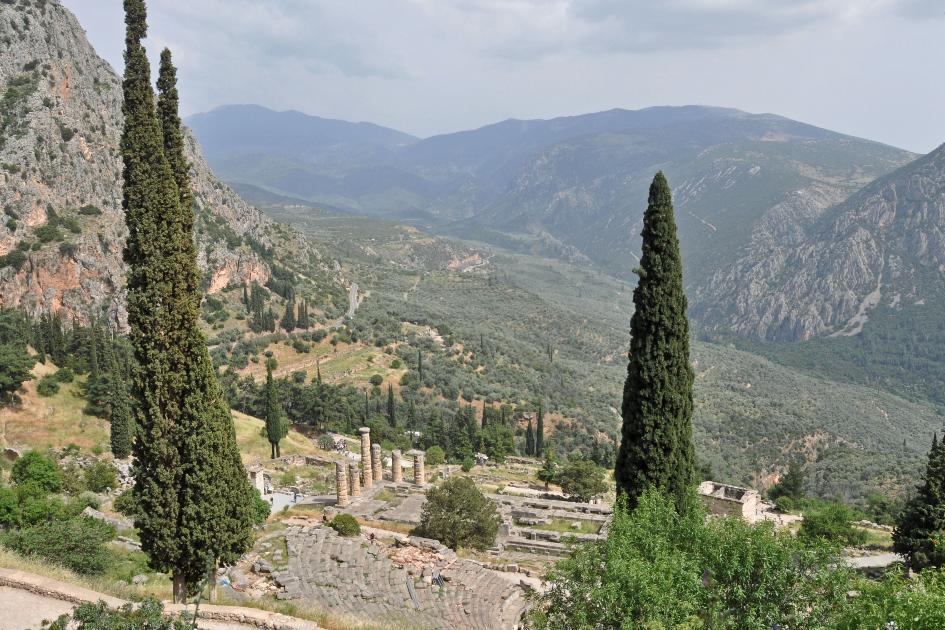
The most sacred building in Delphi was the Temple of Apollo (right). Here sat the Pythia, the most revered oracle of antiquity, famous for her cryptic pronouncements. Both emperors and ordinary mortals came to seek her advice


Image

What remains today are the ruins of the sixth temple on this site, completed in 330 BCE. On the pediment was inscribed in gold letters the famous aphorism Γνῶθι σεαυτόν (“Know thyself”)


Image

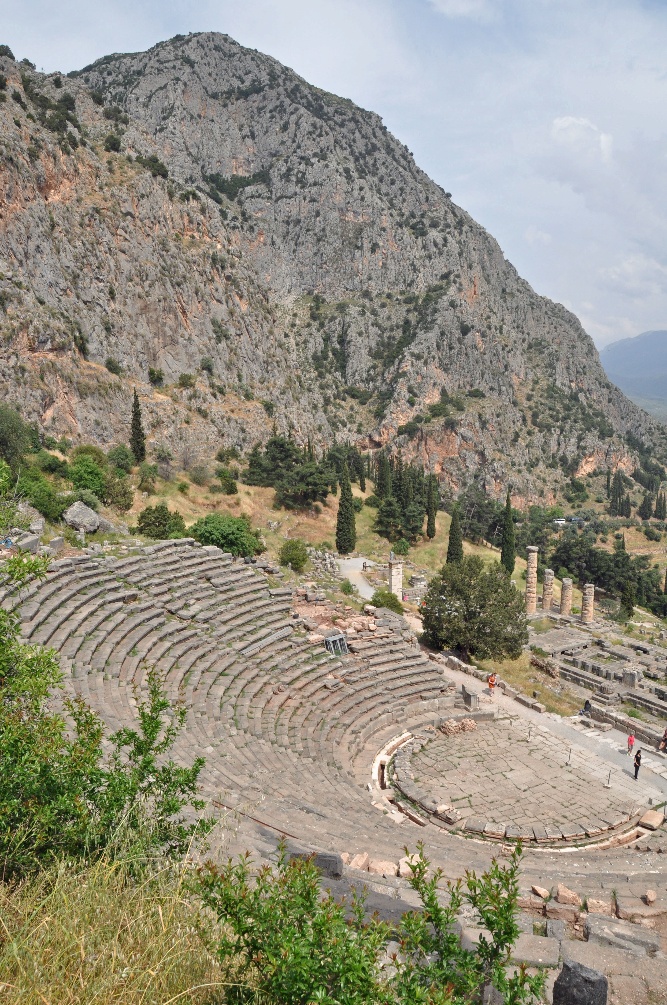
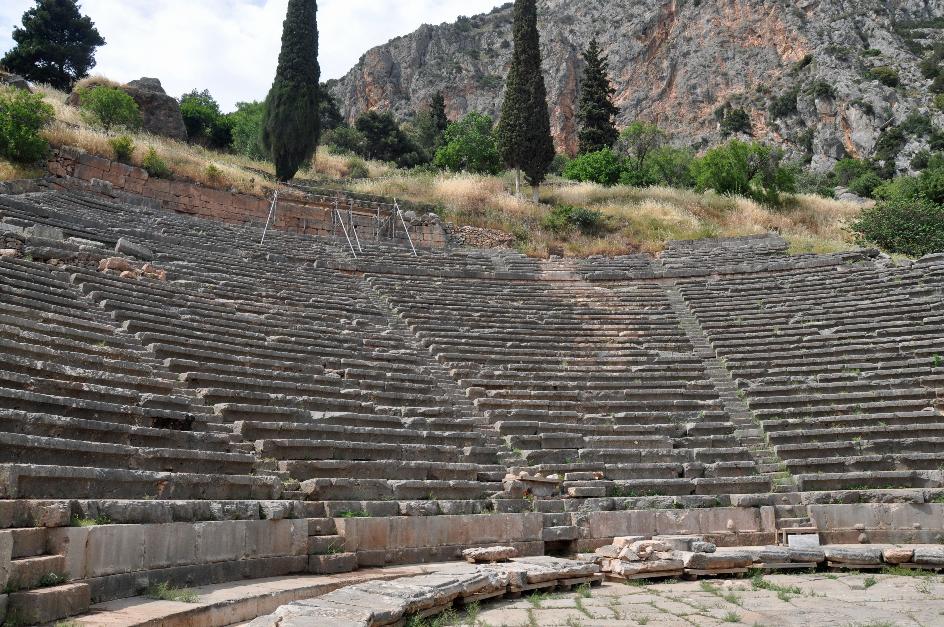
The Theatre of Delphi (2nd century BCE) could accommodate five thousand spectators. During the quadrennial Pythian Games, more importance was given to art and culture than at the Olympic Games


The image shows an ancient, partially ruined amphitious with rows of seats and columns, situated in a mountainous, rocky landscape.

Door AI gegenereerde inhoud is mogelijk onjuist.

Theatre of Delphi


The image depicts an ancient, partially ruined Greco-Roman site with olive trees, under a cloudy sky, nestled amidst a mountainous, forested landscape.

Door AI gegenereerde inhoud is mogelijk onjuist.

The sanctuary of Delphi


The image depicts a picturesque ancient amphitious with rows of seats under a backdrop of rugged, mountainous terrain.

Door AI gegenereerde inhoud is mogelijk onjuist.

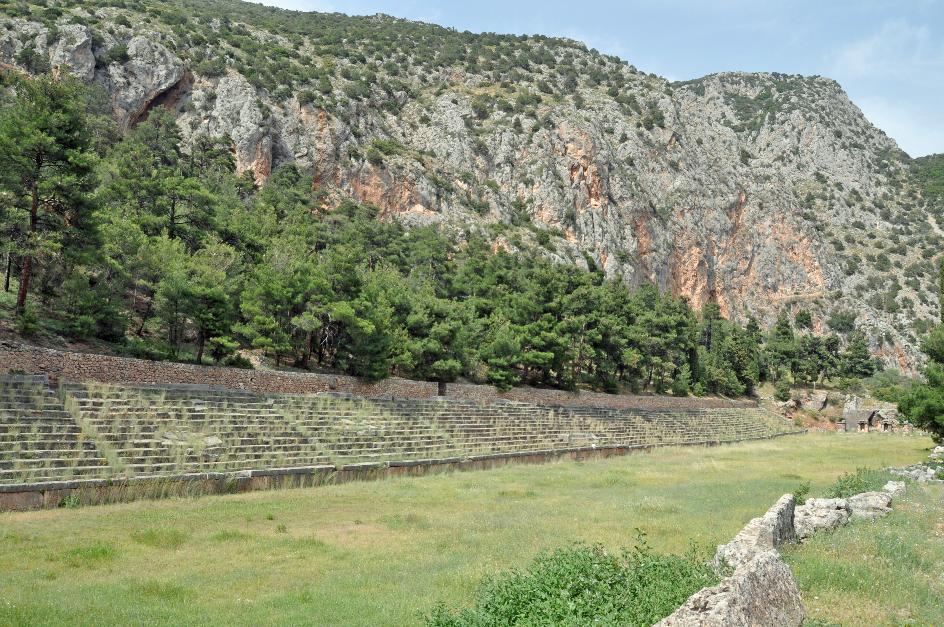
During the quadrennial Pythian Games, athletic competitions took place in this well-preserved stadium


Image


Image

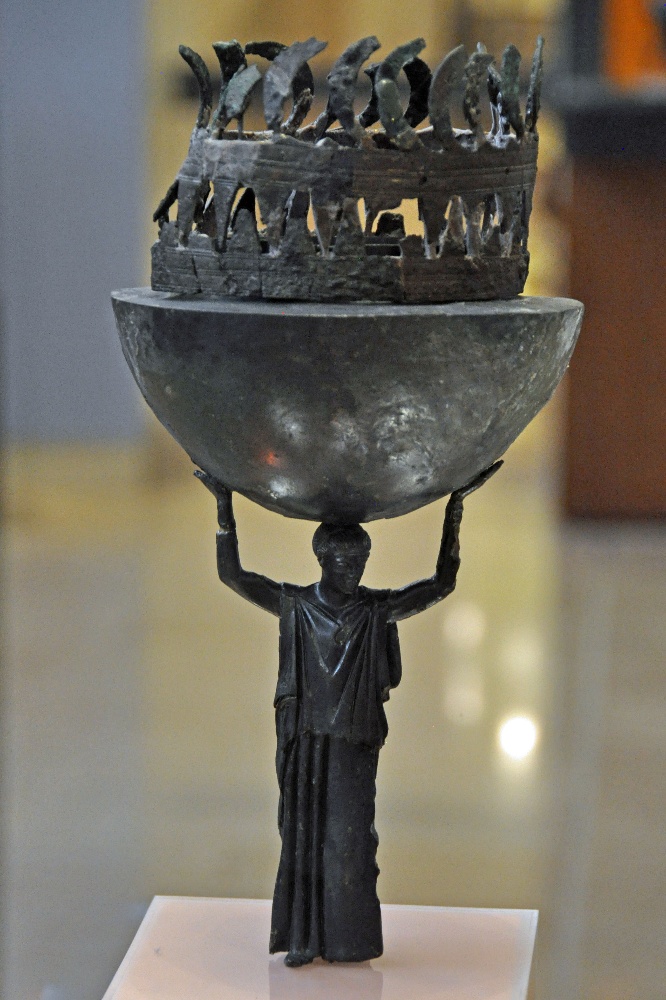
The Archaeological Museum of Delphi was opened in 2004


Image

Bronze incense burner (circa 450 BCE)


Image

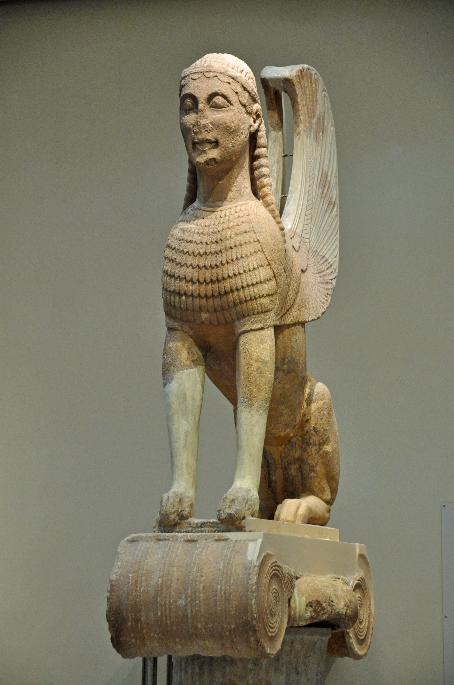
The Sphinx of Naxos (560 BCE) was 2.2 m high and stood on a ten-metre column near the Temple of Apollo


Image

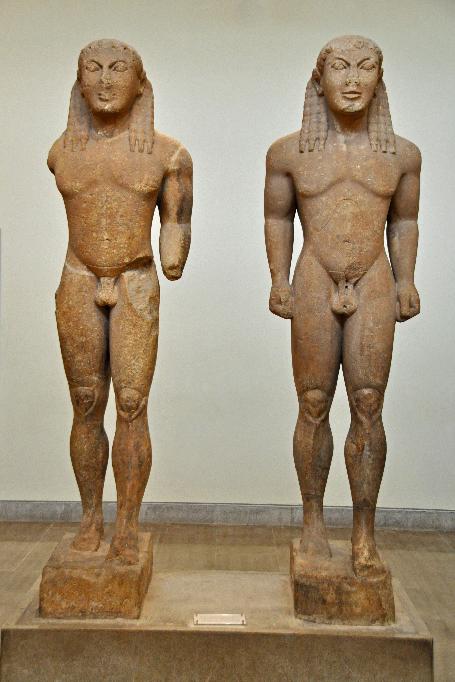
The twin kouros statues of Kleobis and Biton (580 BCE) were found in the Treasury of the Athenians


Image

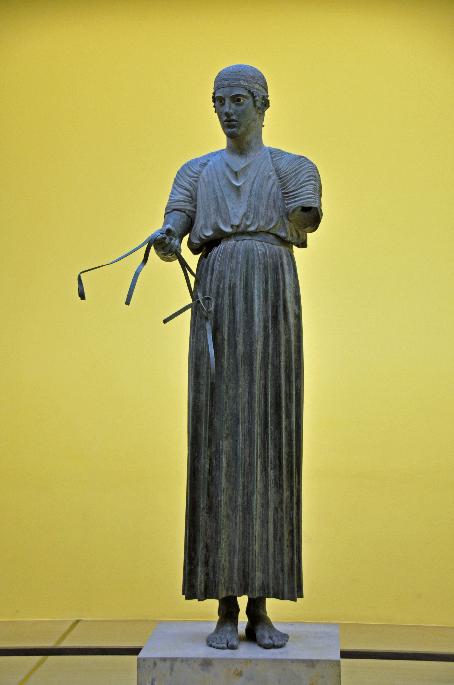
Charioteer of Delphi


The image depicts a small, ancient Greek sculpture group of four figures, likely from the Classical period, arranged in a dynamic, interlocking pose.

Door AI gegenereerde inhoud is mogelijk onjuist.

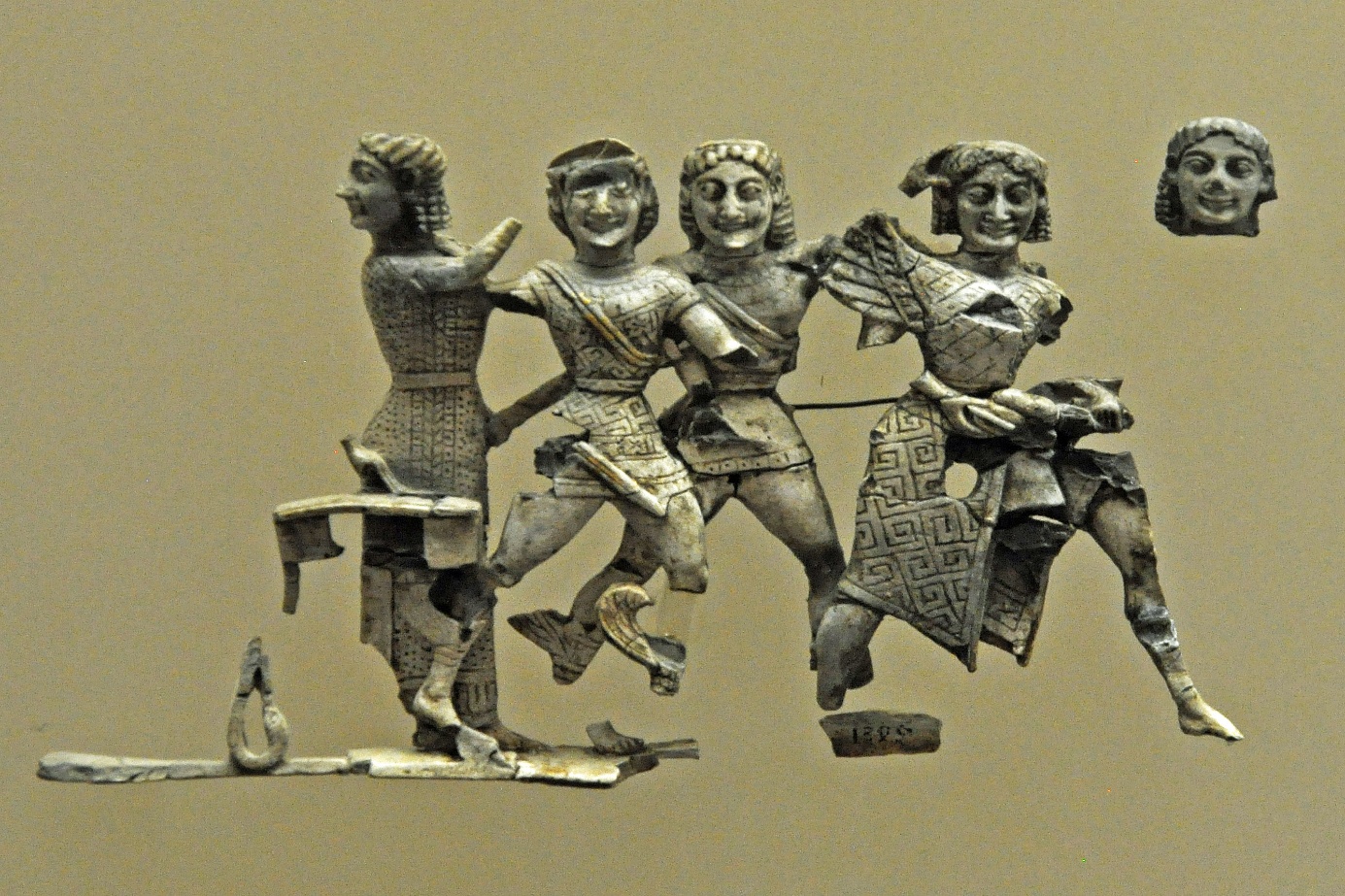
Fragments of an ivory relief (570 BCE) depicting the Harpies (winged female beings) and a male figure, probably an Argonaut

Top

Osios Loukas


The image depicts a picturesque, densely populated mountain town nestled among rolling hills, with some yellow flowers dotting the greenery.

Door AI gegenereerde inhoud is mogelijk onjuist.

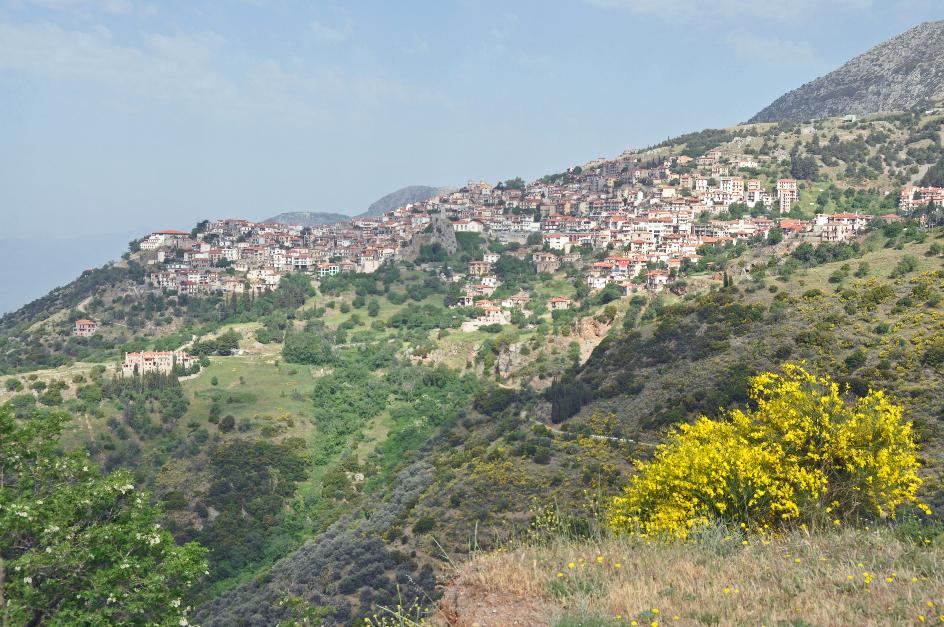
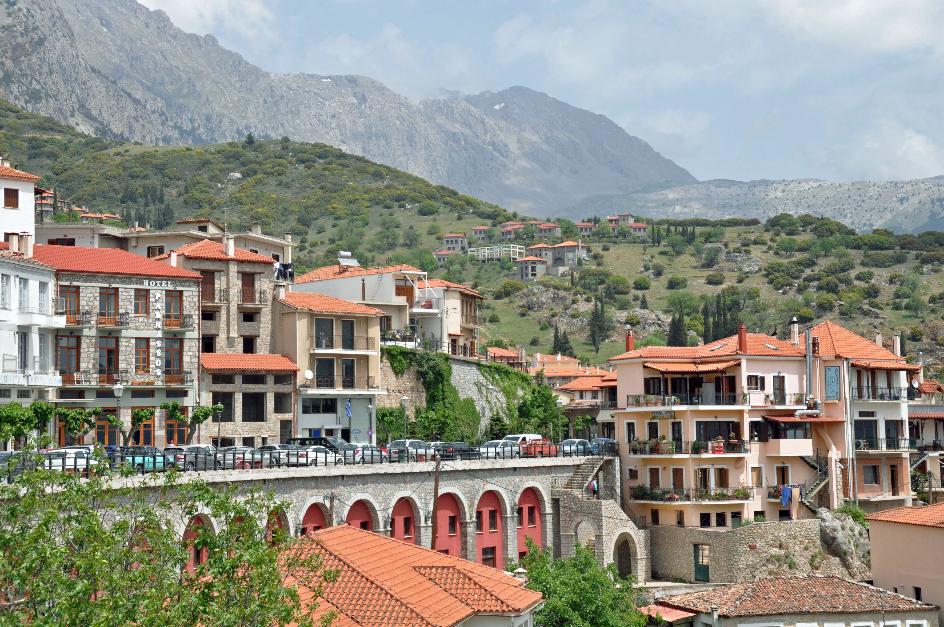
Arachova


The image depicts a picturesque town with a Mediterranean-style buildings overlooking a mountainous landscape under a partly cloudy sky.

Door AI gegenereerde inhoud is mogelijk onjuist.

Arachova


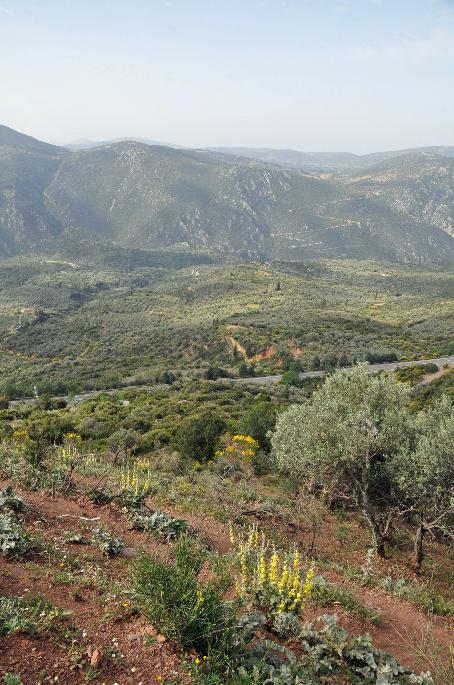
The image depicts a scenic mountainous landscape with a clear sky, dense green foliage, and sparse yellow flowers at the foreground.

Door AI gegenereerde inhoud is mogelijk onjuist.


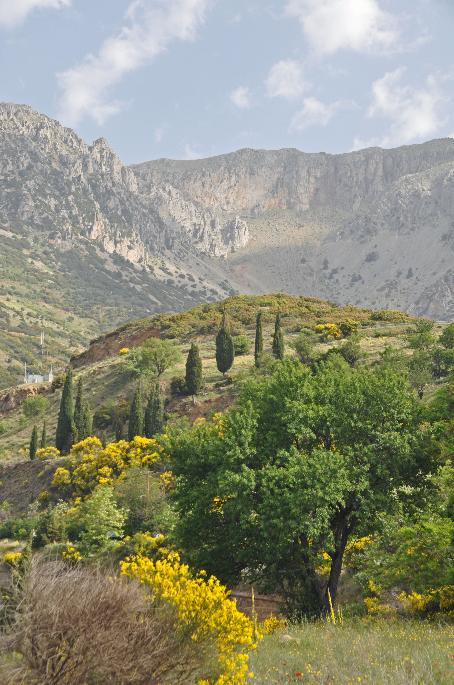
The image depicts a picturesque mountainous landscape with a backdrop of greenery, including shrubs and trees, under a partly cloudy sky.

Door AI gegenereerde inhoud is mogelijk onjuist.


Image

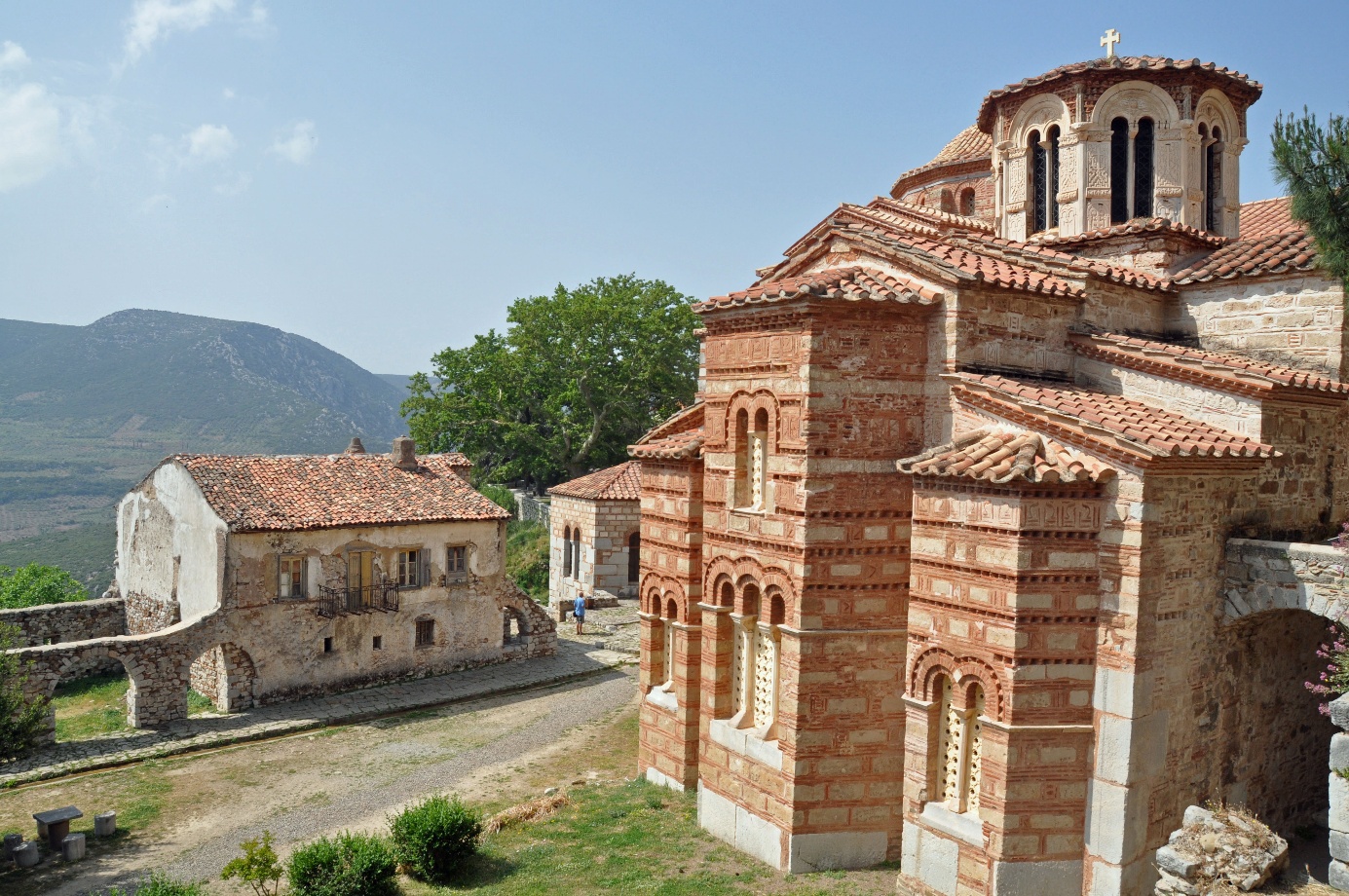
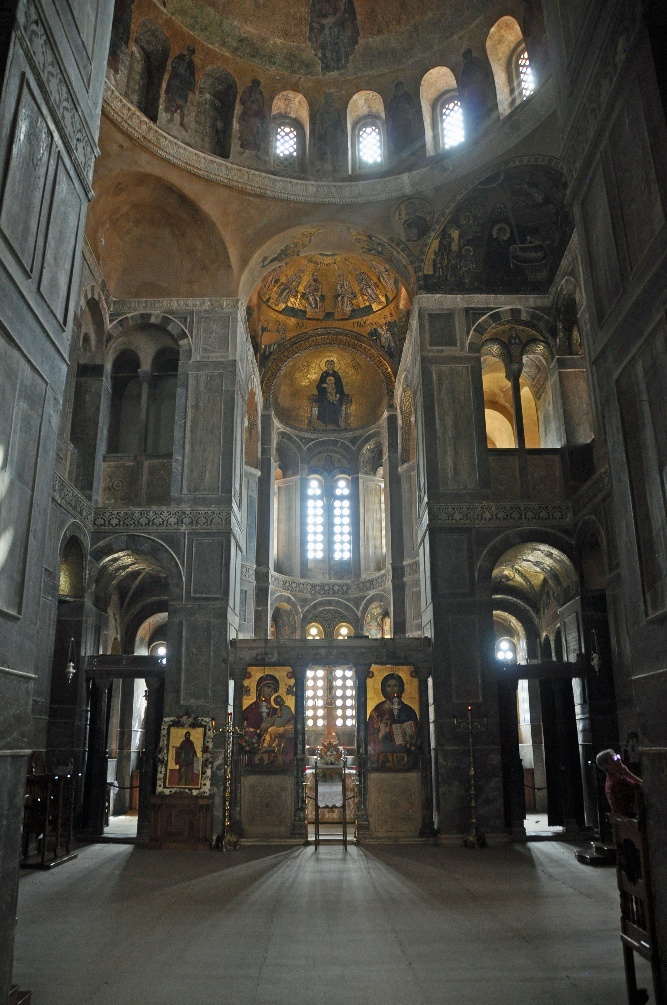
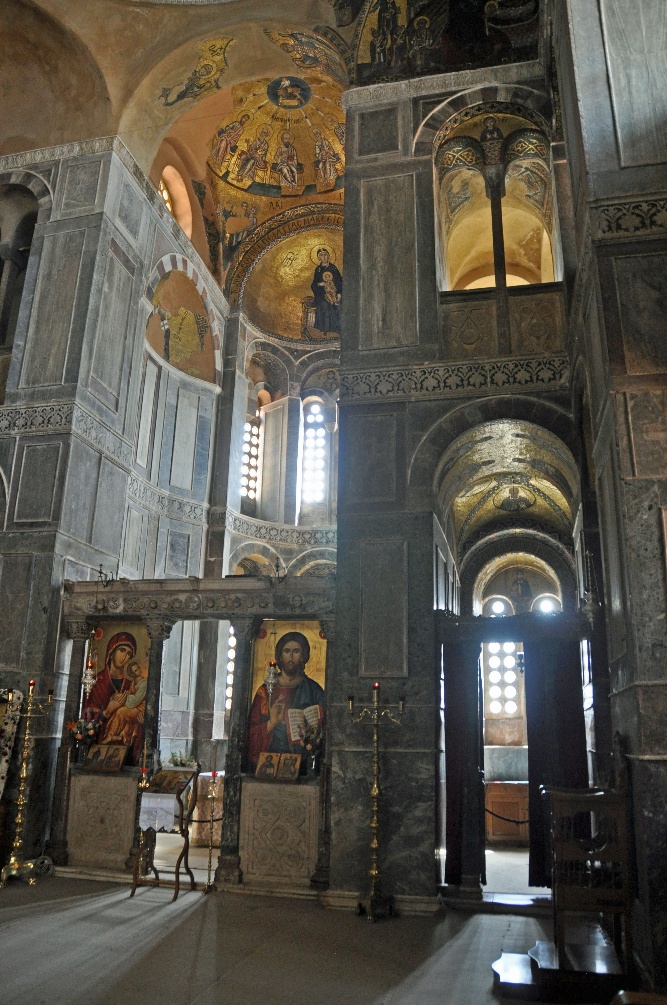
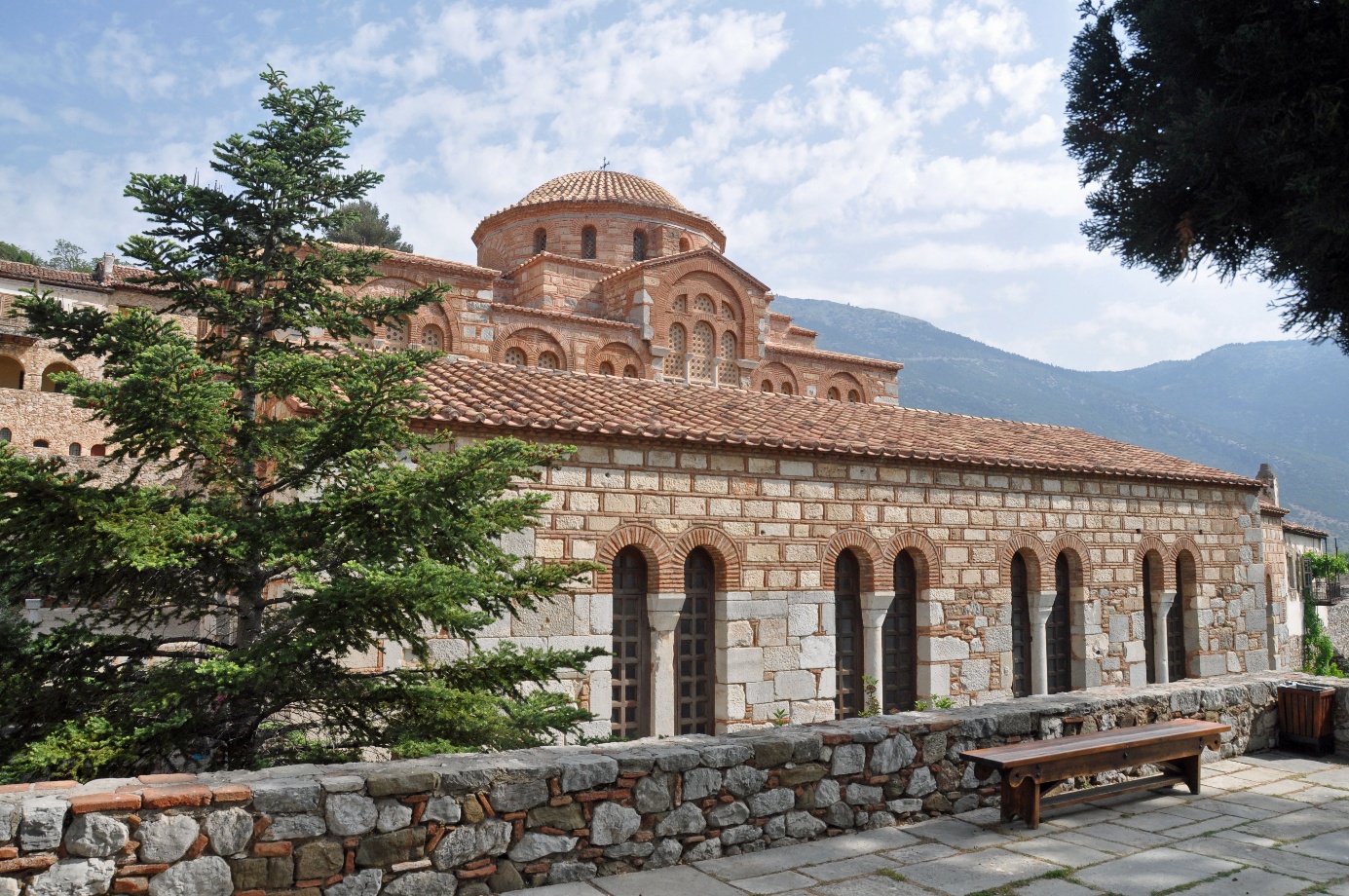
The Hosios Loukas Monastery, dedicated to the “Blessed Loukas,” is regarded as one of the finest Byzantine buildings in Greece. Loukas settled here around 940, lived an ascetic hermit’s life, and gained a reputation as a miraculous healer


Image


Image

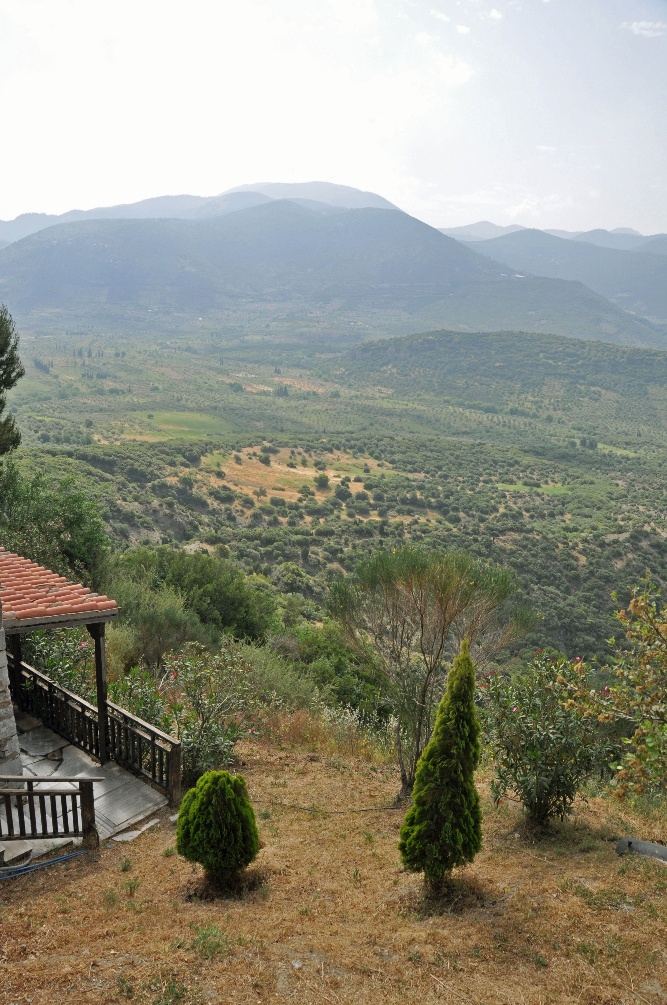
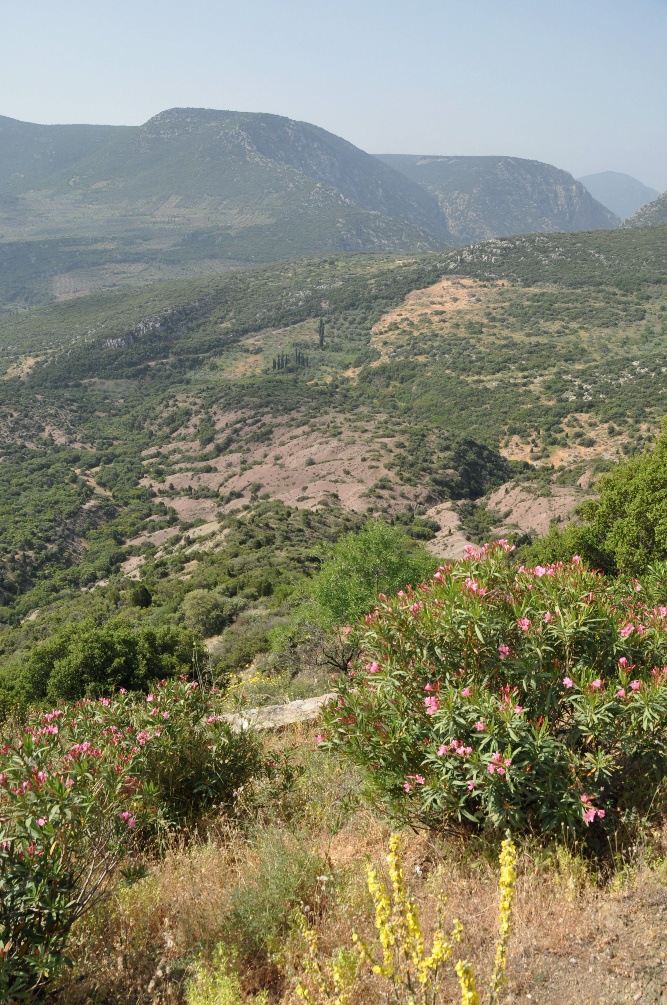
The monastery overlooks the valley where Oedipus unknowingly killed his father Laius. The Oracle of Delphi had foretold that Oedipus would kill his father and marry his mother. To avoid this fate, he never returned home. However, his father Laius had received omens that his son would return to kill him, and he went to the Oracle of Delphi to seek certainty. They met in this valley, where a dispute arose and Oedipus killed his father
 

The image shows a picturesque, ancient stone-built church with a domed roof, nestled among greenery and under a clear sky.

Door AI gegenereerde inhoud is mogelijk onjuist.

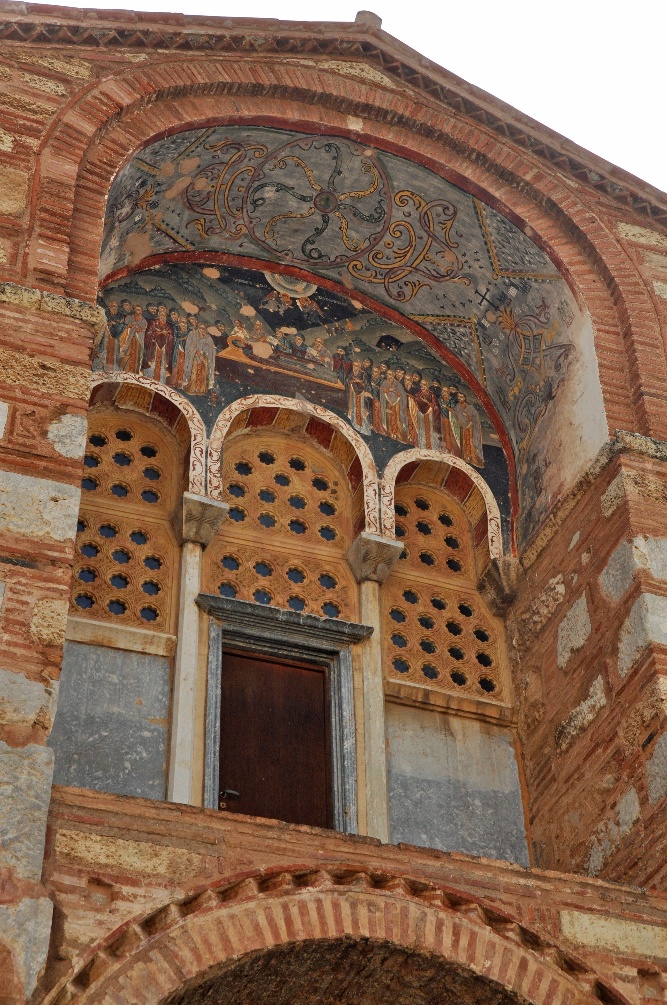
Hosios Loukas Monastery, with façade in opus mixtum – partly brick, partly stone, partly marble
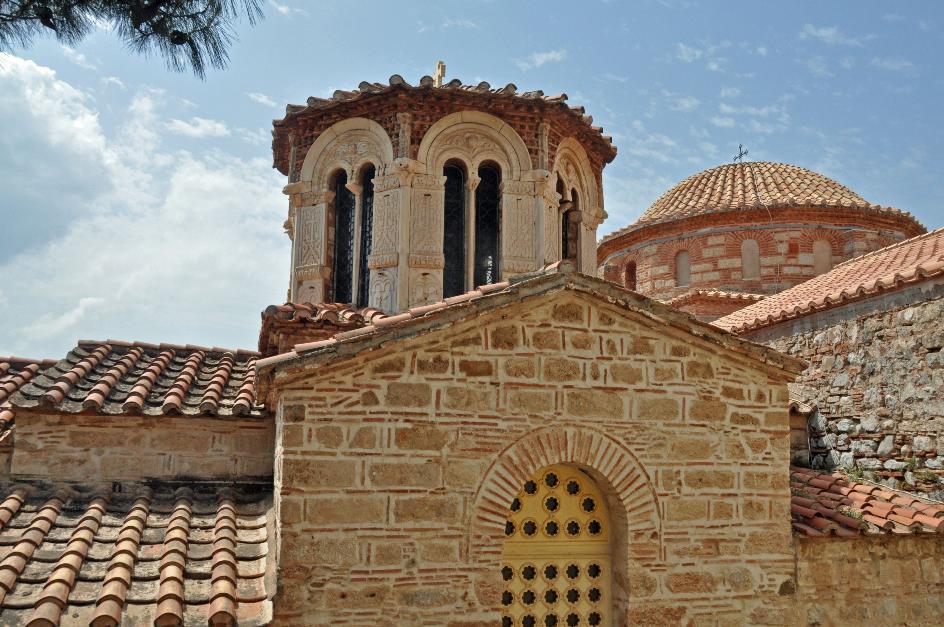
 

The image shows a beautiful, weathered ancient church with a red roof, white stone walls, and a large central dome, under a clear blue sky.

Door AI gegenereerde inhoud is mogelijk onjuist.


Image

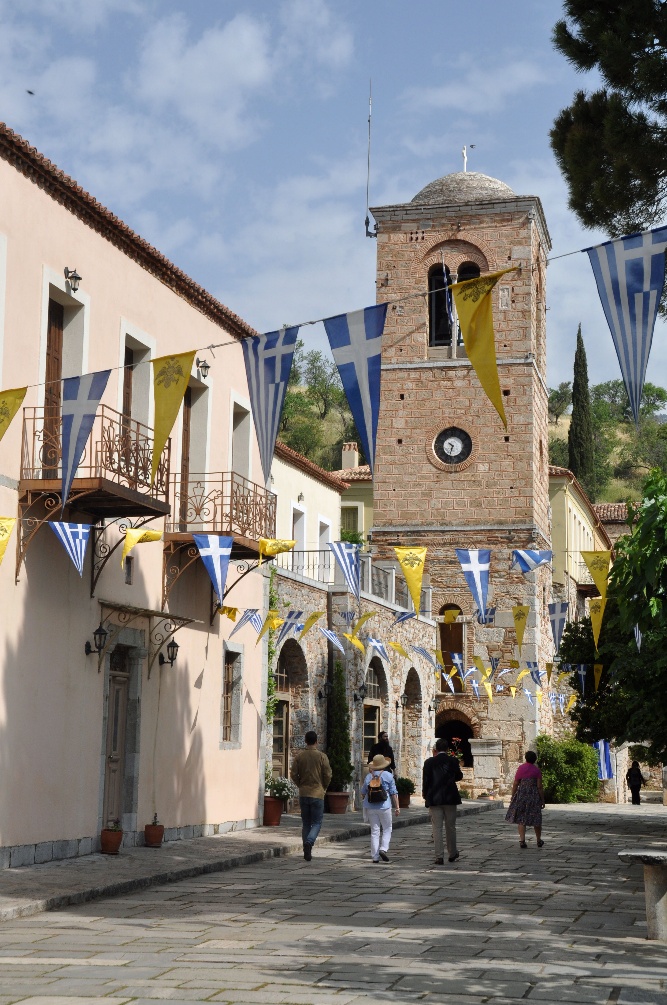
Bell tower. In the past, the monastery functioned as a fortified complex with a water source, a large rainwater reservoir, a thick defensive wall, and three defensive towers to protect the monastery’s wealth


Image

Portal of the Katholikon


Image

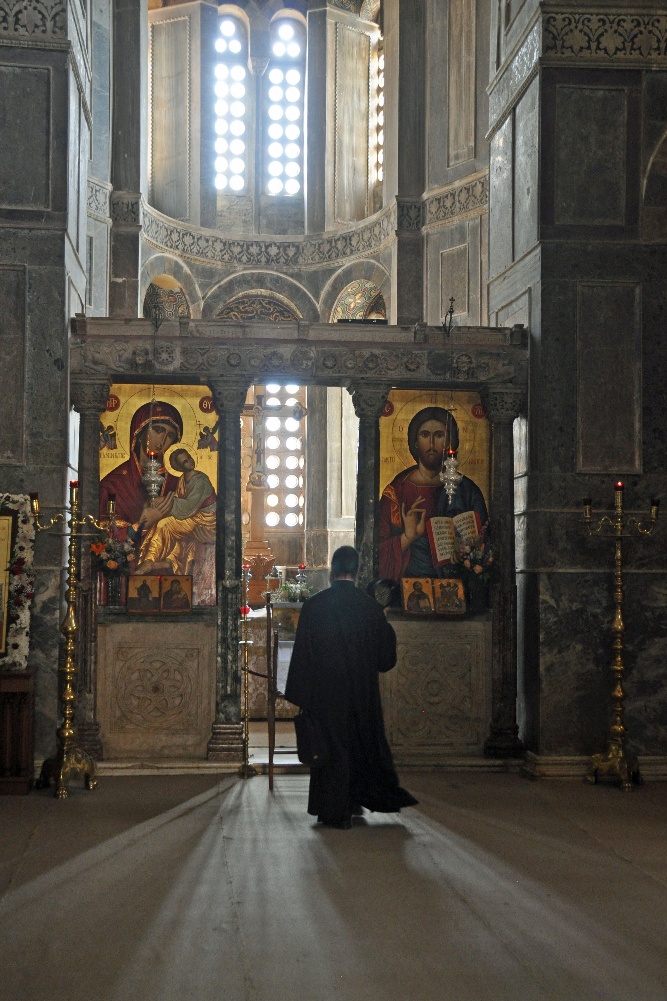
Interior of the Katholikon


Image

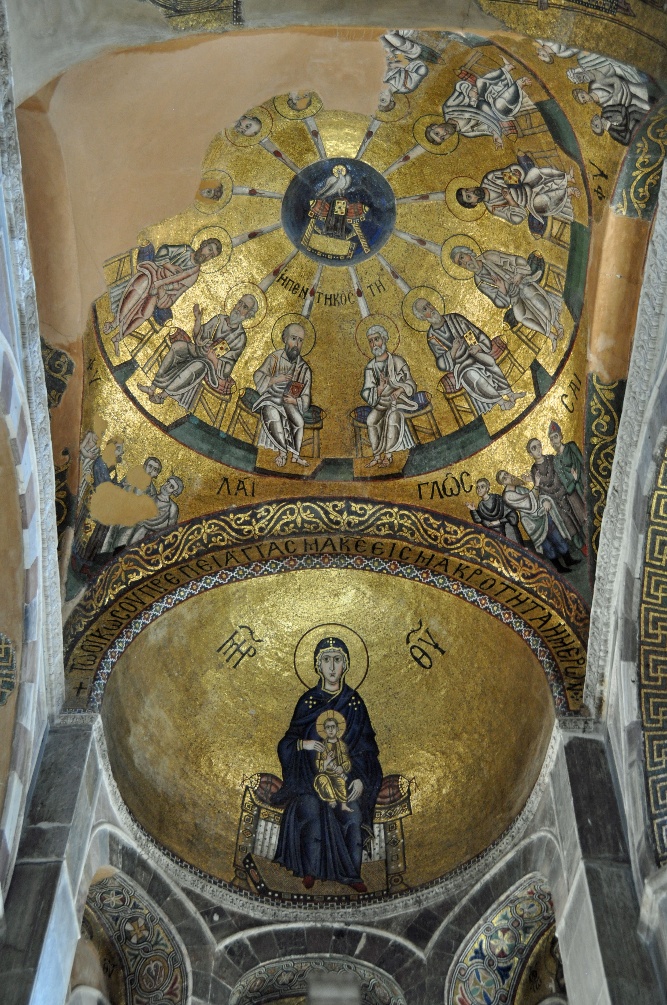
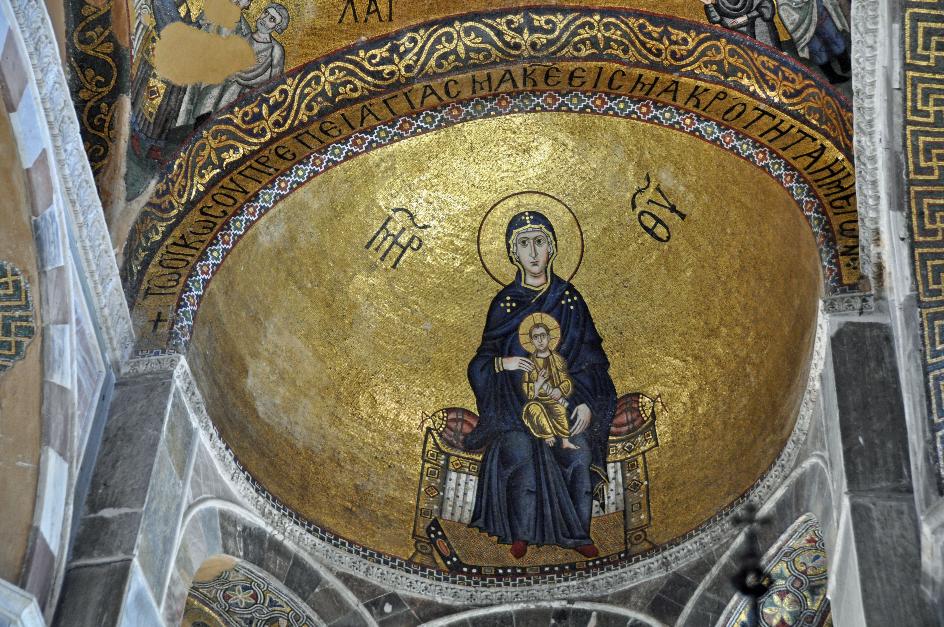
Depiction of the Twelve Apostles and of the Virgin Mary Hodegetria


The image depicts a beautifully decorated domed ceiling with a mosaic featuring a central figure of the Virgin Mary holding the baby Jesus, surrounded by intricate religious motifs and symbols.

Door AI gegenereerde inhoud is mogelijk onjuist.

Virgin Mary Hodegetria. The original mosaics were destroyed and later replaced by frescoes depicting the same scene


Image


Image


The image depicts a mosaic with a central figure wearing a robe and holding an object, surrounded by intricate geometric patterns and colorful tesserae.

Door AI gegenereerde inhoud is mogelijk onjuist.

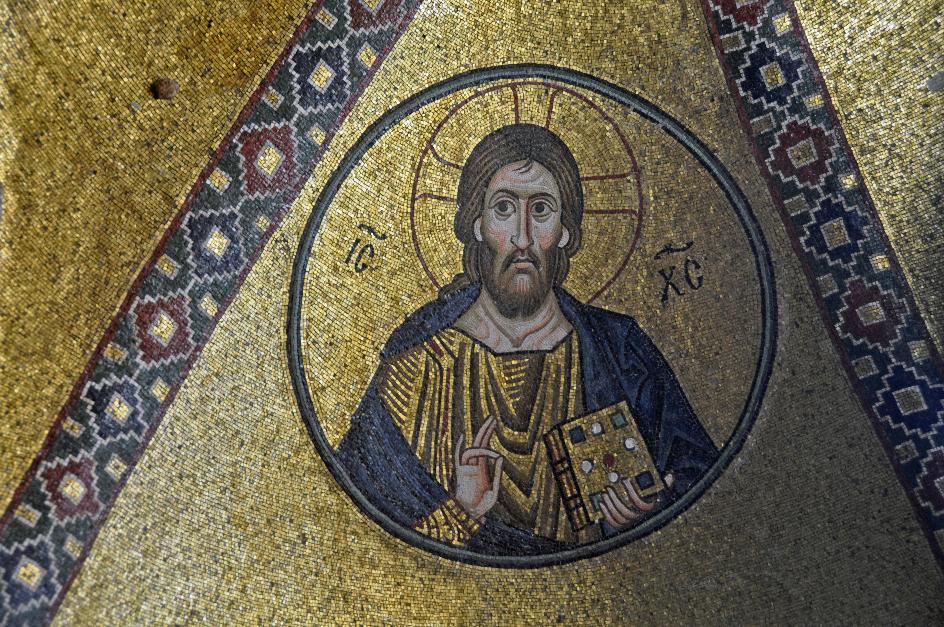
Jesus Christ


The image depicts a mosaic from an ancient church, showcasing a vibrant depiction of the Last Judgment, featuring Jesus Christ, angels, saints, and the heavens, all intricately arranged within a golden, blue, and red background.

Door AI gegenereerde inhoud is mogelijk onjuist.

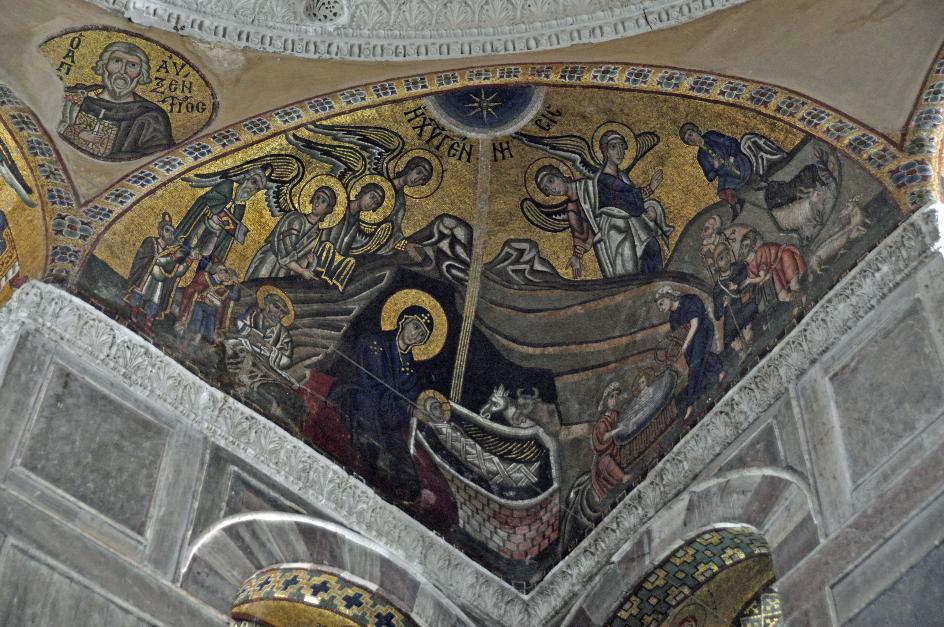
Nativity of Jesus


The image depicts an intricate mosaic from a church or religious site, featuring a central figure of Christ, surrounded by saints, with gold accents and a blue background, showcasing a blend of artistic and religious themes.

Door AI gegenereerde inhoud is mogelijk onjuist.

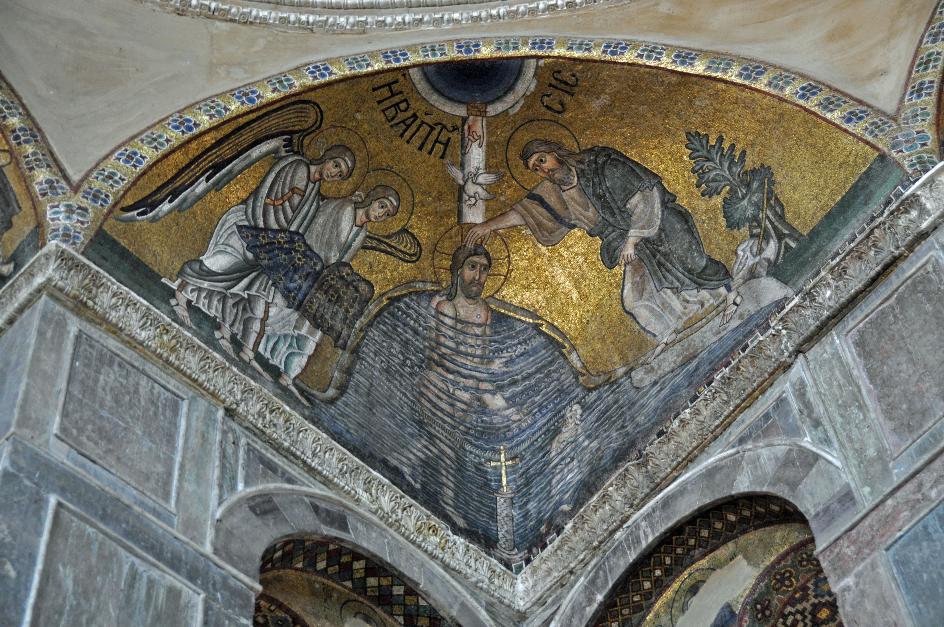
John the Baptist baptises Jesus


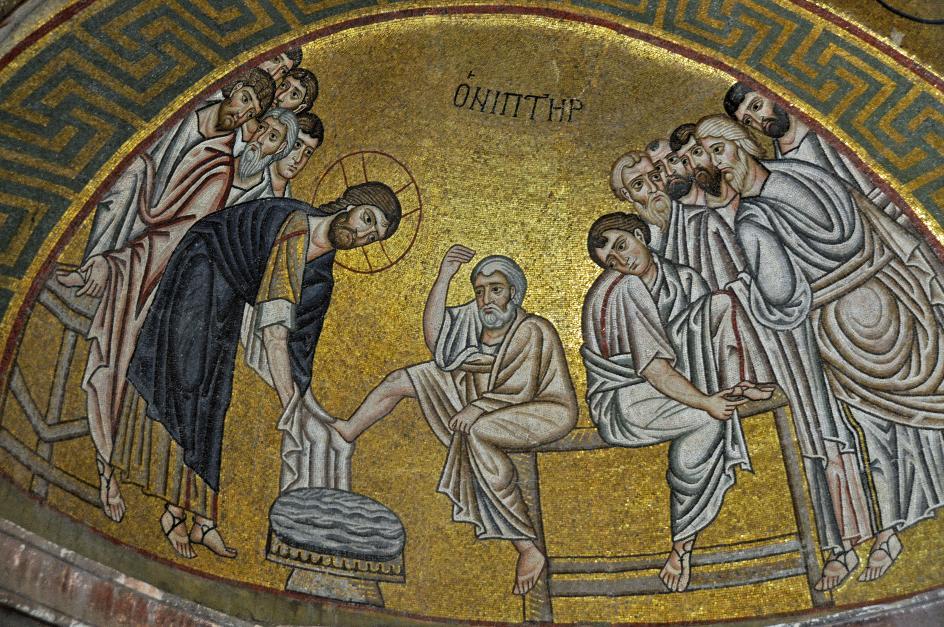
The image depicts a mosaic from an Eastern Orthodox church, showing Jesus Christ in the center, blessing the Apostles, surrounded by figures in traditional religious attire.

Door AI gegenereerde inhoud is mogelijk onjuist.

Washing of the feet


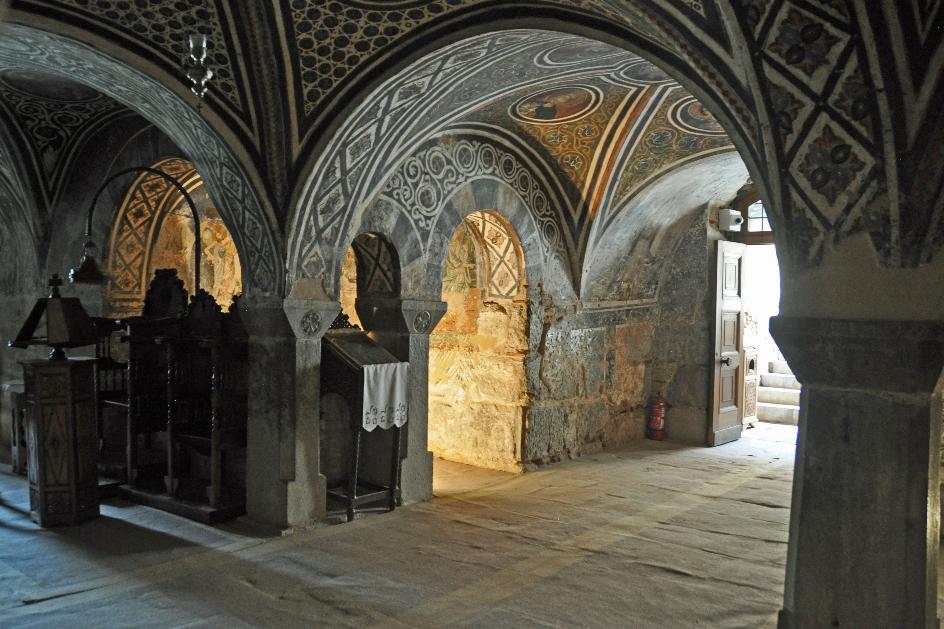
The image depicts a beautifully decorated and ornate church interior with arched ceilings, intricate mosaics, and a sense of historical depth.

Door AI gegenereerde inhoud is mogelijk onjuist.

Crypt with cross-vaulted arches


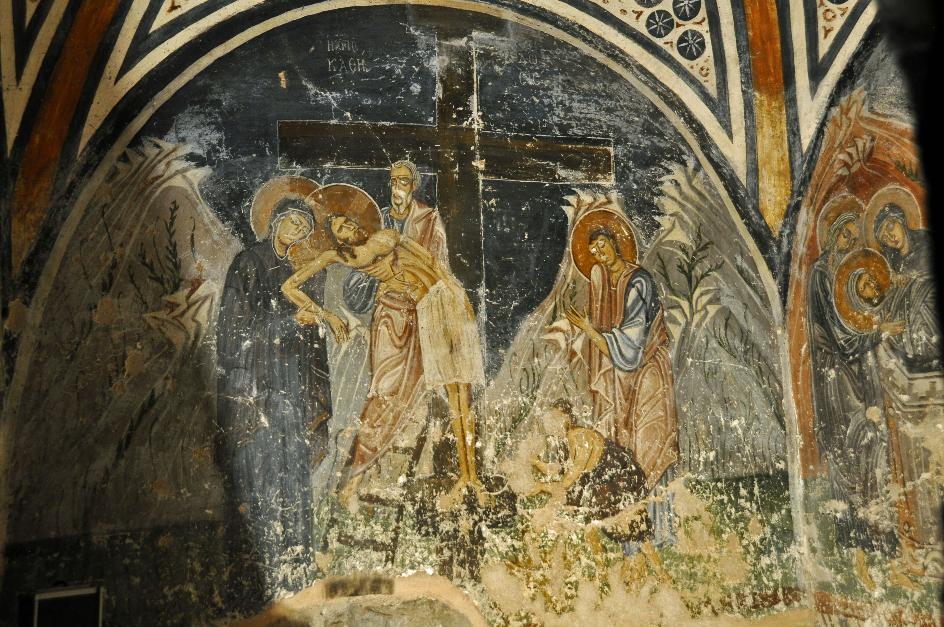
The image depicts a religious fresco featuring Jesus being crucified, surrounded by angels and saints, with a backdrop of intricate, decorative patterns.

Door AI gegenereerde inhoud is mogelijk onjuist.

Crypt – Deposition from the Cross


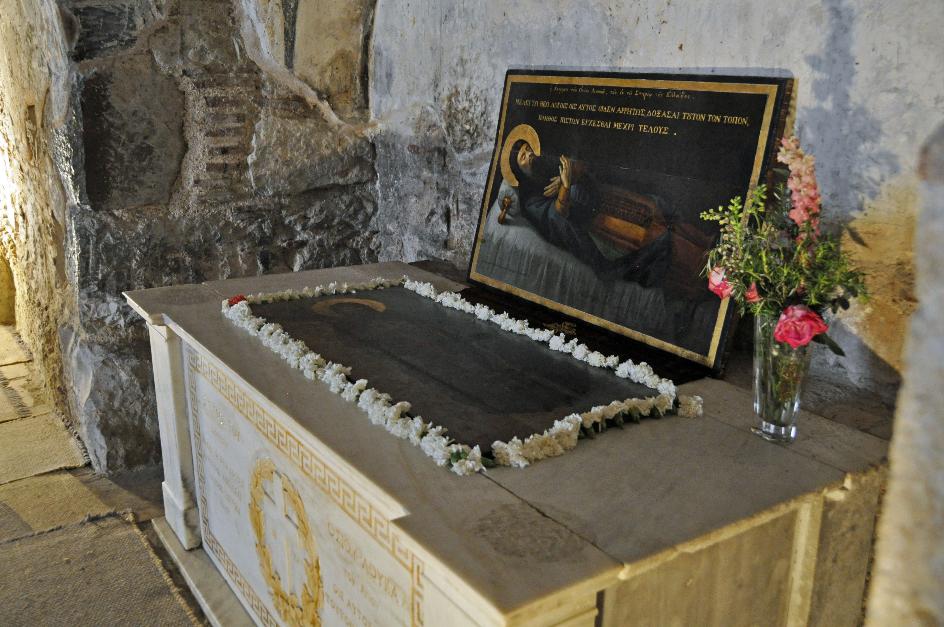
The image depicts a solemn grave, decorated with a wreath and flowers, in a historic setting with a Latin inscription honoring the wise and virtuous.

Door AI gegenereerde inhoud is mogelijk onjuist.

Crypt – Tomb of Hosios Loukas. He died on 7 February 953. Visitors would sometimes sleep for days in the crypt near his tomb, believing it had healing powers

Top

Thermopylae


The image depicts a statue of a person holding a sword, positioned in front of a wall with other sculptures, set against a backdrop of lush greenery and distant trees.

Door AI gegenereerde inhoud is mogelijk onjuist.

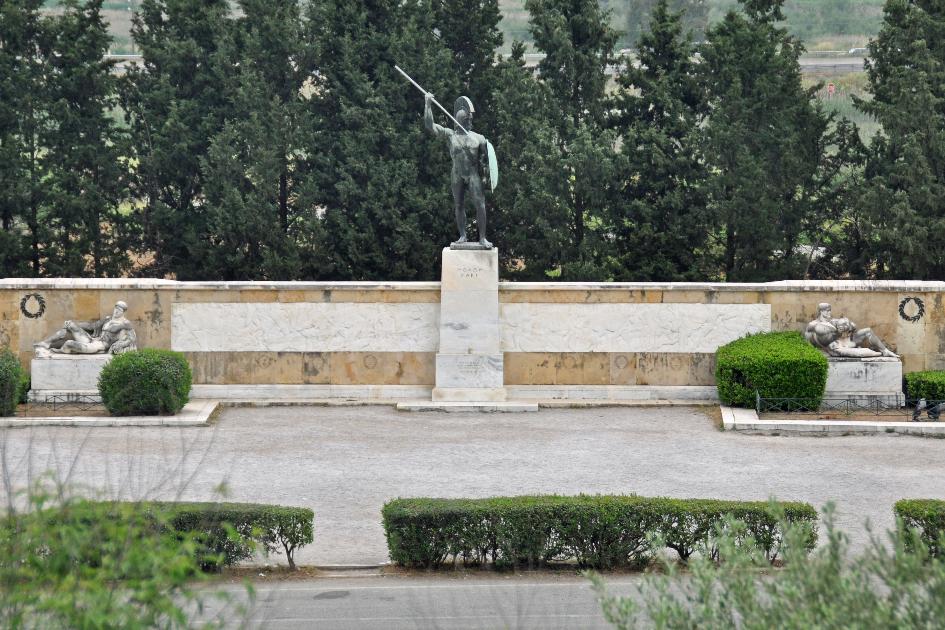
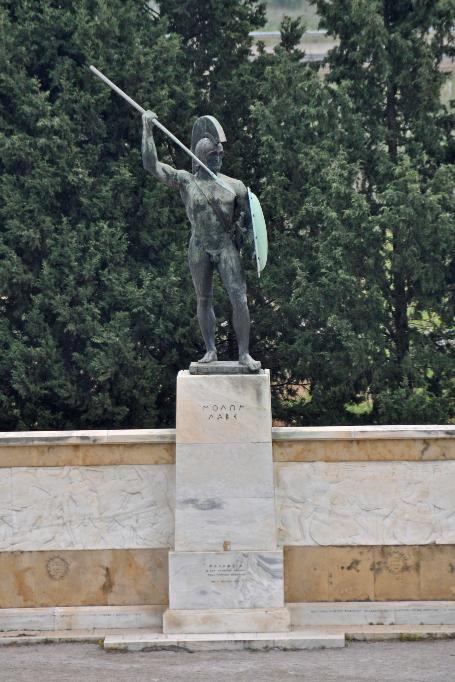
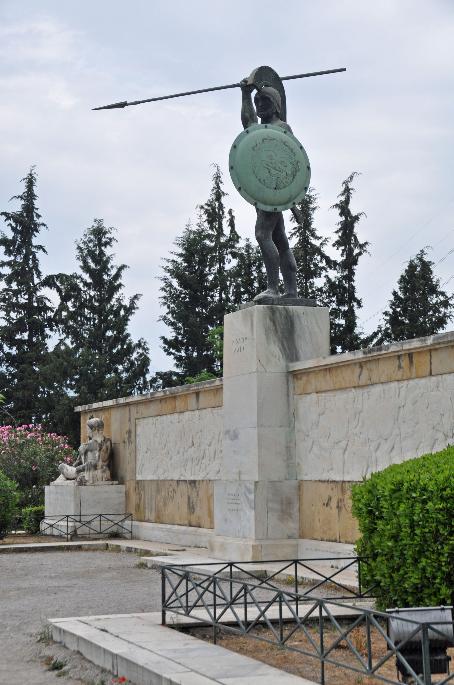
In 480 BCE, a Greek force of 7,000 men managed to hold back a Persian army of several hundred thousand soldiers for seven days in the narrow pass of Thermopylae. Only when a Greek traitor led the Persians along a mountain path behind the Greek lines were the Greeks forced to retreat. A hard core of 300 Spartans allowed themselves to be surrounded and, under the leadership of Leonidas I, fought to the death in order to protect the retreating army


Image


Image

At the time, the waters of the Malian Gulf reached as far as the spot where the statue of Leonidas now stands, making the coastal strip extremely narrow. Since then, however, the sea has retreated by more than two kilometres due to silting, and the strategic importance of this pass is no longer as evident

Top

Jaak Palmans
© 2026 | Version 2026-06-12 14:00


Greece | Photo Gallery